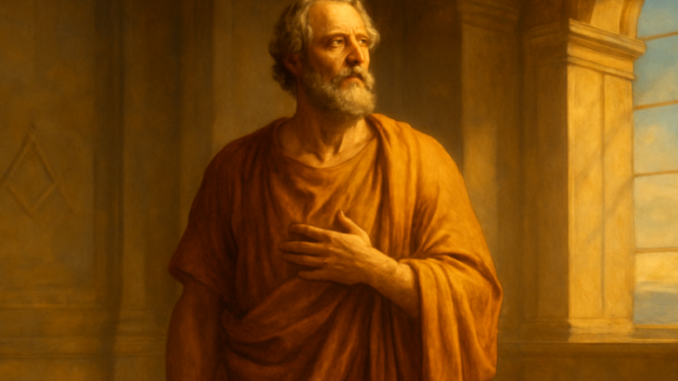
Candlelight flickers as a man sets down his stylus. He has just finished a letter to his student Lucilius, explaining why the body deserves attention — without ever becoming our master. This man is Lucius Annaeus Seneca, and his fourteenth letter to Lucilius offers timeless insights into the relationship between body and mind that remain strikingly relevant today.
The Central Question of Letter XIV
Seneca opens his fourteenth letter with a fundamental question that occupies many of us: how much attention does our body truly deserve? In an era when some philosophers advocated severe asceticism while others championed unbridled pleasure, Seneca charted a nuanced middle course. He warns Lucilius of two dangers: neglecting the body and caring for it excessively.
The Stoic philosopher acknowledges that we are not pure spirit. The body is the vehicle through which we move through life, the instrument with which we put our philosophical insights into practice. To neglect this instrument is to undermine our capacity for spiritual growth. Yet at the same time, Seneca cautions that excessive attention to physical well-being distracts the mind from what truly matters.
The Body as Servant, Not Master
At the heart of Letter XIV lies the idea that the body should play a serving role. Seneca compares the relationship between mind and body to that between a master and his household staff. A wise person takes good care of his servants — not out of excessive concern, but because they are necessary to keep the household running. In the same way, the body must be adequately cared for so it can serve the mind.
The body deserves care not as an end in itself, but as a necessary instrument for the practice of wisdom and virtue.
Seneca stresses that those who devote too much time to physical training, elaborate diets, or personal appearance lose precious hours that could have been spent on philosophical reflection and moral development. He points to people who fill their entire day with gymnastics, lavish meals, and endless grooming rituals. These individuals, he argues, have reversed the proper order of things: they serve their body instead of letting it serve them.
Confronting the Fear of Pain and Death
A significant theme in this letter is how we deal with physical fears. Seneca discusses at length how the dread of pain and death can paralyze us. He acknowledges that these fears are natural, but argues that philosophy teaches us to manage them without being ruled by them. The wise person prepares for adversity without being overwhelmed by worry about what may come.
Seneca raises the example of people who, out of fear of persecution or physical suffering, resort to extreme measures. He advises Lucilius not to flee into excessive caution but rather to develop an inner strength that can withstand external threats. The body may be taken from us, but the inner freedom of the mind remains inviolable for those who have cultivated it.
Practical Advice for Daily Life
Seneca’s letter also contains concrete guidance for everyday practice. He advocates for:
• Sufficient but simple nourishment that keeps the body healthy
• Moderate physical exercise that does not come at the expense of mental activity
• Regular rest without lapsing into laziness
• Avoiding luxuries that create dependency
These recommendations reflect the Stoic emphasis on self-reliance and independence. A person accustomed to simplicity, Seneca reasons, will not suffer when luxury is taken away. On the other hand, someone who has grown dependent on refined pleasures makes himself vulnerable to the whims of fortune.
Timeless Wisdom on Finding Balance
What makes Letter XIV particularly valuable is the nuanced approach Seneca takes. He does not fall into extremes but seeks a workable equilibrium. This makes his advice deeply relevant for modern readers who grapple with questions about health, body image, and the relationship between physical well-being and inner development.
The philosopher acknowledges that we are physical beings with legitimate needs, while simultaneously reminding us of the higher purpose of human existence. The body is neither a prison from which we must escape nor a temple deserving endless worship. It is a tool that needs maintenance to fulfill its function — nothing more, nothing less.
Seneca’s Message for Today
In a culture that often swings between physical obsession and spiritual neglect, Seneca offers a path of wise moderation. His fourteenth letter reminds us that true freedom lies neither in satisfying every bodily desire nor in denying our physical nature. Real freedom emerges when we give the body its proper place: cared for but not worshipped, respected but not feared.
Seneca’s Letter XIV to Lucilius offers a clear compass for anyone seeking balance between body and mind. The Stoic wisdom it contains transcends the centuries: treat your body as a valuable instrument, care for it attentively but without obsession, and reserve your deepest devotion for the development of your character and your inner freedom. In this balance lies the true art of living.
Copyright text & image: devrijmetselaar.nl
Texts are based on the ideas and content of the author of devrijmetselaar.nl, reviewed, corrected, and supplemented with the assistance of OpenAI. Images are created based on the ideas of the author of devrijmetselaar.nl using OpenAI/DALL-E.
Frequently Asked Questions
What is Seneca's main argument about body care in Letter XIV?
Seneca argues for a balanced, middle path between neglecting the body and caring for it excessively. He maintains that the body deserves adequate attention as a necessary instrument for spiritual and philosophical growth, but should never become the master of our lives. The body should serve the mind, not the other way around.
How does Seneca compare the relationship between mind and body?
Seneca uses the analogy of a master and his household servants. Just as a wise master takes good care of his servants because they are necessary to maintain the household, a person should care for their body adequately so it can serve the mind and enable the practice of wisdom and virtue. The key is proper hierarchy and balance.
What does Seneca warn against regarding physical pursuits?
Seneca cautions against devoting excessive time to physical training, elaborate diets, and grooming rituals. He argues that people who fill their entire day with these concerns have reversed the proper order of things—they have become servants to their body rather than maintaining the body as a servant to their mind and philosophical development.

Be the first to comment