
Cathedral foundation stones symbolizing Masonic stewardship and sustainability
Philosophy & Ethics

Sustainability as Philosophy: The Freemason as Steward

Imagine this: a cathedral whose first stone was laid by someone who knew they would never live to see it finished. Medieval master builders didn’t work for themselves — they worked for generations yet to come. In an age where sustainability is largely defined by carbon targets and climate goals, Freemasonry invites us to ask a deeper question: what does it truly mean to build for eternity? The Operative Roots of Sustainable Thinking Freemasonry traces its origins to the guilds of stonemasons and master builders. These craftsmen didn’t build disposable architecture. Every stone was carefully selected, every joint crafted to endure for centuries. This wasn’t romantic idealism — it was necessity. A cathedral that collapsed meant the end of a reputation, and often the end of a life. When Freemasonry evolved from operative to speculative in the eighteenth century, it carried this mentality with it. The physical building blocks became symbols, but the philosophy remained intact: what you create must stand the test of time. Not because someone forces you, but because you understand that your work is part of something far greater than yourself. Stewardship: A Forgotten Philosophical Concept In modern sustainability discussions, you rarely hear the word stewardship. […]

Rough and smooth ashlar stones symbolizing Masonic sustainability philosophy
Philosophy & Ethics

Sustainability as a Philosophical Foundation in Freemasonry

Picture this: two Freemasons sit together after a lodge meeting. One is an engineer specializing in circular economy. The other is a classicist, steeped in ancient philosophy. The conversation turns to sustainability. What follows is not a debate but a shared exploration — a dialogue that touches on what it truly means to bear responsibility for what comes after us. This conversation, reconstructed in essence, forms the foundation of this article. The Question That Opens Everything “What is sustainability, really?” the classicist asks, stirring his coffee with a pensive look. “We use the word as if everyone knows what it means. But is it a goal? A method? A moral duty?” The engineer smiles. “In my field, we talk about systems that can sustain themselves without exhausting their resources. But you’re right — that’s merely the technical definition. The philosophical question runs deeper: why should we care about what happens a hundred years from now?” This is precisely the question Freemasons have grappled with for centuries, albeit in different terms. The construction of the symbolic temple is not a project for a single lifetime. It is a work that transcends generations. The Stone You Leave Behind “Are you familiar with […]

Vrijmetselarij - De 15-minuten stad: verleden, heden en de controverse rondom een duurzaam toekomstmodel
Sustainability

The 15-Minute City: A Sustainable Urban Model with Challenges and Controversies

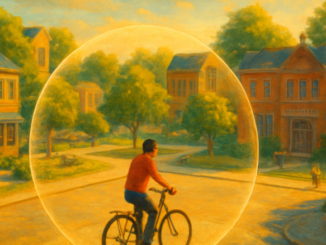
The 15-minute city, a concept that has gained significant attention in recent years, evokes diverse reactions. The idea is simple yet powerful: all essential amenities should be reachable within a 15-minute walk or bike ride. This urban planning model promises to enhance sustainability, quality of life, and social cohesion. But what are the historical roots of this concept? How is it applied today? And why does it provoke controversy? Let’s explore these questions in detail. The Historical Roots of the 15-Minute City The idea of a city where everything is nearby is not new. In medieval times, cities were often compact, with markets, churches, and workshops within walking distance. This was not deliberate urban planning but a practical necessity, as transportation was limited. In the 19th century, this changed with the industrial revolution. Cities expanded rapidly, and suburbanization increased with the advent of trams and trains. The idea of compact urban living gave way to segregated residential and work areas. However, there were already thinkers like Ebenezer Howard advocating for the “garden city,” combining urban and rural qualities with amenities close at hand. The modern concept of the 15-minute city is strongly rooted in the theories of Franco-Colombian urban planner […]