
Somewhere on the dark, frigid waters of the Baltic Sea, a crew member of a Russian cargo ship stands on deck when the unthinkable happens. Unmanned drones descend from the night sky, and within seconds, silence erupts into chaos. While news outlets focus on geopolitical implications and military strategy, a deeper question lingers in the air — heavy as the smoke drifting across the water. What does a crisis reveal about who we truly are? And what can the ancient tradition of Freemasonry teach us about the formation of character when everything around us becomes uncertain?
When the Sea Becomes a Mirror
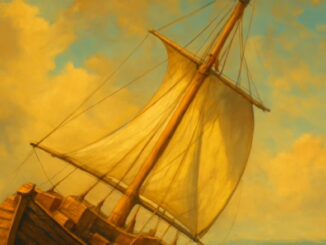
Reports of a rare drone attack on a Russian cargo vessel in the Baltic Sea sent shockwaves around the world this week. For the first time in decades, a commercial ship in these traditionally peaceful waters became the target of aerial violence. The facts are still unfolding, the motives under investigation, and international reactions follow one another at a dizzying pace. But beyond the geopolitical turbulence lies a question as old as humanity itself: how do you conduct yourself when the ground — or in this case, the deck — shakes beneath your feet?
The sea has always served as a powerful metaphor for the unpredictability of life in philosophy and literature. Michel de Montaigne, whose essays remain deeply relevant today, wrote about the inevitable confrontation with danger and how it strips away our carefully constructed masks to reveal our true character. In his famous essay on practice, he described how a near-death experience forced him to examine his own fears and reflexes. The event itself was not the lesson — what mattered was what it revealed about the person he was when all pretenses fell away.
Personality as a Building Project
In Freemasonry, the individual is symbolized as a rough stone — an ashlar — that through conscious effort and self-reflection can be shaped into a polished building block, fit to take its place in a greater structure. This is far more than a quaint metaphor. It points to the profound idea that personality is not a fixed trait we are born with, but something that is formed, tested, and refined through the experiences life brings our way. James Anderson, who codified the first constitutions of modern Freemasonry in 1723, emphasized that the Craft revolves around the inner improvement of the individual. Not status, not lineage, but the willingness to work on oneself forms the true foundation.
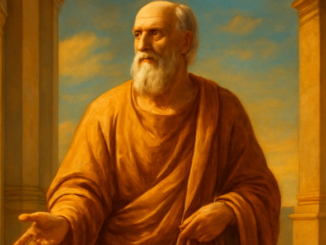
This idea resonates powerfully with the Stoic philosophy of Marcus Aurelius, the Roman emperor-philosopher who wrote in his Meditations that the quality of your life is determined by the quality of your thoughts. When a crew member aboard a ship in a conflict zone faces immediate danger, there is no time for a carefully reasoned response. There is only the reaction that springs from who that person truly is. That reaction, the Stoics would say, is the product of years of inner discipline — or the lack of it.
Ritual as a Training Ground for Character
Where does this inner discipline take concrete form in Freemasonry? In ritual. Masonic rituals are neither magical acts nor hollow ceremony. They function as a kind of repeated encounter with the most fundamental questions of existence: Who am I? What is my responsibility to others? How do I face the unknown? By engaging with these questions again and again in a structured, symbolic environment, the Freemason exercises his character in a way that is comparable to the mental armor the Stoic philosophers sought to forge.
Johann Wolfgang von Goethe, himself a Freemason and one of the towering minds of European cultural history, captured this beautifully when he wrote that character is formed in the stream of the world. It is not in the quiet of the study that we discover who we are, but in our confrontation with the unexpected, the difficult, the unjust. The lodge offers a safe environment to practice that confrontation before life itself administers the test.
Personality is not a possession but a structure — laid stone by stone through conscious choices and tested by the storms that life inevitably brings.
Crises as Unwilling Teachers
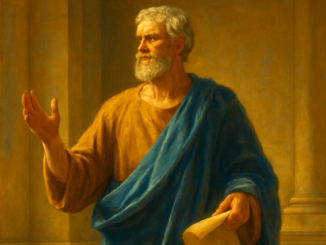
The attack on the Baltic Sea reminds us that the world remains unpredictable, despite all our technological progress and diplomatic frameworks. Aristotle observed long ago that virtue does not arise from merely thinking about it — it must be practiced. You do not become courageous by studying courage, but by acting courageously in the moment that matters. This idea runs like a thread through Freemasonry: knowledge alone is not enough. What counts is the translation of insight into action.
Seen in this light, a crisis — however terrible — becomes an unwilling teacher. It exposes the cracks in our inner structure while simultaneously offering the opportunity to repair them. The crew of that cargo ship on the Baltic Sea had no choice in what happened to them. They did have a choice in how they responded. That space between event and response is precisely the territory where Freemasonry does its most meaningful work.
Three Masonic Insights on Character
Self-knowledge as foundation: Without honest insight into your own weaknesses and strengths, no growth is possible. The mirror that the lodge holds up is unsparing but never cruel.
Repetition as method: Just as a craftsman sharpens his tools daily, the Freemason hones his character through ritual, reflection, and brotherly conversation.
Responsibility as guide: Character only reaches its full potential when it extends beyond personal well-being to embrace the welfare of the wider community.
From the Baltic Sea to the Lodge
It would be easy to dismiss a drone attack on a cargo ship as something remote — a distant event with no bearing on our daily lives. But Freemasonry teaches us otherwise. Every world event, every crisis, every moment of upheaval is an invitation to look inward and ask ourselves: if I were standing on that deck, who would I be? The answer to that question is not found in the moment of crisis itself. It is built, day by day, through the quiet and persistent work of self-improvement that lies at the heart of the Masonic tradition.
The rough stone does not become polished by wishing it so. It is shaped by the chisel of experience, guided by the steady hand of intention. And when the storm arrives — as it always does — it is the quality of that inner work that determines whether we stand firm or crumble.
The waters of the Baltic Sea may feel far away, but the lessons they carry reach directly into the lodge and into every Freemason’s daily life. Character is not revealed by comfort — it is revealed by crisis. And the purpose of the Craft, now as much as ever, is to ensure that when that revealing moment comes, we are ready. Not because we have memorized the right answers, but because we have done the work of becoming the right person — stone by stone, choice by choice, day by day.
Copyright text & image: devrijmetselaar.nl
Texts are based on the ideas and content of the author of devrijmetselaar.nl, reviewed, corrected, and supplemented with the assistance of OpenAI. Images are created based on the ideas of the author of devrijmetselaar.nl using OpenAI/DALL-E.
Frequently Asked Questions
What is the main connection between the Baltic Sea attack and Freemasonry in this article?
The article uses the Baltic Sea drone attack as a modern example of a crisis moment that reveals true character. It draws a parallel to Freemasonry's teaching that character is not fixed but is formed and tested through life experiences. Just as the attack stripped away normal circumstances, Freemasonry teaches that individuals are like rough stones (ashlars) that are shaped and refined through conscious effort and self-reflection during challenging times.
What does Freemasonry mean by the 'ashlar' or rough stone metaphor?
In Freemasonry, an individual is symbolized as a rough stone (ashlar) that through conscious effort and self-reflection can be polished into a refined building block. This metaphor represents the idea that personality is not an inborn, fixed trait but something that is actively formed, tested, and refined through life experiences. It emphasizes that personal improvement is a continuous project requiring willingness to work on oneself.
How does Michel de Montaigne's philosophy relate to the article's themes?
Montaigne's essays, particularly his essay on practice, explored how near-death experiences and dangerous situations strip away our carefully constructed masks to reveal our true character. The article cites his work to support the idea that crises force us to examine our deepest fears and reflexes. What matters is not the crisis itself, but what it reveals about who we are when all pretenses fall away—a concept central to understanding character formation.

Be the first to comment