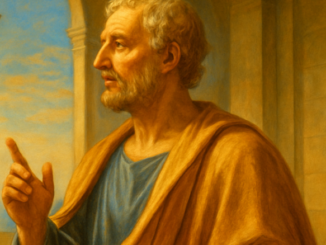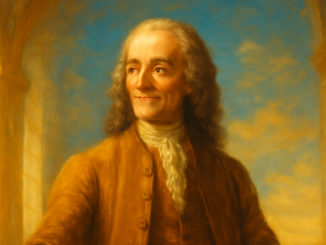
Rough ashlar and chisel symbolizing Montaigne's philosophy of courage and virtue
Michel de Montaigne – Philosophical Background

Montaigne on Cowardice: Philosophical Roots of Courage

When Michel de Montaigne wrote his fifteenth essay on the punishment of cowardice, he touched upon a question that has occupied philosophers for centuries. What makes cowardice such a grievous vice that some societies punished it with death? To truly understand Montaigne’s reflections, we must descend into the philosophical wellsprings from which he drew: the Stoics, the Greek moral philosophers, and the humanist tradition of his own era. In exploring the intellectual background of his thought, we discover not only the roots of his argument but also why these questions still resonate deeply within any brotherhood that places virtue at its center. The Stoic Legacy: Courage as a Cardinal Virtue Montaigne’s thinking about cowardice and courage is deeply rooted in the Stoic tradition. Seneca, whom he read extensively and quoted often, regarded courage as one of the four cardinal virtues — inseparably linked to wisdom, justice, and temperance. For the Stoics, cowardice was not merely a lack of physical bravery; it was a fundamental disturbance of the soul. To flee from danger was ultimately to flee from oneself. Marcus Aurelius wrote in his Meditations that a person must align his actions with nature and reason. From that perspective, cowardice was […]

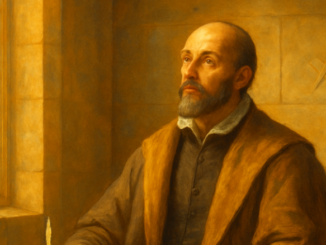
Portrait of Michel de Montaigne with philosophical texts on cruelty
Michel de Montaigne – Philosophical Background

Montaigne and the Law of Cruelty: Philosophical Roots

You have almost certainly experienced it: someone treats another person with unnecessary harshness, and somewhere deep inside you sense that something is fundamentally wrong. Michel de Montaigne, the sixteenth-century French thinker, wrestled with exactly this question. In his essay on cruelty, he digs into the philosophical roots of human violence and compassion. Which thinkers shaped his views? And more importantly — what can those insights still offer us today, particularly as Freemasons committed to the moral improvement of ourselves and society? The Stoic Legacy: Seneca as Teacher When Montaigne writes about cruelty, the voice of Seneca resonates throughout. The Roman philosopher, who lived from 4 BC to 65 AD, regarded cruelty as the very opposite of humanity. For Seneca, brutality was not merely a moral misstep — it was a fundamental assault on human dignity. He championed clementia, a form of mercy that springs from inner strength rather than weakness. Montaigne adopted this idea and applied it to his own turbulent era. Where Seneca wrote amidst the spectacle of Roman gladiatorial games, Montaigne observed the Wars of Religion tearing France apart. Both men witnessed how violence became entertainment, how crowds took pleasure in the suffering of others. The Stoic lesson […]

Open Book of Proverbs with Masonic square and compasses symbolizing wisdom
Christianity

Proverbs and Freemasonry: Wisdom as a Building Block of Character

The Book of Proverbs has spoken to seekers of wisdom for millennia. For some, it is a collection of practical rules for living from an ancient world. For others, it is a timeless mirror reflecting moral principles that remain as relevant today as when they were first written. But how does a Freemason approach these ancient texts? And what does someone discovering the symbolic richness of this book for the first time see in its pages? In this exploration, we examine two perspectives on wisdom as raw material for the inner life. The Perspective of the Traditional Reader For many readers, Proverbs is primarily a collection of practical advice attributed to wise kings and teachers of ancient Israel. The book belongs to what scholars call wisdom literature, and it contains short, pithy statements about honesty, diligence, humility, and justice. The tone is direct, sometimes stern, and always oriented toward daily life. A father speaks to his son, a teacher to his student. The wisdom conveyed is concrete: avoid the foolish, seek the righteous, guard your tongue. From this perspective, the book is essentially a manual for right conduct. The reader is encouraged to listen, to learn, and to improve their […]