Ancient Greek columns symbolizing Plato's philosophy and Masonic education
Plato – Freemasonry & Connection

Plato on Education: Lessons for Freemasonry

What truly makes a person good? And who decides what ‘good’ even means? Plato posed these questions more than two thousand years ago in his celebrated dialogue The Republic, and they still echo through the lodge today. When we study the third book of this masterwork, we discover striking parallels with Freemasonry — not in dogmas or prescriptions, but in a shared conviction that human beings can be shaped through intentional education, through community, and through the pursuit of inner light. Why Did Plato Place Such Value on Education? For Plato, education was never a secondary concern — it was the key to a just society. In the third book of The Republic, he describes how young people should be formed through music, gymnastics, and stories that cultivate virtue. His interest was not in the transmission of facts, but in the shaping of character. The soul, he argued, must be trained just as the body is: through discipline, beauty, and truth. Plato believed that stories and art have the power to mold the soul. For this reason, he advocated telling only those myths that inspire courage, temperance, and justice. Bad examples, he reasoned, corrupt the young mind. This may sound […]
Ancient Greek temple columns symbolizing Plato's philosophy and Masonic education
Plato – Philosophical Background

Plato’s Republic III: The Philosophical Roots of Education

When Plato unfolds his vision of education in the third book of The Republic, he touches on questions that had already been asked for centuries before him — and that continue to resonate today in traditions devoted to the shaping of character. How do we cultivate virtue in a human being? What stories do we tell, what music do we play, and why? For the Freemason, these are far from abstract questions. The lodge itself is a space of formation, where ritual and symbol serve the very pedagogical function Plato envisioned. This article explores the philosophical sources Plato drew upon and places his educational ideal alongside the formative practice of Freemasonry. The Legacy of the Early Greek Thinkers Plato’s educational philosophy in Republic III did not emerge in a vacuum. He built upon a rich tradition of Greek paideia — the ideal of comprehensive human formation that had already taken root in the works of Homer and Hesiod. For Homer, the hero Achilles was the embodiment of aretē: virtue understood as a fusion of courage, honor, and physical excellence. Hesiod, in his Works and Days, added industriousness and justice to the equation. Plato knew these texts intimately, but he took […]

Rough ashlar and sculpting tools symbolizing Platonic and Masonic education
Plato – Content & Summary

Plato’s Republic Book III and Freemasonry: Education & Virtue

How do you shape a human being into a virtuous one? This question has occupied philosophers for millennia, and few have explored it as thoroughly as Plato in the third book of The Republic. In this remarkable text, the Athenian thinker presents his vision of education as the key to a just society — a vision that resonates strikingly with the way Freemasonry forms its members. In this article, we bring two worlds into conversation: the classical Athens of Plato and the symbolic workshop of the Masonic lodge. What do they share, and what can we learn from the comparison? The Heart of Book III: Music, Gymnastics, and the Soul In the third book of The Republic, Plato continues his dialogue through Socrates about the ideal state. The central question is how the Guardians — the protectors of the city — should be educated. Plato identifies two pillars: musical training for the soul and gymnastic training for the body. This division is far from arbitrary. The philosopher believes that harmony in the soul must precede harmony in the state. Musical education, in Plato’s framework, encompasses far more than music in the modern sense. It includes poetry, storytelling, and myth. Plato […]

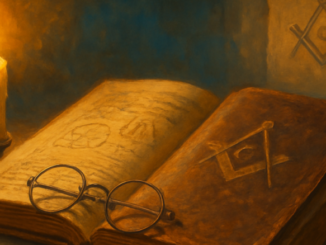
Open book with Masonic symbols representing Montaigne's educational philosophy
Michel de Montaigne – Freemasonry & Connection

Montaigne on Education: Lessons for the Seeking Freemason

Imagine a child who is not taught to obey, but to think independently. A child who is not stuffed with facts, but invited to ask questions. In the sixteenth century, Michel de Montaigne wrote an essay outlining precisely this vision of education. What he put to paper over four hundred years ago touches on something every Freemason recognizes: the conviction that true growth begins with the development of an independent mind and a virtuous character. In this article, we explore how Montaigne’s pedagogical ideas connect with the core values of Freemasonry. The Heart of Montaigne’s Educational Philosophy In his essay ‘On the Education of Children,’ Montaigne pushes back against the educational practices of his era, which he considered mechanical and superficial. Teachers crammed students full of trivia without paying attention to understanding or application. Montaigne argued for something radically different: an education that sharpens judgment rather than merely filling the memory. The child must learn to weigh, compare, and draw conclusions independently. This is not a passive process, but an active quest for insight. What does this look like in practice? Montaigne advises that an educator should confront the child with a variety of viewpoints and encourage them to choose […]

Open book with classical philosophical texts representing Montaigne's education
Michel de Montaigne – Philosophical Background

Montaigne on Education: Philosophical Roots of Formation

Why did a sixteenth-century French nobleman write an essay on the education of children that still provokes deep reflection more than four centuries later? And which thinkers whispered their insights to him as he sat writing in his famous tower? Michel de Montaigne drew from a rich philosophical tradition when he committed his thoughts on formation to paper. Let us explore the sources that nourished his vision — and discover why they still matter to anyone walking the path of self-improvement. Which Philosophical Currents Shaped Montaigne’s Thinking? Montaigne lived during an era of intellectual rebirth. Renaissance Humanism had rediscovered the classical texts and brought a fresh perspective on human nature and its possibilities. This humanism was characterized by a return to the sources: Greek and Roman thinkers were no longer filtered through medieval interpretations but read and questioned directly. In his essay on the education of children, we see three major currents converge: Stoicism, with its emphasis on virtue and character; Skepticism, with its critical stance toward dogmatic knowledge; and the practical humanism of Plutarch, which viewed formation as the art of living. Montaigne blended these ingredients into his own recipe, rooted in personal experience rather than abstract theory. What […]

Open book with Masonic square and compasses symbolizing education and Freemasonry
Michel de Montaigne – Content & Summary

Montaigne on Education: The Art of Forming Free Minds

In 1580, Michel de Montaigne wrote a remarkable essay that turned the educational thinking of his time upside down. What began as a letter to the Countess Diane de Foix evolved into a fundamental critique of sixteenth-century schooling. While his contemporaries focused on rote transmission of knowledge, Montaigne argued for something radically different: the formation of a discerning, free, and morally strong individual. His ideas would go on to influence educators and philosophers for centuries — and, less widely known, they helped shape the Masonic ideal of the searching, self-improving human being. A World in Turmoil: The Historical Context The France in which Montaigne lived was torn apart by religious wars between Catholics and Huguenots. Education at universities and colleges was dominated by scholastic methods: students memorized vast quantities of texts without truly understanding them. Latin and Greek were the languages of instruction, and the primary goal was to produce scholars who could cite classical authorities on command. Montaigne had experienced this system firsthand at the Collège de Guyenne in Bordeaux, one of the finest schools of the era. Yet looking back, he found it deeply wanting. Montaigne’s father, Pierre Eyquem de Montaigne, had already taken an unconventional approach by […]

Open book of Montaigne's Essays with symbolic light representing custom and law
Michel de Montaigne – Content & Summary

Montaigne on Custom: Why Laws Don’t Change Easily

What makes us consider certain customs perfectly natural while other peoples do the exact opposite? And why is it so difficult to change laws, even when they are clearly flawed? Michel de Montaigne posed these questions more than four centuries ago, and his answers remain strikingly relevant today. In this twenty-second essay from his first book, the French philosopher examines the extraordinary power that custom holds over our thoughts and actions — a theme that resonates deeply with anyone who values self-examination and the role of ritual in shaping human life. The Core of the Essay: Custom as Tyrant Montaigne opens with a deceptively simple observation: custom determines nearly everything we consider normal. What we eat, how we sleep, the clothes we wear, the way we bury our dead — all of this varies radically from culture to culture. Yet people everywhere experience their own practices as the natural, even the only correct way to live. Custom, Montaigne argues, is a tyrannical mistress who takes possession of us by stealth. The essay weaves together two interconnected themes. The first explores how custom clouds our judgment and blinds us to the arbitrariness of our own practices. The second applies this insight […]

Vrijmetselarij - Vrijmetselaarsliteratuur en inspiratie: boeken en bronnen die je laten groeien
Philosophy & Ethics

Masonic Literature & Inspiration: Books and Sources for Growth

Freemasonry is not a one-time experience — it is a lifelong journey of self-awareness, personal development, and meaningful connection. Beyond what happens inside the lodge, Masonic books, essays, and online resources form an invaluable treasury of knowledge and inspiration. Masonic literature opens doors to deeper understanding and offers practical tools to better grasp the symbolism, rituals, and philosophy of the Craft — and to apply them in your everyday life. Whether you are a curious seeker, a newly initiated Entered Apprentice, or a seasoned Master Mason, Masonic literature enriches your thinking, sharpens your intuition, and encourages meaningful reflection. Why Masonic Literature Is So Powerful Freemasonry is not about dogmas or fixed truths. It is about asking questions, seeking meaning, and shaping your own path. Books and written works support that process. They provide not only historical context but also philosophical frameworks, interpretations of symbolism, and personal testimonies from fellow travelers on the same road. Think of Masonic literature not as a textbook, but as a toolbox: you choose the tool that fits your journey at any given moment. Recommended Books to Get Started If you are new to Freemasonry or looking to build a solid foundation, several accessible books serve […]