Open book with Masonic symbols representing Montaigne's educational philosophy
Michel de Montaigne – Freemasonry & Connection

Montaigne on Education: Lessons for the Seeking Freemason

Imagine a child who is not taught to obey, but to think independently. A child who is not stuffed with facts, but invited to ask questions. In the sixteenth century, Michel de Montaigne wrote an essay outlining precisely this vision of education. What he put to paper over four hundred years ago touches on something every Freemason recognizes: the conviction that true growth begins with the development of an independent mind and a virtuous character. In this article, we explore how Montaigne’s pedagogical ideas connect with the core values of Freemasonry. The Heart of Montaigne’s Educational Philosophy In his essay ‘On the Education of Children,’ Montaigne pushes back against the educational practices of his era, which he considered mechanical and superficial. Teachers crammed students full of trivia without paying attention to understanding or application. Montaigne argued for something radically different: an education that sharpens judgment rather than merely filling the memory. The child must learn to weigh, compare, and draw conclusions independently. This is not a passive process, but an active quest for insight. What does this look like in practice? Montaigne advises that an educator should confront the child with a variety of viewpoints and encourage them to choose […]
Open book with classical philosophical texts representing Montaigne's education
Michel de Montaigne – Philosophical Background

Montaigne on Education: Philosophical Roots of Formation

Why did a sixteenth-century French nobleman write an essay on the education of children that still provokes deep reflection more than four centuries later? And which thinkers whispered their insights to him as he sat writing in his famous tower? Michel de Montaigne drew from a rich philosophical tradition when he committed his thoughts on formation to paper. Let us explore the sources that nourished his vision — and discover why they still matter to anyone walking the path of self-improvement. Which Philosophical Currents Shaped Montaigne’s Thinking? Montaigne lived during an era of intellectual rebirth. Renaissance Humanism had rediscovered the classical texts and brought a fresh perspective on human nature and its possibilities. This humanism was characterized by a return to the sources: Greek and Roman thinkers were no longer filtered through medieval interpretations but read and questioned directly. In his essay on the education of children, we see three major currents converge: Stoicism, with its emphasis on virtue and character; Skepticism, with its critical stance toward dogmatic knowledge; and the practical humanism of Plutarch, which viewed formation as the art of living. Montaigne blended these ingredients into his own recipe, rooted in personal experience rather than abstract theory. What […]

Ancient Stoic philosophical texts symbolizing Masonic brotherhood and wisdom
Marcus Aurelius – Meditations

Marcus Aurelius Book VI: Philosophical Roots of Brotherhood

What drives a Roman emperor to write about the interconnectedness of all people while camped in a war zone? And why do those thoughts still resonate nineteen centuries later in the rituals of Masonic lodges around the world? The answers lie buried deep in the philosophical traditions that shaped Marcus Aurelius — traditions that continue to provide the foundations for fraternal bonds to this day. Where Did Marcus Aurelius Draw His Ideas From? This is perhaps the first question that arises when reading Book VI of the Meditations. Marcus Aurelius did not write in a vacuum. He stood on the shoulders of giants — generations of Stoic thinkers who had laid the groundwork before him. The Stoa, founded by Zeno of Citium around 300 BC, taught that all human beings are part of one cosmic community. This concept, the cosmopolis, forms the backbone of everything Marcus wrote about our obligations to one another. But the emperor did not limit himself to a single source. He drank from multiple philosophical rivers: the practical ethics of Epictetus, the letters of Seneca, and the moral biographies of Plutarch. Each of these thinkers contributed a unique stone to the edifice of his thought on […]

Philosopher contemplating brotherhood and Masonic symbolism in a lodge
Personal Development & Leadership

The Eighth Child and the Philosopher: Brotherhood as a Way

What can the eighth child of a philosopher teach us about brotherhood and the formation of personality? The question may seem unusual at first glance, but a closer look at the lives of great thinkers reveals that family circumstances often shaped their understanding of human connection. The role of the brother — both in the literal and the figurative sense — runs like a golden thread through the philosophical tradition, and it finds a particularly powerful echo in the practice of Freemasonry. Why Does Birth Order Matter So Much? Picture a large family in eighteenth-century Europe. Eight children, perhaps more. The eldest inherits the estate, the middle children seek their fortunes in trade or the military, and the youngest? They must make do with whatever remains. Yet it is precisely in this position that something remarkable emerges: the necessity of forging an identity independent of family tradition and birthright. The Genevan philosopher Jean-Jacques Rousseau wrote extensively about how upbringing and environment shape character. Although Rousseau himself was not an eighth child, he understood deeply that one’s position within a family — as a brother among brothers — fundamentally influences personality. A child who learns to navigate relationships with older siblings […]

Open book with Masonic square and compasses symbolizing education and Freemasonry
Michel de Montaigne – Content & Summary

Montaigne on Education: The Art of Forming Free Minds

In 1580, Michel de Montaigne wrote a remarkable essay that turned the educational thinking of his time upside down. What began as a letter to the Countess Diane de Foix evolved into a fundamental critique of sixteenth-century schooling. While his contemporaries focused on rote transmission of knowledge, Montaigne argued for something radically different: the formation of a discerning, free, and morally strong individual. His ideas would go on to influence educators and philosophers for centuries — and, less widely known, they helped shape the Masonic ideal of the searching, self-improving human being. A World in Turmoil: The Historical Context The France in which Montaigne lived was torn apart by religious wars between Catholics and Huguenots. Education at universities and colleges was dominated by scholastic methods: students memorized vast quantities of texts without truly understanding them. Latin and Greek were the languages of instruction, and the primary goal was to produce scholars who could cite classical authorities on command. Montaigne had experienced this system firsthand at the Collège de Guyenne in Bordeaux, one of the finest schools of the era. Yet looking back, he found it deeply wanting. Montaigne’s father, Pierre Eyquem de Montaigne, had already taken an unconventional approach by […]

Ancient Stoic philosopher reflecting in contemplation within a symbolic lodge
Lucius Annaeus Seneca – Letters to Lucilius

Seneca on Simplicity and Fidelity: The Philosophical Roots

Can anyone truly practice philosophy when their life contradicts their words? Lucius Annaeus Seneca poses this question with striking sharpness in his twentieth letter to Lucilius. It is a question that has echoed through the centuries and still reverberates today in the silence of the Masonic lodge, where the tension between professing and practicing lies at the very heart of the work. Let us explore the philosophical sources Seneca drew upon when he composed this remarkable letter. The Paradox of the Talking Philosopher Seneca opens his letter with a challenge that is as simple as it is unsettling: let your actions match your words. The demand sounds self-evident, and that is precisely what makes it so treacherous. The Stoic tradition from which Seneca emerged had always wrestled with the gap between theory and practice. Zeno of Citium, the founder of the Stoa around 300 BCE, was already criticized by opponents who argued that his strict doctrines were impossible to live by. Seneca acknowledges this tension openly. He was himself a wealthy man at the court of Emperor Nero — a position that was difficult to reconcile with his preaching of sobriety. Yet this is not hypocrisy in the simple sense […]

Ancient Greek columns symbolizing Plato's Republic and Masonic philosophy
Plato – Content & Summary

Plato on Justice: The Republic Book I and Its Masonic Echoes

What does it mean to be just? This seemingly simple question opens one of the most influential philosophical works in the Western tradition. In the first book of The Republic, Plato sends his teacher Socrates into dialogue with three interlocutors, each defending a different definition of justice. None of them manages to convince Socrates — and yet this is no tale of intellectual defeat. It is a shared search for truth, the kind of quest that has inspired Freemasons for centuries. The Setting: An Encounter at the Piraeus The conversation takes place in the harbor of Athens, the Piraeus, where Socrates is stopped by Polemarchus after attending a religious festival. Polemarchus invites him to the home of his elderly father Cephalus, a wealthy arms dealer. What begins as a polite exchange about old age and wealth quickly transforms into a profound philosophical exploration. Cephalus remarks that wealth allows him to be honest and pay his debts. In doing so, he implicitly suggests a definition of justice: speaking the truth and returning what you owe. Socrates immediately exposes the weakness of this definition with a striking example. Suppose you have borrowed a sword from a friend who has since gone mad. […]

Open book with Montaigne essay beside Masonic square and compass symbol
Michel de Montaigne – Freemasonry & Connection

Montaigne on Custom, Prejudice, and the Power of Connection

What if our deepest convictions are nothing more than habits, worn into us by time and culture? In his essay on custom and convention, Michel de Montaigne poses an uncomfortable question that strikes at the heart of human connection: how can we truly live together when each of us is trapped in the web of our own traditions? Written in the sixteenth century, this question proves remarkably relevant for anyone who reflects on a brotherhood that transcends borders. The Paradox of the Familiar Montaigne opens with an observation that is at once simple and deeply unsettling: we regard whatever is unfamiliar to us as barbarous. The Greek calls the Persian a barbarian; the Persian does the same to the Greek. Both are utterly convinced that their own customs represent the standard of civilization. Here lies a paradox that Montaigne explores with undisguised curiosity — the familiar feels self-evident, but only because we happened to grow up with it. This insight resonates deeply with Freemasonry, which from its very origins has brought together men of different religious and cultural backgrounds. In the lodge, men meet who might never have crossed paths outside its walls. The question Montaigne raises is the same […]

Portrait of Michel de Montaigne with philosophical and Masonic symbols
Michel de Montaigne – Philosophical Background

Montaigne on Customs: Philosophical Roots and Freemasonry

In 1580, Michel de Montaigne published a remarkable essay on the diversity of human customs. His observations on how different peoples perform the same acts in entirely different ways touched upon fundamental questions that had occupied thinkers for centuries. What philosophical traditions shaped his view of human diversity? And what can we — nearly five centuries later — still learn from his intellectual legacy, particularly as Freemasons? The Skeptical Tradition as Foundation Montaigne’s approach to human customs is deeply rooted in Pyrrhonian Skepticism, a philosophical school tracing back to the Greek thinker Pyrrho of Elis. This tradition held that absolute certainty about the world is unattainable and that we must suspend judgment. Montaigne immersed himself in the works of Sextus Empiricus, whose writings were being rediscovered and recirculated during his lifetime, and was profoundly influenced by his arguments against dogmatic thinking. In his essay on customs, Montaigne applies this skeptical stance consistently. He observes how what one culture considers civilized, another may regard as barbaric. Who, then, gets to determine what is truly right? By placing customs side by side without passing judgment, he invites the reader toward intellectual humility. This is not relativism — it is a call to […]

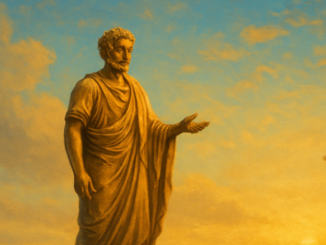
Bust of Marcus Aurelius symbolizing Stoic virtue and philosophical wisdom
Marcus Aurelius – Meditations

Marcus Aurelius and the Stoic Roots of Virtue as Supreme Good

When Marcus Aurelius writes in the sixth book of his Meditations that only virtue possesses real value, he is not speaking as a solitary thinker philosophizing in his tent. He is articulating a tradition that began more than four centuries before him in the colonnades of Athens, was shaped by exiles and slaves, and ultimately reached the throne of the Roman Empire. The claim that virtue is the sole good forms the beating heart of Stoicism — but what does it actually mean? And which thinkers forged this conviction before an emperor committed it to his private journal? The Paradox of the Stoic Good Here lies a philosophical paradox that deserves careful examination. Stoicism asserts that virtue — and only virtue — is good. Wealth is not good. Health is not good. Even life itself is not good. How can such an extreme position be reasonable? The answer lies in the Stoic definition of the good: something is truly valuable only if it always, under all circumstances, leads to well-being. Wealth can breed greed, health can foster arrogance, and a long life can descend into idleness. But a virtuous character, the Stoics argued, can never be misused. You can have […]

Symbolic contrast of darkness and light representing Voltaire and Pascal
Symbolism & Rituals

Voltaire vs Pascal: Optimism as a Bridge to Brotherhood

There are moments when the weight of the world feels unbearable — moments when you wonder whether humanity is simply destined for misery. Blaise Pascal, the brilliant seventeenth-century thinker, wrote from exactly that conviction. But what happens when another mind reads those same texts and arrives at radically different conclusions? Voltaire took up the challenge, and in his Philosophical Letters he delivered a response that not only ignited one of the great intellectual debates in Western thought but also articulated a philosophy of life that runs remarkably close to the heart of Freemasonry. Two Thinkers, Two Visions of the Human Condition Pascal saw humanity as a species torn between greatness and insignificance, trapped in a universe that appears deaf and blind to our existence. His famous Pensées breathe an atmosphere of existential unease: without God, man is lost, and even with faith, existence remains a precarious balancing act. When Voltaire read these fragments, he felt resistance rising within him — not because he underestimated Pascal’s intelligence, but because he held a fundamentally different view of what it means to be human. Where Pascal emphasized human weakness, Voltaire saw possibility. Where Pascal warned against the vanity of worldly pursuits, Voltaire celebrated […]

Vrijmetselarij - Plato's Symposium en vrijmetselarij: liefde als verbindende kracht
Plato – Freemasonry & Connection

Plato’s Symposium and Freemasonry: Love as a Unifying Force

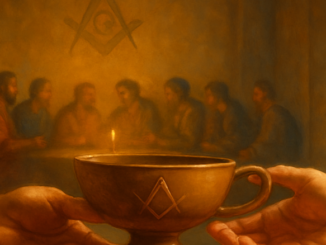
A drinking cup passed from hand to hand. A circle of men speaking about what truly moves them. In Plato’s Symposium, written around 385 BCE, guests gather to explore the nature of love. What initially appears to be a philosophical conversation about romance unfolds into a profound exploration of human connection, the longing for beauty, and the transformative power of community. For anyone familiar with both classical philosophy and Freemasonry, the parallels are striking — and deeply instructive. The Drinking Cup as a Symbol of Shared Wisdom The Symposium opens with an everyday ritual: the sharing of wine. The host, Agathon, receives his friends following his victory at a dramatic competition. The guests agree to drink moderately and instead deliver speeches in honor of Eros, the god of love. This seemingly simple scene carries deeper significance. The cup passed around the table symbolizes not mere conviviality, but the sharing of insight. Each speaker fills the evening with his own perspective, and from this multiplicity of voices a richer understanding slowly emerges. In Freemasonry, we recognize similar moments where sharing stands at the center of the experience. The lodge is a space where brethren exchange their thoughts, where every viewpoint contributes […]

Ancient Greek philosophical scene representing Plato's winged soul and Masonic symbolism
Plato – Philosophical Background

Plato’s Phaedrus: Philosophical Roots of Beauty and the Soul

What if beauty is not merely something we perceive, but a memory of something we once knew? Plato’s dialogue Phaedrus poses this question with a force that has echoed through Western philosophy for over two millennia. But where did Plato’s vision actually come from? What thinkers and traditions formed the intellectual soil from which his ideas about the soul, beauty, and divine madness grew? In this article, we explore the philosophical roots of the Phaedrus and discover why this ancient work still resonates profoundly with anyone searching for deeper truth — including those who walk the path of Freemasonry. Why Did Plato Write About the Soul and Beauty? To understand Plato’s Phaedrus, we first need to understand the world in which he thought and wrote. Fourth-century Athens was a vibrant center of intellectual debate. Sophists like Gorgias and Protagoras had called absolute truths into question. They taught that the power to persuade mattered more than truth itself. Plato saw a danger in this: if everything is relative, what remains worth striving for? His teacher Socrates had shown him that something does exist beyond mere human opinion. There are Forms — Ideas — that are eternal and unchanging. The Phaedrus became […]

Open book with mirror and rough ashlar stone symbolising Masonic self-reflection
Michel de Montaigne – Content & Summary

Montaigne on Custom: What Our Habits Reveal About Us

A spoon. A simple piece of cutlery we raise to our mouths without a second thought. But what if you grew up in a culture where eating with your hands was the only respectable way to dine? In his twenty-third essay, Michel de Montaigne invites us to pause and reflect on such everyday habits — and to discover what they reveal about the human condition. In ‘Of Custom,’ he unfolds a rich collection of examples that compels us to question everything we consider normal. The Core Idea of the Essay In this essay, Montaigne examines the vast diversity of human customs and habits — from eating practices to funeral rites, from dress codes to forms of greeting. His central thesis is as simple as it is unsettling: what we experience as natural and self-evident is almost always the product of habit and upbringing. The power of custom is so great that we are barely able to look at it critically. Montaigne draws from classical sources such as Herodotus, Pliny, and Seneca, but also from travel accounts of his own time about newly discovered peoples in the Americas and Africa. He places the customs of these distant cultures alongside those of […]

Portrait of Michel de Montaigne with classical philosophical texts and symbols
Michel de Montaigne – Philosophical Background

Montaigne on Custom: Philosophical Roots of a Timeless Essay

In 1580, Michel de Montaigne published his groundbreaking essays, among them a remarkable treatise on the power of custom and the danger of rashly changing established laws. Written against the backdrop of religious wars and political turmoil, this essay drew on a rich philosophical tradition stretching back to classical antiquity. The intellectual sources Montaigne wove together illuminate his unique position between ancient wisdom and early modern doubt — and offer enduring lessons for anyone who values tradition, reflection, and the careful balance between preservation and reform. Pyrrhonian Skepticism as Foundation Montaigne’s thinking about custom finds its deepest roots in the Greek skepticism of Pyrrho of Elis. This fourth-century BC philosopher taught that human judgments are always uncertain because our senses and reason constantly deceive us. Sextus Empiricus, who systematically recorded Pyrrhonian doctrine, emphasized that different peoples regard entirely different customs as self-evident. What was considered barbaric in Greece was honored in Persia. Montaigne owned and intensively studied a copy of Sextus Empiricus in the years leading up to the composition of his essays. The skeptical method of placing opposing customs side by side — without passing final judgment — permeates his essay on custom. He gathers examples from every corner […]

Ancient Greek symposium scene symbolizing Plato's philosophy of love
Plato – Philosophical Background

Plato’s Symposium: Philosophical Sources of the Desire for Love

You may have wondered where that deep human urge for connection truly comes from — that pull toward something greater than yourself, toward beauty, toward truth. Plato asked the same question more than two thousand years ago, and his answer in the Symposium has shaped generations of thinkers. But Plato didn’t write in a vacuum. His ideas about love were nourished by a rich philosophical tradition reaching back to the earliest Greek thinkers. Let’s explore the intellectual sources that gave shape to this masterwork — and discover why it resonates so profoundly with the Masonic tradition. The Legacy of the Presocratic Philosophers Before Plato ever put pen to paper, thinkers like Parmenides and Heraclitus had already posed fundamental questions about the nature of reality. Parmenides taught that behind the ever-changing world lies an unchanging truth. This idea echoes powerfully in Plato’s vision of love as a ladder leading upward to the eternal and immutable Beautiful. Heraclitus, by contrast, emphasized the constant flux of existence — the perpetual state of becoming. In the Symposium, both influences are clearly at work: love as a dynamic force that sets us in motion, yet directed toward something that transcends all change. Empedocles, another early […]

Voltaire and Newton symbolizing Enlightenment philosophy and Freemasonry
Symbolism & Rituals

Voltaire on Newton: Philosophical Roots of the Enlightenment

Imagine living in Paris in 1733. The salons are buzzing with new ideas, yet the Church and the State maintain a firm grip on what you are allowed to think and say. Then a book appears that turns everything upside down: Voltaire’s Philosophical Letters. His fourth letter, devoted to Isaac Newton, is far more than a tribute to a scientist. It is a philosophical manifesto that lays the foundation for an entirely new way of thinking about humanity, nature, and the cosmos — a way of thinking that resonates powerfully with the principles of Freemasonry. The Intellectual World Voltaire Wrote In To understand why Voltaire’s letter on Newton was so revolutionary, you need to step into the intellectual landscape of early eighteenth-century France. The Cartesian philosophy of René Descartes still dominated the academies. Descartes had promoted a mechanistic worldview in which nature operated like an enormous clock, driven by swirling particles in a filled universe. For the French elite, this was the officially sanctioned framework of thought. Voltaire returned from his English exile carrying a radically different message. During his stay in London, he had encountered the empirical philosophy of John Locke and the scientific revolution set in motion by […]

Ancient Greek symposium scene symbolising the Platonic ascent of love
Plato – Content & Summary

Plato’s Symposium: Love as the Path to the Higher Self

A drinking party in ancient Athens became the setting for one of the most influential conversations about love ever recorded. In Plato’s Symposium, a series of speakers each deliver a speech in praise of Eros, the god of love. What unfolds is not a single definitive answer, but a gradual ascent — from the physical to the spiritual, from the finite to the infinite. This article explores the heart of that masterwork and the symbolic depth it holds, particularly for those who walk a path of inner refinement and self-knowledge. The Setting: A Feast with Philosophical Stakes The Symposium takes place during a banquet held in honour of the poet Agathon, who has just won a prestigious prize. Rather than spend the evening in excessive drinking, the guests agree to take turns delivering a speech in praise of Eros. This is no arbitrary choice. By making love the subject of philosophical inquiry, Plato elevates a common human experience to the level of the most fundamental questions about existence. Who — or what — is love, truly? What does it seek? And where does it lead us? The speakers are carefully chosen, each representing a different perspective. Phaedrus opens with a […]

Ancient compass symbolizing Stoic philosophy and Masonic inner direction
Lucius Annaeus Seneca – Letters to Lucilius

Seneca and Stoic Philosophy: Ancient Roots of Masonic Wisdom

A compass always points north, no matter where you stand or how lost you feel. For Lucius Annaeus Seneca, philosophy served exactly this purpose — not as a collection of abstract theories, but as a reliable guide that gives the soul direction in times of uncertainty. In his sixteenth letter to Lucilius, he unfolds this idea with an urgency that still resonates today. But what intellectual traditions shaped Seneca’s conviction that philosophy is indispensable for a life well lived? And what can Freemasons recognize in this ancient quest for an inner compass? The Stoic Foundation of Seneca’s Thought Seneca wrote from the heart of Roman Stoicism, a philosophical school founded around 300 BCE by Zeno of Citium in the painted colonnade of Athens. Stoicism taught that a person can only be truly free when they master their inner disposition, regardless of external circumstances. This core idea permeates Letter XVI entirely. In essence, Seneca reaffirms what Zeno, Cleanthes, and Chrysippus had articulated centuries earlier: happiness does not lie in what happens to us, but in how we respond to it. Yet Seneca was no slavish follower. He adapted the rigorous Greek Stoa for Roman life, where political power, wealth, and social […]

Ancient Greek temple columns symbolizing Plato's philosophy and Freemasonry
Plato – Freemasonry & Connection

Plato’s Charmides and Freemasonry: What Is Temperance?

What does it truly mean to be temperate? And why does this concept seem so elusive, even to the sharpest minds? In Plato’s dialogue Charmides, Socrates and his interlocutors wrestle with precisely this question. The answer they seek turns out to be remarkably close to the heart of Masonic values: self-knowledge, inner balance, and the honest acknowledgment of what we do and do not know. What Is Temperance, Really? In the Charmides, Socrates meets the young Charmides, a man praised for both his beauty and his composed character. Socrates poses what seems like a straightforward question: what is temperance? But the answers that follow reveal just how complex this concept truly is. Charmides offers his first attempt: temperance is acting calmly and deliberately. But does that mean a quick, sharp mind is inherently intemperate? Surely not. Then perhaps temperance is a sense of modesty or shame? That, too, proves insufficient — shame can lead to both good and bad outcomes. Critias, the older cousin of Charmides, enters the conversation with a deeper suggestion: temperance is knowing yourself. This echoes the famous inscription at the Oracle of Delphi — “Know thyself.” Yet even this definition does not fully withstand the Socratic […]