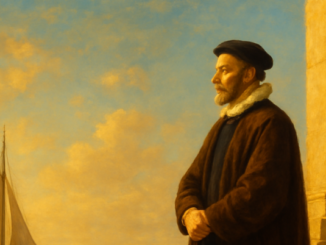
Montaigne on Fortune and Reason: When Chance Brings Wisdom
In 1572, as religious wars tore France apart, Michel de Montaigne retreated to the tower room of his château. Surrounded by books and Latin inscriptions carved into the ceiling beams, he began writing a series of essays that would permanently reshape Western thought. In the thirty-third essay of his first book, he examines a paradox that has fascinated generals and philosophers alike: how blind fortune sometimes produces exactly those outcomes that the sharpest human reason could never have devised. The Core Idea of the Essay Montaigne opens with a seemingly contradictory proposition: chance — which we typically regard as the very opposite of deliberate action — regularly produces outcomes superior to the most carefully laid plans. This is not a plea for laziness or indifference. It is an invitation to humility. Human reason, however refined, cannot possibly account for every variable in existence. Fortune, on the other hand, operates beyond the constraints of our limited knowledge. The idea draws heavily on the Stoic tradition that Montaigne loved so well. Thinkers like Seneca and Marcus Aurelius likewise acknowledged that the wise person cannot control everything. Where Montaigne differs is in his lightness of touch: he offers no rigid philosophical system, but […]