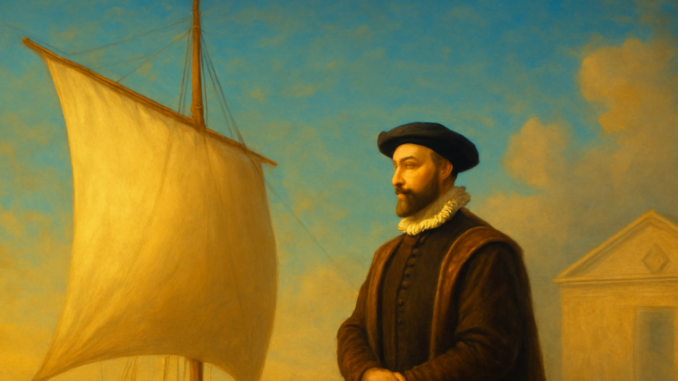
There exists an invisible force capable of moving mountains without so much as flexing a muscle. Michel de Montaigne called this force the imagination, and he devoted one of his most fascinating essays to exploring it. In ‘Of the Power of the Imagination,’ the sixteenth-century philosopher examines how our thoughts, expectations, and mental images can transform the body in ways that transcend rational understanding. This essay is far more than a historical curiosity — it touches on a question that remains profoundly relevant today: where does the mind end and the body begin?
The Core Idea: Imagination as a Creator of Reality
Montaigne opens his essay with a candid confession: he himself is particularly susceptible to the suggestive power of images and stories. When he hears about the symptoms of an illness, he sometimes feels them manifesting in his own body. This personal observation serves as the springboard for a profound exploration of a phenomenon we would now recognize as psychosomatics — though Montaigne approached it from a place of wonder rather than clinical diagnosis.
The central theme of the essay revolves around one deceptively simple question: how can mental images produce physical effects? Montaigne argues that the imagination is not a passive mirror reflecting reality, but an active force that helps shape reality itself. What we believe and expect, he suggests, has the power to mold our bodies according to the image of our thoughts.
Examples That Speak to the Imagination
True to his signature style, Montaigne supports his argument with a rich collection of anecdotes and examples drawn from classical antiquity and his own era. He references stories of men who became impotent through the sheer fear of failure — a subject he discusses with remarkable frankness for his time. The expectation of failure, he demonstrates, can become self-fulfilling through the workings of the imagination.
He also cites cases of people who fell ill because they were convinced they had been bewitched or cursed. And he explores the reverse phenomenon: healings that occurred simply because someone became convinced of their recovery. Drawing on classical authors such as Pliny the Elder, he recounts stories of pregnant women whose imagination supposedly influenced the physical appearance of their children.
The Mirror as a Symbol of Inner Power
When we consider Montaigne’s essay through a symbolic lens, a deeper layer reveals itself. The imagination functions in this work as an inner mirror — a theme that also occupies a central place within Freemasonry. The mirror does not merely show what is; it reveals what could be. It confronts us with the question of who we truly are and who we might yet become.
The imagination is not an illusion that alienates us from reality, but a creative force that expands the boundaries of the possible.
In the ritual practice of Freemasonry, the mirror plays a comparable role. The Entered Apprentice is invited to look within — not to judge, but to understand. Montaigne’s essay reminds us that this act of inner reflection is anything but passive. What we see is partly determined by what we expect to see. The imagination colors our perception and, by extension, our capacity for growth.
Skepticism and Wonder, Hand in Hand
What makes this essay particularly compelling is Montaigne’s balanced stance. He neither accepts the power of the imagination uncritically nor dismisses it as mere superstition. Instead, he observes with the curiosity of a natural philosopher and the humility of someone who understands that the human mind harbors more secrets than reason alone can fathom.
Montaigne acknowledges that many stories about the imagination may be exaggerated or entirely fabricated. Yet he refuses to deny the core of the phenomenon. He chooses a middle path — one that leaves room for wonder without abandoning critical thinking. This approach makes him a forerunner of what we would today call empirical inquiry, and it resonates deeply with the Masonic commitment to seeking truth through both reason and experience.
The Relevance for Personal Development
For anyone engaged in self-improvement and inner growth, this essay carries a powerful message. Our thoughts are not innocent bystanders to life — they are active participants. The images we cherish, the expectations we cultivate, and the stories we tell ourselves have real consequences for who we become.
The imagination can heal as well as harm. Expectations have a tendency to become self-fulfilling prophecies. Awareness of our inner images is the first step toward meaningful change. And perhaps most importantly, skepticism and openness can — and should — walk hand in hand.
In this sense, Montaigne’s essay is not a dusty historical document but a living invitation. It asks us to pause and examine the images we carry within us, and to honestly ask whether those images serve us or limit us. The power of the imagination, Montaigne teaches, is far too important to leave to chance.
Michel de Montaigne wrote his essay on the imagination more than four hundred years ago, yet its central question has lost none of its urgency. How do our thoughts influence our bodies and our lives? The answer that emerges from this work is both sobering and hopeful: the imagination is not idle daydreaming, but a formative power. Those who learn to wield this force consciously unlock a wellspring of possibilities that reaches far beyond what the eye can see. In that sense, this essay is a mirror in which every reader — and every seeker of light — can recognize themselves.
Copyright text & image: devrijmetselaar.nl
Texts are based on the ideas and content of the author of devrijmetselaar.nl, reviewed, corrected, and supplemented with the assistance of OpenAI. Images are created based on the ideas of the author of devrijmetselaar.nl using OpenAI/DALL-E.
Frequently Asked Questions
What is the main argument of Montaigne's essay 'Of the Power of the Imagination'?
Montaigne argues that imagination is not a passive mirror of reality, but an active force that can shape physical reality itself. He demonstrates through personal observation and historical examples that our thoughts, expectations, and mental images have the power to produce tangible physical effects on the body, a phenomenon we now recognize as psychosomatics.
What examples does Montaigne use to support his theory about imagination's power?
Montaigne uses various anecdotes including stories of men who became impotent due to fear of failure, cases of people who fell ill from believing they were cursed or bewitched, instances of healing through conviction of recovery, and classical accounts of pregnant women whose imagination allegedly influenced their children's physical appearance. He draws on authorities like Pliny the Elder to support these claims.
Why is Montaigne's essay still relevant to modern readers?
The essay remains profoundly relevant because it addresses a timeless question about the mind-body connection that continues to fascinate contemporary science and psychology. Montaigne's sixteenth-century exploration of how mental states produce physical effects prefigures modern understanding of psychosomatic illness and the power of expectation, making his work more than a historical curiosity but an enduring meditation on human nature.

Be the first to comment