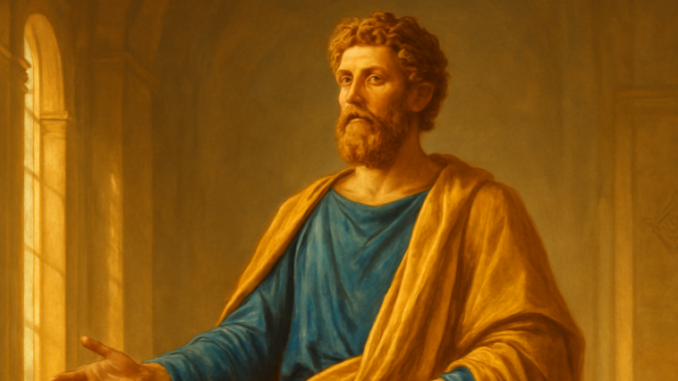
Picture a Roman emperor who, in the midst of wars and the weight of governing an empire, sits down to write about what he learned from his grandfather, his mother, his teachers — even people he only met in passing. Marcus Aurelius does not open his Meditations with pride in his own accomplishments. He opens with gratitude. That first book is a practical lesson that remains strikingly relevant today, especially for anyone seeking connection and personal growth. For Freemasons, it offers a familiar mirror: who have your teachers been, and how do you carry their wisdom forward?
The Power of Recognition
In Book I of his Meditations, Marcus Aurelius names a series of people individually. His great-grandfather taught him the value of a good education. From his mother, he received simplicity and a distaste for extravagance. His philosophy tutor Rusticus introduced him to Stoicism. Each person transmitted a specific virtue. This is not vague sentimentality — it is a concrete inventory of what he received from others.
This practice of deliberate recognition is something anyone can apply immediately. Take a moment and ask yourself: who shaped you? Perhaps a grandfather who modeled patience, a colleague who lived with integrity, or a friend who taught you how to truly listen. By actively naming these people, you make their influence visible and enduring.
Brotherhood as a School of Life
Within Freemasonry, one of the central ideas is that brethren shape one another. The lodge is not a place where wisdom flows down from on high — it is shared horizontally, between equals. The master-apprentice relationship, which traces its roots back to the operative stonemason guilds, mirrors exactly what Marcus Aurelius describes: growth through contact with others who are further along in certain areas of life.
This plays out in practice every time a lodge meets. When you sit down after a meeting with a more experienced brother to discuss an ethical dilemma, you receive more than just an opinion — you receive a piece of lived experience. Freemasonry provides a structure in which these kinds of exchanges happen naturally. The ritual creates the space, but the substance comes from person to person.
Gratitude is not a passive emotion. It is an active acknowledgment of the chain of wisdom in which you are a link.
Practical Steps to Cultivate Gratitude
Marcus Aurelius wrote his gratitude down. That was no accident. Recording what you have received makes it concrete and serves as a reminder when you inevitably forget. Here are three practical steps you can take today:
First, write down five names of people who taught you something essential. Next to each name, note one specific lesson you received from them. Second, choose one person from that list and reach out. A short message, a phone call, or a visit — tell them what you learned from them. Third, ask yourself: what lesson am I passing on to others? Become aware of your own role as a teacher, even when that role is unintentional.
These exercises are simple but powerful. They transform a vague sense of thankfulness into an active, living practice.
The Chain of Light
In Freemasonry, there is a concept of passing on light — a reference to knowledge and insight that travels from generation to generation. Marcus Aurelius embodied this idea long before modern Freemasonry existed. By honoring his teachers, he acknowledged that wisdom does not appear out of nowhere. It is transmitted, refined, and passed along.
This perspective changes how you look at your own life. You are not a solitary individual who must figure everything out alone. You stand within a tradition, a chain of people who came before you and who will come after you. That recognition brings both humility and responsibility.
From Receiving to Giving
What makes gratitude truly remarkable is that it does not end with receiving. Marcus Aurelius never wrote his Meditations for publication, yet the text survived and has influenced millions of people across the centuries. By honoring his teachers, he became a teacher to future generations himself.
For Freemasons, this is a core principle. The brotherhood does not only ask for self-improvement — it asks for contribution to the whole. Every lesson you receive, you can pass on in your own way. Not by preaching, but by living. By showing patience when things are difficult. By choosing honesty when it would be easier to deceive. By being present when someone needs you.
A Daily Practice of Awareness
Practicing gratitude is not a one-time event. It is an attitude you can cultivate every single day. Begin each morning with the question: what did I receive yesterday? End each evening with the question: what did I pass on today? These questions are not meant for self-judgment — they are meant to build awareness.
Marcus Aurelius maintained this reflective practice in the middle of an extraordinarily demanding life as emperor. If he could find the time, so can you. It does not need to take an hour. Five minutes at the start or end of your day is enough to anchor this awareness into your routine.
The lesson Marcus Aurelius offers in Book I of his Meditations is clear and practical: recognize who shaped you, be aware of the chain in which you stand, and actively contribute to what you pass forward. For Freemasons, this is not a new idea — it is a confirmation of what the brotherhood has practiced for centuries. Gratitude is not a sentimental gesture. It is the foundation of genuine connection. Start today. Write those names down. Make that call. Become conscious of the chain in which you are a living link.
Copyright text & image: devrijmetselaar.nl
Texts are based on the ideas and content of the author of devrijmetselaar.nl, reviewed, corrected, and supplemented with the assistance of OpenAI. Images are created based on the ideas of the author of devrijmetselaar.nl using OpenAI/DALL-E.
Frequently Asked Questions
How does Marcus Aurelius's practice of gratitude relate to Freemasonry?
Marcus Aurelius opens his Meditations by deliberately recognizing specific people who shaped him and the virtues they taught him. This practice directly mirrors Freemasonry's core principle that brethren shape one another through horizontal sharing of wisdom. Both emphasize that growth comes through acknowledging and learning from others, and that the lodge serves as a space where these meaningful exchanges naturally occur between equals.
What is the practical difference between vague sentimentality and Marcus Aurelius's approach to gratitude?
Marcus Aurelius does not express gratitude vaguely—he creates a concrete inventory of specific people and the specific virtues each one taught him. For example, he names his mother's lesson about simplicity and his tutor Rusticus's introduction to Stoicism. This deliberate recognition makes the influence visible and enduring, rather than leaving gratitude as a passive emotion.
Why did Marcus Aurelius write down his gratitude, and how can Freemasons apply this practice?
Writing gratitude down was not accidental for Marcus Aurelius—it makes what you have received concrete and serves as a reminder. Freemasons can apply this same practice by deliberately naming the people who shaped them and recording the specific wisdom or virtues they received. This transforms gratitude from a passive emotion into an active acknowledgment of the chain of wisdom in which each person is a link.


Be the first to comment