City bus passengers symbolizing shared community trust and vulnerability
Freemasonry & Society

Building Safety Together: A Masonic Reflection on Trust

It’s early morning. On a city bus in Rotterdam, people sit side by side: a mother with her child, a student wearing headphones, an elderly man carrying groceries. They share the same space, the same journey, the same vulnerability. Then shots ring out. Today’s news confronts us with a question Freemasons have been asking for centuries: how do we build a world in which strangers can trust one another? The Bus as a Mirror of Society A city bus is more than a means of transportation. It is one of the few remaining places where every layer of society literally sits side by side. Rich and poor, young and old, people from vastly different backgrounds and life stories. No one chooses their fellow passengers, yet everyone shares a common destination. This forced proximity makes the bus a powerful symbol of what society truly is: a collection of individuals who depend on each other’s goodwill. When violence invades that shared space, it doesn’t only harm those directly involved. It shakes the very foundation of communal life — the basic trust that we can be safe among strangers. For Freemasons, this trust is never taken for granted. It is a structure that […]
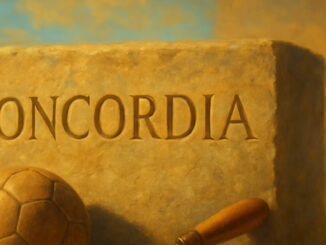

Symbolic representation of unity and harmony in Freemasonry and community
Freemasonry & Society

Concordia: How Unity Shapes Both Sports Clubs and Freemasonry

In the heart of the Dutch province of Friesland, the name Concordia Sneek carries a meaning that reaches far beyond sports. The Latin word concordia — meaning unity or harmony — reflects a deeply rooted human aspiration: the desire for connection in a fragmented world. This desire takes many forms, from local sports clubs to centuries-old brotherhoods. When we examine these seemingly different worlds through the lens of community and civic engagement, surprising parallels emerge. The World of Concordia Sneek: Local Bonds in Action For anyone who grew up in or around the Frisian town of Sneek, the name Concordia is inseparable from community life. For generations, it has stood for togetherness on the sports field, for the thrill of competition and the warmth of the clubhouse afterward. It is a world where people know each other by name, where volunteers tirelessly mark the pitch lines, and where children learn their first lessons in teamwork. This local community functions as a micro-society. There are written and unwritten rules, traditions passed down from generation to generation, and a shared purpose that binds individuals together. The player who dedicates his best years to the club, the parent who stands on the sideline […]

Famous Freemasons gathered in a lodge symbolizing brotherhood and unity
Personal Development & Leadership

Famous Freemasons: What Their Brotherhood Can Teach You

When you read about famous Freemasons throughout history, one thing immediately stands out: they came from vastly different backgrounds, professions, and belief systems. Yet they found common ground in the lodge. Composers sat alongside generals, writers beside statesmen. What united them? And more importantly, what can you take from their example and apply to your own life? This article isn’t about name-dropping — it’s about the practical power of brotherhood these men shared. What Truly Connected Famous Freemasons Think about the eighteenth and nineteenth centuries — an era of revolutions, radical new ideas, and deep social tensions. Yet during this very period, composers, scientists, politicians, and artists gathered together in lodges. Not to advance each other’s careers or build networks in the modern sense of the word. They came together because they believed in something greater: the possibility of growing as human beings, alongside others walking the same path. Historical records show that musicians like Mozart and Haydn were active members of Viennese lodges. Enlightenment thinkers such as Voltaire were initiated shortly before their deaths. And across the Atlantic, Freemasons played a significant role in shaping a young republic. What made this remarkable? Within the lodge, social distinctions fell away. […]

Rescue workers digging through rubble symbolizing brotherhood and hope
Freemasonry & Society

Rescue Under Rubble: What Rescue Workers Teach Us About Hope

For two days, a baby lay buried beneath the rubble of collapsed buildings in Venezuela. Rescue workers dug tirelessly, hour after hour, until their hands finally reached a living child. This story touches something universal within us — the refusal to give up when a human life is at stake. It also resonates deeply with the principles of Freemasonry: the power of organized cooperation, perseverance, and practical charity in action. Chaos and Determination After earthquakes struck Venezuela, rescue workers faced an overwhelming challenge. Mountains of debris, unstable structures, limited resources, and the terrible knowledge that time was working against them. Yet they refused to stop. Every stone they removed, every inch of progress, was an act of hope. For two days, teams worked in rotating shifts — coordinated, disciplined, and driven — until the impossible became possible. Moments like these confront us with fundamental questions. What drives people to keep going when the odds seem insurmountable? How do you organize hope in a situation of utter chaos? And perhaps more importantly: what can we, in our everyday lives, learn from this kind of determination? Practical Brotherhood in Action Freemasonry speaks often of brotherhood, but that word only gains true meaning […]

Fallen tree on a road symbolizing unexpected tragedy and community response
Freemasonry & Society

When Fate Strikes: Brotherhood in Times of Crisis

Picture an ordinary weekday. You’re driving along a familiar road. The sun is shining, the trees are swaying gently in the breeze. Then, in a fraction of a second, everything changes. A tree falls, and the life you knew ceases to exist. Tragedy struck recently when a woman lost her life after a tree crashed onto her car. Emergency services were overwhelmed with calls, alerts flooded in from every direction. In moments of chaos and grief like these, an ancient question rises to the surface: what truly binds us together as a community when fate strikes without mercy? The Fragility of Existence Perhaps you’ve felt it yourself — that sudden, jarring moment when you realize just how fragile life really is. You walk down the street, you breathe, you make plans for tomorrow, and somewhere deep down you know that none of it is guaranteed. Freemasonry has always acknowledged this vulnerability. Not as something to fear, but as something to embrace. Throughout the symbolism of the lodge, you find constant reminders of human mortality: the skull, the hourglass, the extinguished candle. These symbols aren’t meant to darken your mood. They’re meant to wake you up. To remind you that every […]

Masonic square and compasses symbolizing foresight and community preparedness
Freemasonry & Society

Gas Shortages and Foresight: Masonic Lessons on Preparedness

Reports of dwindling gas reserves ahead of winter raise a fundamental question that reaches far beyond the energy sector. What does it truly mean for a society to look ahead? And what can we learn from a tradition that has placed preparation, responsibility, and community at its core for centuries? Freemasonry offers a surprisingly relevant perspective on this very modern challenge. The Art of Anticipation When a major energy authority publicly voices concerns about winter gas supplies, it touches on something deeper than statistics and cubic meters. It speaks to our collective ability — or inability — to look beyond the present moment and anticipate what lies ahead. This art of foresight has been a central theme in philosophical traditions for centuries, and Freemasonry is no exception. In the symbolic language of Freemasonry, the Master Builder plays a crucial role. A Master Builder does not simply start stacking stones. He first draws a plan, calculates the required materials, and accounts for the changing seasons. The great cathedrals of old were not built in a single year — they were raised over generations. That long-term vision, the capacity to labor on something whose fruits will only ripen far in the future, […]

Stone fortress wall symbolizing Masonic steadfastness and inner strength
Freemasonry & Connection

When Your Walls Fall: Montaigne and the Art of Steadfastness

Imagine you’re under pressure. Maybe it’s a conflict at work, a fracture in a friendship, or a season when everything seems to be crumbling around you. You feel besieged — surrounded by circumstances you can’t fully control. In moments like these, a single question emerges: how do you stand your ground without losing yourself? Michel de Montaigne, the sixteenth-century philosopher, wrestled with exactly this question in his short but powerful essay on the commander of a besieged fortress. His reflections offer surprisingly practical guidance for anyone seeking steadfastness and human connection in times of adversity. The Heart of the Dilemma In this essay, Montaigne describes a situation that appears military on the surface but is universal at its core. A commander of a besieged fortress must choose: when do you negotiate, when do you hold firm, and when do you yield? It’s not just about walls of stone — it’s about the inner walls we build when we feel threatened. The philosopher asks what honor, courage, and wisdom truly mean when the pressure becomes unbearable. You may never have commanded a garrison, but you’ve almost certainly faced your own version of this dilemma. Think of a moment when you had […]

Vrijmetselarij - Bekende vrijmetselaars: laat je inspireren door grootse denkers en doeners
History

Famous Freemasons: Inspiring Thinkers and Leaders Through History

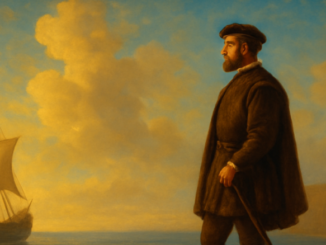
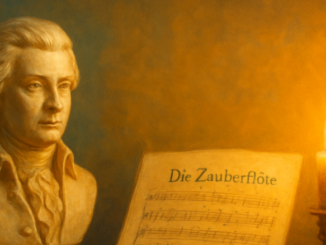
What do Mozart, Churchill, and George Washington have in common? They were all Freemasons. Though they lived in different eras and moved through vastly different worlds, they shared a common pursuit: becoming a better version of themselves while making a positive impact on the world around them. In this deep dive, we explore the lives and ideals of famous Freemasons — men who didn’t just make history, but who actively shaped their own character along the way. What Makes Someone a Famous Freemason? Not every lodge member becomes famous — and that’s perfectly fine. Freemasonry is fundamentally about inner growth, not outward glory. Yet some individuals have managed to walk both paths. They became role models because they translated the core values of Freemasonry — honesty, self-reflection, and service to others — into concrete action. You can see it in their work, their conduct, and their lasting impact on society. Wolfgang Amadeus Mozart — Musical Genius and Symbolic Builder Mozart was initiated into a lodge in Vienna at a young age. His compositions are filled with references to Masonic symbolism, most notably in his celebrated opera The Magic Flute. In this work, he wove in themes of enlightenment, purification, and […]

Vrijmetselarij - Vrijmetselarij en Maatschappij – Persoonlijke Groei met Impact op de Wereld om je Heen
Freemasonry & Society

Freemasonry and Society – Personal Growth With Real-World Impact

Freemasonry is often described as an inner journey — a path toward self-knowledge, moral depth, and ethical living. But that journey doesn’t end at the lodge door. In fact, that’s where it truly begins. Freemasonry and society are inseparably linked, because what good is personal growth if it has no positive influence on the world around you? Society as the Real Proving Ground Freemasonry is not an escape from reality. It’s a training ground for reality. Inside the lodge, you work on yourself: you learn to think symbolically, examine your own behavior, and sharpen your moral compass. Then you take those insights with you — into your workplace, your family, your friendships, and your community. Precisely because Freemasons engage in regular, structured self-reflection rooted in ethics and ideals, they tend to be conscious and engaged citizens. They continually ask themselves: How can I contribute? What can I improve? From Self-Awareness to Social Impact Freemasonry and civic engagement go hand in hand. The underlying idea is simple: by improving yourself, you also improve the world. This philosophy plays out in tangible ways: Freemasons frequently dedicate their time to community organizations, from local neighborhood initiatives to international humanitarian projects. Many lodges support […]

Freemason checking a thoughtful text message from a Brother at dawn
Personal Development & Leadership

Brotherhood Beyond the Screen: The Power of a Simple Message

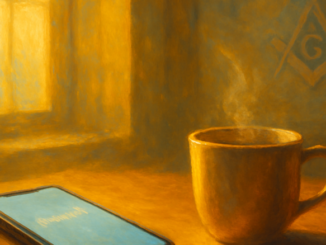
It’s quarter to seven in the morning. A middle-aged man stands at the kitchen counter, coffee in one hand, phone in the other. The screen lights up. A short message from a Brother: “Thinking of you tonight. Good luck with that meeting.” Three sentences. No secret code, no hidden agenda. Just one person thinking of another. And yet, something deeper lives beneath this ordinary gesture. The Phone as an Extension of the Temple When we think of Freemasonry, we tend to picture grand lodge buildings, centuries-old rituals, and symbolic working tools. But what happens when the lodge doors close and Brothers return to their everyday lives? The connection doesn’t stop at the threshold. In our age, it also expresses itself through the most commonplace communication tool we know: the short text message on our phones. It’s tempting to dismiss such a message as trivial — a fleeting notification among dozens of others. But look a little deeper. When a Brother sends another Brother a word of encouragement before a difficult conversation, a congratulation on a personal milestone, or simply asks how he’s doing, that is not idle communication. It is an echo of what happens inside the lodge, translated into […]

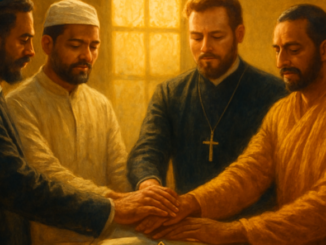
Freemasonry symbols representing unity and respect among world religions
Religion

Freemasonry and Religion: A Bridge of Connection and Respect

Freemasonry is an ancient fraternity built on universal values such as truth, brotherhood, and morality. While it is not a religion, it maintains a unique and fascinating relationship with religions around the world. How does Freemasonry position itself in relation to faith traditions, and what makes its spiritual vision so distinctive? Freemasonry: Not a Religion, But Deeply Spiritual One of the most common misconceptions about Freemasonry is that it is a religion. It is not. Freemasonry does not require its members to hold any specific religious belief. What it does ask is that members believe in a Supreme Being — often referred to as the “Grand Architect of the Universe” — a universal concept of a higher power that transcends any single faith tradition. This openness allows people from all religious backgrounds to participate and find common ground. The rituals and symbols used in Freemasonry are not religious in the traditional sense. Instead, they serve as tools for self-reflection and moral growth. This approach provides a shared foundation for members who may hold vastly different religious convictions, creating a space where spiritual exploration is encouraged without imposing any doctrine. How Freemasonry Relates to World Religions Respect for Diversity: Freemasonry recognizes […]