Crested mangabey symbolizing the Masonic journey of departure and return
Personal Development & Leadership

What an Escaped Monkey Teaches Us About Personal Growth

For a full month, a crested mangabey roamed the Dutch countryside, far from his familiar enclosure at the Beekse Bergen safari park. Eventually, he was captured and returned to his group. This small news item from July 2026 raises a timeless question that lies at the very heart of Freemasonry: what happens to our personality when we break free from the familiar — and what changes when we return? The Primal Urge to Escape In the eighteenth century, when modern Freemasonry was establishing its first lodges, the understanding of human nature was deeply intertwined with ideas about freedom and constraint. Philosophers of that era wrestled with a fundamental question: is man by nature a social creature, or does he possess a deep-rooted longing to escape every structure that binds him? The English thinkers who laid the foundations of the lodge were well acquainted with their contemporaries’ writings on the social contract. They understood that brotherhood can only exist when individuals voluntarily choose to be part of something greater than themselves. The crested mangabey who spent a month wandering through the Brabant countryside acted on an impulse we all recognize. There is something in every living being that wants to cross […]
Rough ashlar stone on a builder's workbench symbolizing Masonic self-knowledge
Personal Development & Leadership

Departure as Self-Knowledge: What Breaking a Contract Reveals

In the seventeenth century, breaking an oath was considered one of the gravest transgressions a person could commit. Guild brothers swore loyalty to their craft, knights to their lord, and apprentices to their master. Today, we read about a footballer having his contract terminated and departing with immediate effect. Reactions range from understanding to outrage. But those who look deeper will recognize an ancient question lurking beneath the surface: what does a rupture reveal about the character of the one who breaks away? The Historical Weight of the Broken Word In the medieval guilds, a contract was far more than a business arrangement. It was a sacred promise, sealed through a ritual in which the apprentice placed his hand upon the tools of his trade or a holy object. Historians of the craft guilds describe how a departing member didn’t just lose his profession — he lost his name and reputation. The collective had invested in his formation, and a premature departure was seen as theft of that shared capital. Yet even those strict times recognized exceptions. When a journeyman discovered that his calling lay elsewhere, when a master proved unjust, or when circumstances changed fundamentally, there existed rituals of […]

Rough ashlar stone symbolizing personal growth in Freemasonry
Personal Development & Leadership

Bologna and the Wounded Soul: On Rage and Personality

When dozens of officers are injured during protests, when streets burn with collective outrage, an uncomfortable question arises: what happens to the human personality when a sense of justice tips over into destruction? The events in Bologna following a fatal arrest compel us not only to reflect on social tensions, but also on the fragile architecture of our own character. The Paradox of Righteous Anger Here lies a paradox that has fascinated philosophers throughout the ages: the person who rises up for justice can, in that very pursuit, become unjust. Those who protest against violence can themselves become violent. Those who cry out for humanity can lose their own humanity in the heat of the moment. This is not a judgment on protesters or authorities — it is an observation about the human condition itself. The ancient Greeks had a concept called thumos, roughly translated as “spiritedness” or “wrath.” Plato placed this element of the soul between reason and appetite — a force that could be both constructive and destructive. Thumos could drive someone to courageous deeds, but also to blind fury. The question was never whether this force existed, but how it could be mastered. Personality as Architecture In […]

A single candle flame glowing in darkness symbolizing Masonic inner light
Spiritual Traditions

Violence Against Journalists: Keeping Light in Dark Times

The brutal murder of a local sports journalist in Italy strikes a deep chord. Here was someone who told stories about sport and community — silenced by unimaginable violence. News like this raises questions that go far beyond the headline: how do we preserve our inner light when the world reveals its darkest side? This article offers practical guidance from a spiritual perspective rooted in Masonic tradition. When the Incomprehensible Crosses Your Path You read the news, scroll past it, but something lingers. An uneasy feeling in your stomach. A question you don’t ask aloud: what am I supposed to do with this? It’s a familiar moment for anyone who tries to live consciously. Senseless violence confronts us with the limits of our understanding and our power. In Freemasonry, this moment is never avoided. It sits at the very heart of the Craft: how do you relate to darkness while striving toward light? The tradition teaches that spiritual growth doesn’t happen in spite of life’s dark aspects — it happens through our conscious engagement with them. This is not abstract theory. It is a daily practice. The First Response: Acknowledgment Without Judgment What do you actually do when such news […]

Medieval blacksmith forging iron symbolizing Masonic character building
Personal Development & Leadership

Working in the Heat: What Ancient Crafts Teach About Character

The summer of 2026 is shattering temperature records, yet something remarkable is happening on the work floor: heat waves are barely causing worker absenteeism. Where does this resilience come from? The answer reaches far beyond modern air conditioning — it stretches back to an ancient tradition of laboring under extreme conditions. The cathedral builders, the blacksmiths at their glowing forges, and the stonemasons under the scorching sun understood something we seem to have forgotten. Their secret was hidden in the deliberate formation of character. The Blacksmith and His Inner Fire In the Middle Ages, the smithy was one of the most brutally hot workplaces anyone could enter. Temperatures soared to unbearable heights while the craftsman spent hours forcing iron into shape. Yet blacksmiths rarely abandoned their duties. The reason was not merely physical toughness — it was something far deeper: the cultivation of an inner disposition that could withstand external hardship. The smith learned not only to master metal, but above all, to master himself. This tradition of inner formation found its way into the lodges of operative masons. Before an apprentice was allowed to begin complex stonecutting techniques, he first had to prove he could persevere. It was not […]

Racing cars on a circuit symbolizing Masonic brotherhood through adversity
Personal Development & Leadership

Falling and Rising: What Racing Teaches About True Brotherhood

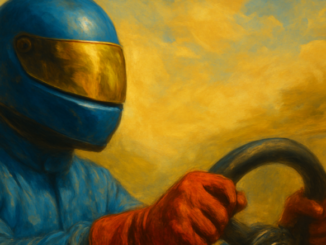
Picture two drivers on the same circuit, facing the same conditions, carrying the same ambitions. One pulls a flawless line through the corners of the Ardennes; the other ends up in the barriers. It’s an image you might recognize from your own life — moments where you perform brilliantly while someone beside you stumbles, or the other way around. What do you do then? How do you handle that inequality of fortune? And what does your response reveal about the nature of true connection? The Circuit as a Mirror of Life A racetrack is more than asphalt and curves. It’s a concentrated version of existence itself — risk, choices, timing, and the eternal dance between control and surrender. During a training session in the Belgian Ardennes this week, two experienced drivers had entirely different experiences. One drove smoothly and with composure; the other lost grip and crashed. Neither could have predicted the outcome beforehand. You probably know that feeling. You’re in the same meeting as a colleague, following the same training, facing the same challenge. Yet things go differently for you than for the person beside you. Sometimes you’re the one who falls. Sometimes you’re the one who keeps going. […]

A moving train symbolizing the shared human journey and Masonic brotherhood
Personal Development & Leadership

When Connection Breaks: Lessons From a Train Incident

Picture this: you’re standing in a moving train, tensions rising, words turning into weapons, and before you know it, the unthinkable happens. A railway employee falls from the train during an altercation with a passenger. The news from Germany is shocking — but it also raises deeper questions. How can an everyday encounter spiral so far out of control? And what does it tell us about the fragile threads that bind us together as human beings? The Thin Line Between Order and Chaos You’ve probably experienced it yourself: standing in a crowded train, someone pushes, another grumbles, and you feel the atmosphere shift. Most of the time, it ends with an angry glance or a muttered remark. But sometimes — very rarely — it escalates. The incident involving a German railway worker who fell from a moving train during a dispute with a passenger shows just how quickly the thin line between order and chaos can vanish. It reminds us that every encounter, no matter how fleeting, carries the potential to heal or to wound. In Freemasonry, we often speak of building a better world, stone by stone. But what happens when those stones collide? What happens when the structure […]

Racing car speeding through a curve symbolizing Masonic character under pressure
Personal Development & Leadership

Speed and Character: Masonic Lessons from the Racetrack

There is something deeply paradoxical about speed. A driver tearing through the corners of Spa-Francorchamps at blistering pace seems to have no room for reflection. And yet, in that fraction of a second — the split-second decision to brake or commit — the entire personality of the driver is laid bare. A top result in free practice is a sporting achievement, certainly. But what does speed actually reveal about character? And what might a Freemason learn from someone who repeatedly puts himself to the ultimate test? Personality Reveals Itself Under Pressure Let us begin with a provocative thought: perhaps personality is not what someone claims to be, but what someone does when the pressure is at its peak. A racing car cutting through the Ardennes forest at three hundred kilometers per hour offers no time for masks. There is no room for façade. The driver, in that moment, is entirely himself — fear, courage, calculation, instinct. Everything that makes a person who they are concentrates itself into an action lasting mere seconds. This raises a compelling question: is personality a verb rather than a noun? Not a fixed quality, but something that continuously reshapes itself in confrontation with the world? […]

Broken golden chain symbolizing Freemasonry brotherhood and ethical labor
Personal Development & Leadership

The Broken Chain: Luxury, Labor, and True Brotherhood

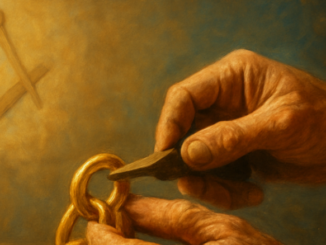
A golden chain around the neck. A handbag of supple leather. A timepiece built to last generations. These objects radiate craftsmanship, tradition, and a connection to the artisan who created them. But what if that chain doesn’t only link gold — what if it also conceals a shadow chain of exploitation? Recent police raids on renowned Italian fashion houses force us to confront a fundamental question: what does true connection actually mean? The Jewel and Its Shadow Every piece of jewelry tells two stories. The first is visible: the sparkle, the design, the status it projects. The second story lies hidden in the journey the object took before it reached the display window. In workshops — sometimes far removed from the gleaming boutiques — hands bend over workbenches. Those hands have names, faces, families. The question raised by the Italian investigations is simple yet deeply unsettling: are those hands treated as brothers, or as tools? In Freemasonry, the chain is a powerful symbol. Brothers stand in a circle, hands clasped together, as a sign of unbreakable unity. That chain is not a hierarchy, not a production line. It is a horizontal bond of equality. Every link carries equal weight. When […]

Freemasons in lodge discussing different perspectives in brotherhood
Personal Development & Leadership

Two Opinions, One Goal: Psychology and Brotherhood

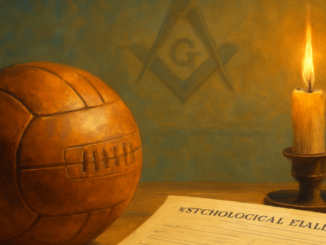
In 1958, a sports psychologist advised the Brazilian national football coach to leave two young players at home before the World Cup. Those players would go on to become legends. The advice was ignored, Brazil won the tournament, and the psychologist faded into the shadows of history. Yet hidden within this story lies a deeper truth about brotherhood, trust, and the courage to offer a dissenting opinion — even when the world seems to prove you wrong. The Outsider’s Perspective Imagine you are a scientist — a pioneer in the field of sports psychology at a time when the discipline is barely taken seriously. You are tasked with evaluating the mental readiness of a group of footballers. After careful analysis, you arrive at a conclusion that runs directly counter to what everyone wants to hear. Two young players, however talented, show signs of emotional instability that, according to your tests, make them unfit for the pressure of a World Cup. You know your recommendation will be unpopular. You know your reputation is on the line. And yet you speak what you believe to be true. This is the outsider’s perspective: someone who is not part of the group, who has […]

Firefighter helmet and Masonic square and compasses symbolizing brotherhood
Personal Development & Leadership

Arsonist in Uniform: When Brotherhood Fails

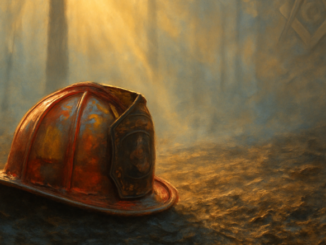
The siren wails through the night. A firefighter pulls on his jacket, jumps on the engine, and races toward a blaze he himself has set. Six arrests later — including one of their own — France is left in shock. This isn’t just a story about fire. It’s a story about trust going up in smoke, and about the urgent question of how we protect brotherhood when someone undermines it from within. The Shock of Betrayal From Within When we learn that someone who swore an oath to protect has become the very source of destruction, it shakes our faith in institutions to the core. For most people, the fire service is a symbol of unconditional service. These are the men and women who run into burning buildings while everyone else runs out. They form a tightly knit community — a brotherhood in every sense of the word. And yet, one of them betrayed the trust of colleagues and citizens in the most fundamental way imaginable. Events like these don’t just affect the people directly involved. They sow doubt in every community built on mutual loyalty. How can any group function when the bonds of trust can no longer be […]

Rough ashlar stone symbolising character building in Freemasonry
Personal Development & Leadership

Trust and Character: What a Lawsuit Teaches Us

You may have seen it in the news: a major technology company is taking former employees to court for allegedly stealing trade secrets and handing them to a competitor. On the surface, it sounds like a corporate dispute with little relevance to everyday life. But look a little closer, and this story touches on something universal — the question of who you are when no one is watching, the weight of your word, and the building blocks of your character. When Trust Is Broken Imagine spending years working on complex projects, gaining access to your employer’s most sensitive information, and then one day deciding to move on. What do you take with you? Your experience, your skills, your memories — certainly. But where is the line between what belongs to you and what was entrusted to you? That question now sits at the heart of a lawsuit captivating the technology world. The case is not merely about the legal definitions of intellectual property. It is about the invisible agreements we make when someone places their trust in us. It is about whether our word still means something after we close a door behind us. The Rough Ashlar as a Mirror […]

Polar bear resting peacefully, symbolizing devotion, care, and Masonic reflection
History

Farewell to a Polar Bear: Lessons in Care and Devotion

Imagine a creature that spent 36 years surrounded by dedicated caretakers, that amazed generations of visitors, and that ultimately departed this world in peace. The passing of the oldest polar bear ever held in captivity stirs something deep within us — perhaps because her remarkably long life raises questions we rarely ask ourselves. What does it truly mean to live well? And what do we leave behind when our time comes? A Life Beyond the Statistics Polar bears in captivity typically live to around twenty years of age. The fact that this particular bear reached thirty-six makes her story extraordinary. Her keepers spoke of her not merely as an animal of unusual longevity but as a creature of remarkable character. She was headstrong, recognized familiar faces, and seemed to form bonds — in her own way — with the people around her. Perhaps you recognize the feeling that arises when you hear about an animal that has lived so far beyond expectations. A kind of respect emerges, an acknowledgment that this being experienced something most of its kind never will. And it is precisely that recognition that invites deeper reflection on what a long life actually means. Time as a […]

A rough ashlar stone beside Masonic square and compasses symbolizing humility
Personal Development & Leadership

Humility as Strength: What Freemasons Know About Success

In the eighteenth century, when the first Grand Lodges in Europe opened their doors, an unwritten rule applied that remains relevant to this day: whoever enters leaves their social rank at the door. Whether you were a baker or a banker, your standing in the lodge was determined by your inner growth — not by your external achievements. This principle sheds a surprising light on a notion that still circulates in our culture: the belief that everything one touches turns to gold. The Alchemical Myth Debunked The expression “everything I touch turns to gold” traces back to King Midas from Greek mythology. His story ends tragically: he nearly starves to death because even his food transforms into gold. From the earliest philosophical traditions, thinkers understood the Midas myth as a warning against hubris — the dangerous overconfidence that arises when success goes to one’s head. Freemasonry, with its roots in the medieval stonemason guilds, understood this lesson centuries ago. The craftsmen who built the great cathedrals of Europe knew that every masterpiece was the result of countless failed attempts, broken stones, and endless patience. Their wisdom: true craftsmanship reveals itself not in perfection, but in the ability to learn from […]

Rough ashlar stone beside a calm candle symbolizing Masonic inner strength
Personal Development & Leadership

Artificial Energy vs Inner Strength: A Masonic Perspective

As more people report heart palpitations, insomnia, and anxiety from stimulant supplements, a fundamental question emerges: where do we truly draw our energy from? The modern individual reaches for pills and powders to get through the day. The Freemason seeks something different — a force that doesn’t come from a bottle, but from within. Two paths, two views of human nature, yet both share the same search for vitality and meaning. The Modern Quest for Energy In a world that never stops, many feel the pressure to be perpetually switched on. Employers demand alertness, social media calls for constant engagement, and the body is simply expected to keep up. Stimulant supplements in powder or capsule form promise an easy fix: focus without effort, energy without rest. But reality tells a different story. Users increasingly report nervousness, a racing heart, or a restless mind. The promise of artificial energy carries a shadow side that no label warns you about. These complaints are not merely physical. They touch on something deeper: the feeling of losing control over one’s own body. When someone becomes dependent on external substances to function, they gradually lose contact with their natural rhythms. The question then shifts from […]

A level and whistle symbolizing impartiality in Freemasonry and refereeing
Philosophy & Ethics

Impartiality Under Pressure: The Referee and the Freemason

When the head of refereeing for an international football federation declares that even the most powerful figures have no influence over his decisions, it touches on a universal theme: the question of impartiality. How do you preserve your integrity when external pressure mounts? This challenge plays out not only on the football pitch but also in the quiet of the Masonic lodge, where brethren practice the art of judgment without prejudice. The World of the Referee In international football, the referee stands as a central symbol of fairness. Every decision is analyzed, criticized, and sometimes regarded with suspicion. When a top official must publicly declare that there has been no outside influence — not even from the highest authority — it reveals something about the world he operates in. It is a world of constant scrutiny, where every whistle can be interpreted as evidence of bias. The referee moves through an arena where millions of eyes are watching. His neutrality is not merely expected — it is demanded. And yet, he is human, carrying his own experiences, preferences, and blind spots. The art lies not in denying this humanity but in acknowledging it and rising above it. The referee must […]

Rough ashlar stone being shaped symbolizing Masonic character building
Personal Development & Leadership

Personality and Choices: What a Verdict Teaches About Character

Sometimes you come across a news story that stays with you all day — not because of the shocking details, but because of the questions it raises. A court hands down a nine-year prison sentence, and you find yourself wondering: how does a person end up there? What happens within someone’s personality that leads them down a path ending in a courtroom? These questions go far beyond the legal realm. They touch on something fundamental about who we are and who we have the potential to become. The Rough Stone Within Each of Us In Freemasonry, we work with the symbol of the rough ashlar — the unfinished stone. This is no arbitrary metaphor. The rough stone represents the human being as they enter the world: full of potential, but also full of imperfections, sharp edges, and hidden cracks. The Freemason’s task is to work that stone — to chisel, smooth, and polish it. Not to achieve perfection, because that is an illusion, but to become more conscious of your own shape and the choices you make. When you read about a tragic event where lives have been permanently altered by violence, an uncomfortable question surfaces: what happened to the […]

Masonic level and plumb line symbolizing balance and self-reflection
Symbolism & Rituals

When Conviction Capsizes: The Hidden Risk of Certainty

Here is a paradox worth contemplating: the more firmly convinced you are of something, the greater the danger of capsizing. Not figuratively — literally. The word “convinced” traces back to nautical language, where it described a ship carrying so much weight on one side that it listed dangerously, no longer responded to the helm, and risked rolling over at the first strong gust of wind. Certainty as a risk factor. Firmness as a source of instability. Isn’t that one of the most uncomfortable truths language has been quietly trying to tell us all along? Certainty Makes You Lose the Helm Let’s take that paradox seriously. In everyday speech, we say “I’m convinced” as though it’s a virtue — a sign of resolve and strength. We admire people who stand firm, who don’t budge an inch. But an old-time sailor would have raised an eyebrow at such admiration for imbalance. To him, being “over-convinced” wasn’t a badge of honor — it was a diagnosis. A ship that had shifted all its weight to one side was a ship in distress. The rudder rendered useless, the crew at the mercy of forces they could no longer steer against. The shift in meaning […]

Symbolic representation of agnosticism and Freemasonry paths converging
Freemasonry & Society

Agnosticism and Freemasonry: Two Paths Toward the Unknowable

Agnosticism is often understood as a position of not-knowing — a philosophical stance that acknowledges certain questions about existence may be unanswerable. Freemasonry, on the other hand, is sometimes perceived as a fraternity defined by its rituals and symbols. But what happens when we place these two worlds side by side? Both share a fundamental recognition: that the human mind cannot fathom everything, and that within that very recognition lies a particular kind of wisdom. In this article, we explore how the agnostic outlook and Masonic philosophy mirror and enrich each other. The Agnostic Perspective: Living With Uncertainty The agnostic does not claim to know whether a higher power exists. This is not a weakness or a lack of conviction — it is a deliberate intellectual position. The term was coined in the nineteenth century by the British biologist Thomas Henry Huxley, who wanted to express that certain metaphysical questions lie beyond the reach of human knowledge. The agnostic stance demands humility: the ability to say “I don’t know” without abandoning the search for meaning. In modern society, agnosticism is frequently confused with indifference or atheism. Nothing could be further from the truth. Where the atheist asserts that no god […]

A rough ashlar stone symbolizing personal growth through crisis in Freemasonry
Personal Development & Leadership

What Our Crises Reveal About Who We Truly Are

Sometimes a person disappears — not just physically, but inwardly. A young athlete withdraws from the world, overwhelmed by pressure and expectations. When he returns, he speaks openly about regret and self-awareness. This kind of story raises questions that reach far deeper than the headline itself. What does a moment of crisis actually reveal about who we truly are? And how does a Freemason view such turning points in a human life? Why Do People Sometimes Vanish From the Stage? The outside world tends to see a disappearance as either a mystery or a scandal. A news article presents the facts, quotes bystanders, and searches for explanations. But anyone who looks at the story from the inside recognizes something different: a human being who could no longer function under the weight of the expectations placed upon him. Pressure, perfectionism, fear of failure — these are universal themes that can touch any one of us. For the outsider, such a disappearance is a news item. For the Freemason, it is a mirror. In the lodge, we learn that a person is never a finished work, and that every crisis contains the possibility of growth. Disappearing is not an ending — sometimes […]