
In 1958, a sports psychologist advised the Brazilian national football coach to leave two young players at home before the World Cup. Those players would go on to become legends. The advice was ignored, Brazil won the tournament, and the psychologist faded into the shadows of history. Yet hidden within this story lies a deeper truth about brotherhood, trust, and the courage to offer a dissenting opinion — even when the world seems to prove you wrong.
The Outsider’s Perspective
Imagine you are a scientist — a pioneer in the field of sports psychology at a time when the discipline is barely taken seriously. You are tasked with evaluating the mental readiness of a group of footballers. After careful analysis, you arrive at a conclusion that runs directly counter to what everyone wants to hear. Two young players, however talented, show signs of emotional instability that, according to your tests, make them unfit for the pressure of a World Cup.
You know your recommendation will be unpopular. You know your reputation is on the line. And yet you speak what you believe to be true. This is the outsider’s perspective: someone who is not part of the group, who has no emotional attachment to the players, and who renders judgment purely on the basis of professional expertise. The outsider sees what insiders cannot — or will not — see.
The Perspective of Brotherhood
The coach faced a choice. On one hand, the scientific assessment of an expert. On the other, his own observations, his intuition, and above all, the trust he had built with his players. During weeks of intensive training, he had seen something no test could measure: the spark in those young men’s eyes, their hunger, their ability to rise to the occasion under pressure.
This is the perspective of brotherhood. Not the blind loyalty that dismisses all criticism, but the deep knowing that emerges when people work together, suffer together, and strive toward a common goal. The coach knew his players not merely as athletes, but as human beings. He had witnessed their fears and their resilience. He trusted what he had seen with his own eyes.
True brotherhood does not mean always thinking alike. It means respecting each other’s judgment, even when you choose a different path.
Where Both Perspectives Meet
It would be easy to frame this story as a triumph of intuition over science, or of brotherhood over cold analysis. But reality is more nuanced. The psychologist did not act out of malice. He applied the best methods available to him and reached an honest conclusion. The fact that his conclusion turned out to be wrong in hindsight does not render his effort worthless.
In Freemasonry, we know this tension all too well. The lodge is a space where brethren come together with different backgrounds, different insights, and different convictions. One brother approaches a question analytically; another relies on intuition. One trusts tradition; another champions innovation. Brotherhood does not mean these differences disappear. It means we learn to value them as complementary forces.
The outsider brings objectivity and critical distance. The insider brings context, experience, and relational trust. Together, they form a more complete picture than either could achieve alone.
The Courage to Dissent
What makes this story truly remarkable is that both parties showed courage. The psychologist dared to give unpopular advice, knowing he would face criticism. The coach dared to set that advice aside, knowing he would bear full responsibility if things went wrong. Neither blindly followed the expectations of the outside world.
In the lodge, this kind of courage is cherished. A brother who voices a dissenting opinion during discussion is not seen as a troublemaker, but as someone contributing to the collective search for truth. Masonic ritual teaches us to listen before we judge and to weigh before we decide. The gavel of the Worshipful Master does not call for silence to stifle criticism — it creates space for reflection.
What This Story Teaches Us
History vindicated the coach. The young players became the stars of the tournament. But that does not mean the psychologist’s advice was useless. It forced the coach to test his own convictions, to choose more deliberately, and to take conscious responsibility for his decision. Without that dissenting voice, the choice might have been made far more carelessly.
Brotherhood, this story reminds us, is not an echo chamber where everyone simply affirms one another. It is a space where different voices are heard, where disagreement is welcomed as a gift, and where the final decision is richer because it has been tested against multiple perspectives. The psychologist and the coach were not adversaries. They were, each in their own way, servants of the same goal: to bring out the best in the team.
A Mirror for Our Time
In a world that grows ever more polarized — where dissenting opinions are often ridiculed or ignored — this story offers a valuable lesson. The question is not who was right. The question is how we handle difference. Can we, like brethren in a lodge, learn to respect the outsider without denying our own experience? Can we receive advice with an open heart, even when we ultimately choose not to follow it?
The story of the psychologist and the star footballers is more than a footnote in sports history. It is a meditation on the nature of brotherhood — not as uniform agreement, but as respectful dialogue between different truths. In the lodge, on the football pitch, and in life, we are at our best when we have the courage both to speak and to listen.
Copyright text & image: devrijmetselaar.nl
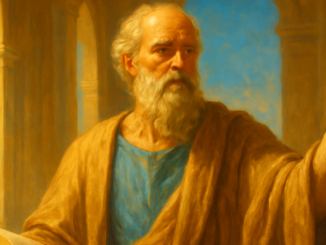
Texts are based on the ideas and content of the author of devrijmetselaar.nl, reviewed, corrected, and supplemented with the assistance of OpenAI. Images are created based on the ideas of the author of devrijmetselaar.nl using OpenAI/DALL-E.
Frequently Asked Questions
What is the main lesson about Freemasonry in this article?
The article illustrates that Freemasonry thrives when brethren respect diverse perspectives and expertise while maintaining trust and brotherhood. It demonstrates that lodges benefit from both analytical thinking and intuitive wisdom, and that true brotherhood means valuing different viewpoints even when pursuing a common goal.
How does Freemasonry handle disagreements among members?
Freemasonry creates a space where brethren with different backgrounds, insights, and convictions can respectfully engage with one another. The fraternity recognizes that disagreement does not undermine brotherhood; rather, it strengthens the lodge when members listen to each other's perspectives and work toward shared principles.
Can Freemasonry balance both scientific thinking and traditional wisdom?
Yes, Freemasonry embraces both analytical approaches and intuitive understanding as valuable contributions to the fraternity. The article shows that the most effective decisions come when lodges honor expert analysis while also drawing upon the lived experience and human wisdom built through time together as brothers.
What does 'true brotherhood' mean in Freemasonry according to this article?
True brotherhood in Freemasonry means respecting each member's judgment and expertise while choosing your own path forward. It is not blind loyalty, but rather a deep trust built through working together, supporting one another, and striving toward a common goal while honoring the dignity of differing opinions.
Why is the outsider's perspective important in a Masonic lodge?
The outsider's perspective, based on professional expertise and objective analysis, helps the lodge see what members immersed in daily operations might miss. Freemasonry values this balance because it prevents groupthink and ensures that decisions are informed by both careful analysis and the experiential knowledge of the brotherhood.



Be the first to comment