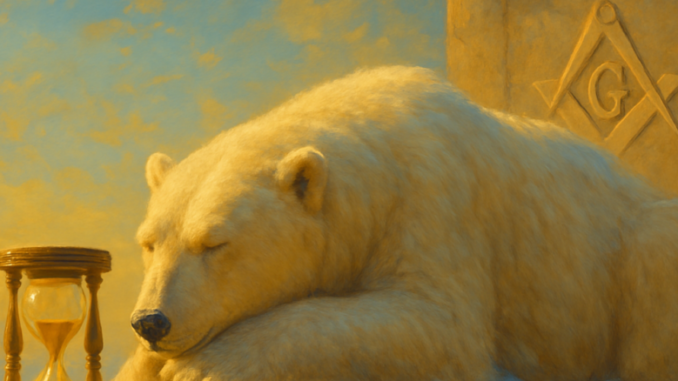
Imagine a creature that spent 36 years surrounded by dedicated caretakers, that amazed generations of visitors, and that ultimately departed this world in peace. The passing of the oldest polar bear ever held in captivity stirs something deep within us — perhaps because her remarkably long life raises questions we rarely ask ourselves. What does it truly mean to live well? And what do we leave behind when our time comes?
A Life Beyond the Statistics
Polar bears in captivity typically live to around twenty years of age. The fact that this particular bear reached thirty-six makes her story extraordinary. Her keepers spoke of her not merely as an animal of unusual longevity but as a creature of remarkable character. She was headstrong, recognized familiar faces, and seemed to form bonds — in her own way — with the people around her.
Perhaps you recognize the feeling that arises when you hear about an animal that has lived so far beyond expectations. A kind of respect emerges, an acknowledgment that this being experienced something most of its kind never will. And it is precisely that recognition that invites deeper reflection on what a long life actually means.
Time as a Teacher
In Freemasonry, the relationship with time plays a central role. Since the earliest lodges of the seventeenth and eighteenth centuries, Brethren have reflected on the finite nature of existence — not to cultivate melancholy, but to sharpen awareness. The hourglass, a classic Masonic symbol, reminds us that every grain of sand counts. This awareness does not make life heavier; it makes life richer.
The story of this polar bear aligns with that principle in a surprisingly powerful way. Her caretakers gave her not only food and shelter but also attention, affection, and structure. Day after day, year after year. That kind of sustained devotion over such a long period is rare. It demands patience, consistency, and a form of love that does not depend on quick results.
The Art of Caring
Freemasons often speak of building — building oneself and building a better society. That construction does not happen through grand, spectacular gestures but through small, daily acts. A kind word. A helping hand. Attention given to those who need it most. This is exactly what the polar bear’s keepers did for decades.
True greatness reveals itself not in what we possess, but in how we care for what has been entrusted to us.
This thought touches on an ancient wisdom found across many traditions. Throughout the history of Freemasonry, there is a recurring emphasis on responsibility — not as a burden, but as a privilege. Whoever has something or someone in their care is given the opportunity to grow in devotion and compassion.
The Legacy We Leave
Now that the polar bear has passed, a question remains: what was her legacy? She brought joy to countless visitors. She taught children about nature and its fragility. And she gave her caretakers the opportunity to practice their craft — and exercise their hearts — for years on end.
In Freemasonry, it is often said that a Brother continues his work in the hearts of those he has touched. Perhaps the same can be said for this polar bear. Her physical presence is gone, but the memories, the lessons, and the sense of wonder she inspired live on.
Historical Echoes of Care and Devotion
When we look back through history, we see that humanity has always maintained a special relationship with animals. In the eighteenth century, when modern Freemasonry was taking shape, zoological gardens were still rare and often reserved for kings and nobles. Yet even then, there was a fascinating awareness that the care of animals represented a form of civilization. It was not merely about possession — it was about responsibility.
That thread runs directly into the present day. Caring for a polar bear over the course of thirty-six years is, in a sense, a continuation of that ancient ideal. It is an acknowledgment that we, as human beings, have a duty toward the world around us — not because we expect something in return, but because the act of caring itself refines us.
An Invitation to Reflect
Perhaps the story of this polar bear invites you to pause and consider your own life. Not to judge whether you have achieved enough, but to feel what truly holds value. The moments of connection. The small gestures of care. The willingness to show up for another — whether that other is a person or an animal.
Which relationships have you nurtured for years? Where do you show daily devotion, even when no one is watching? What do you wish to leave behind for those who come after you?
These are questions without definitive answers. But the very act of asking them opens doors. In Freemasonry, we call this working on the rough stone — the ongoing process of self-reflection and improvement. And sometimes the inspiration for that work comes from the most unexpected places, like the life story of a polar bear who was granted thirty-six remarkable years.
The farewell to this extraordinary polar bear reminds us that a long life gains its meaning through the care that surrounds it. Her keepers spent years building something that cannot be captured in numbers: a bond of devotion and respect. In that sense, her story is universal. It invites you to consider what you are building, day by day, and what will endure when your own time comes.
Copyright text & image: devrijmetselaar.nl
Texts are based on the ideas and content of the author of devrijmetselaar.nl, reviewed, corrected, and supplemented with the assistance of OpenAI. Images are created based on the ideas of the author of devrijmetselaar.nl using OpenAI/DALL-E.
Frequently Asked Questions
What is the connection between this polar bear story and Freemasonry?
The article draws a parallel between the bear's caretakers' devotion and Masonic principles of care and responsibility. Freemasonry teaches that true greatness lies not in possessions but in how we care for those entrusted to us, which the keepers demonstrated through 36 years of consistent, loving attention. This reflects the Masonic emphasis on building character through small, daily acts of compassion rather than grand gestures.
What does the hourglass symbol mean in Freemasonry?
The hourglass is a classic Masonic symbol that reminds us of the finite nature of existence and that every moment counts. Rather than creating sadness, this awareness makes life richer by encouraging us to use our time meaningfully and with greater intentionality. It teaches Brethren to appreciate the present and live with purpose.
How does Freemasonry define responsibility and care?
In Freemasonry, responsibility is viewed not as a burden but as a privilege and opportunity to grow in devotion and compassion. Whether caring for an animal, serving others, or building oneself, Masons understand that true greatness comes through consistent, daily acts of service and attention to those in their care. This philosophy emphasizes that we are stewards of what has been entrusted to us.
What can we learn from the polar bear's long life about living well?
The bear's 36-year life demonstrates that living well means being surrounded by devoted care, forming meaningful bonds, and having a positive impact on others. Her story illustrates the Masonic principle that a life of purpose—whether for the caretaker or the cared-for—is built through patience, consistency, and love expressed over time. Legacy is not measured in years alone, but in the joy and lessons we leave behind.



Be the first to comment