
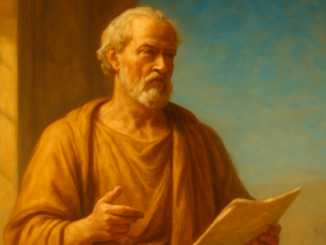
Imagine waking up in the morning with the day stretching out before you like an unfamiliar road. You have decisions to make, people to meet, perhaps conflicts to resolve. What helps you choose the right direction? For Lucius Annaeus Seneca, the answer was clear: philosophy. In his sixteenth letter to Lucilius, he describes how philosophy is not merely an intellectual pursuit but a practical guide for daily life. This idea resonates deeply with Freemasonry, where brethren likewise seek an inner compass that connects them to themselves and to others.
Philosophy as a Daily Companion
Seneca writes to his friend Lucilius that philosophy is not a luxury reserved for quiet moments — it is a necessity for every single day. He compares it to a helmsman guiding his ship through rough waters. Without knowledge of the stars and currents, you are at the mercy of the waves. The same holds true for life: without philosophical reflection, you are swept along by impulses, emotions, and external pressures.
This idea can be applied directly to your own life. Instead of reaching for your phone first thing in the morning, begin with a moment of silence. Ask yourself: what do I truly want to accomplish today? Which values do I want to embody? This simple practice of self-reflection is precisely what Seneca means by philosophy as a guide. It is not about reading thick academic volumes — it is about consciously shaping your choices.
Freemasonry and the Search for Inner Light
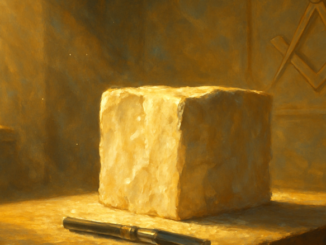
Within Freemasonry, this same idea plays a central role. The fraternity invites its members to work continuously on themselves — to shape the rough ashlar into a more perfect form. This is not a one-time act but a lifelong process of self-reflection and improvement. Like Seneca’s philosophy, Freemasonry is not a theoretical system but a practical path.
The square and compasses, well-known working tools within the tradition, symbolize this endeavor. The compasses teach you to set boundaries on your own behavior, while the square invites you to act with integrity and fairness. When you apply these instruments not literally but figuratively in your daily life, every decision becomes an exercise in virtue.
Philosophy and Freemasonry share the same core principle: the goal is not to accumulate knowledge but to transform insight into meaningful action.
Connection Through Shared Values
In Letter XVI, Seneca emphasizes that philosophy does not only help you know yourself — it also helps you engage more wisely with others. Those who understand their own weaknesses judge the faults of others less harshly. Those who recognize what is truly valuable are not distracted by superficial conflicts. This insight forms the foundation of genuine connection.
In Freemasonry, brotherhood is not seen as a casual friendship but as a deeply rooted commitment. Brethren come together in the lodge not only to observe rituals but to support one another in their personal growth. The lodge functions as a training ground for life beyond the temple walls. What you learn there about respect, listening, and collaboration, you carry into your family, your work, and your community.
Practical Steps You Can Take Today
How can you apply the wisdom of Seneca and the principles of Freemasonry in your own life starting today? Here are some concrete actions to consider:
Set aside five minutes each morning for quiet reflection. Ask yourself which virtue you want to practice that day. Choose one moment during the day to consciously listen to someone else — without interrupting or judging. In the evening, briefly write down what you have learned about yourself. Where did you act in alignment with your values, and where did you fall short? Find a conversation partner with whom you can regularly discuss life’s deeper questions, much as Seneca did with Lucilius.
These steps may seem simple, but they require discipline. Seneca warns that most people can spend their entire lives without ever truly philosophizing. They are lived rather than living. Freemasonry offers a structure to help avoid this trap: regular meetings, rituals that invite contemplation, and brethren who hold you accountable for your own growth.
The Power of Repetition
Both Seneca and the Masonic tradition emphasize that wisdom does not come from a single flash of insight but through continual repetition. The Stoic philosopher wrote letters daily to organize and deepen his thoughts. Freemasons return again and again to the same rituals — not because they expect something new, but because each repetition can unlock a new layer of understanding.
You can apply this principle outside of these traditions as well. Read a wise text not just once, but return to it month after month. You will notice that at different moments in your life, you discover different meanings. What once seemed abstract suddenly becomes concrete when you encounter a comparable situation. This is how philosophy becomes what Seneca intended: a living guide that grows alongside you.
Seneca’s Letter XVI reminds us that philosophy is not a dusty academic subject but a daily tool for anyone who wants to live consciously. Freemasonry offers a parallel message: work on yourself, connect with others on the basis of shared values, and let your actions be guided by inner light. You can begin today — not through grand transformations, but through small, deliberate choices. The journey of a thousand miles begins with a single step, and philosophy points the way.
Copyright text & image: devrijmetselaar.nl
Texts are based on the ideas and content of the author of devrijmetselaar.nl, reviewed, corrected, and supplemented with the assistance of OpenAI. Images are created based on the ideas of the author of devrijmetselaar.nl using OpenAI/DALL-E.
Frequently Asked Questions
How does Seneca's philosophy relate to Freemasonry?
Both Seneca's philosophy and Freemasonry share the core principle that the goal is not to accumulate knowledge but to transform insight into meaningful action. Like Seneca's view of philosophy as a practical daily guide, Freemasonry invites members to continuously work on themselves through self-reflection and improvement, shaping the rough ashlar into a more perfect form throughout their lifetime.
What does Seneca mean by philosophy as a daily companion?
Seneca describes philosophy not as a luxury for quiet moments but as a necessity for every day. He compares it to a helmsman guiding a ship through rough waters. Without philosophical reflection to guide you, you are swept along by impulses, emotions, and external pressures. The practice involves beginning each day with self-reflection, asking yourself what you truly want to accomplish and which values you want to embody.
What do the square and compasses symbolize in Freemasonry?
The square and compasses are working tools that symbolize the Masonic endeavor of self-improvement. The compasses teach you to set boundaries on your own behavior, while the square invites you to act with integrity and fairness. When applied figuratively in daily life, these instruments transform every decision into an exercise in virtue.

Be the first to comment