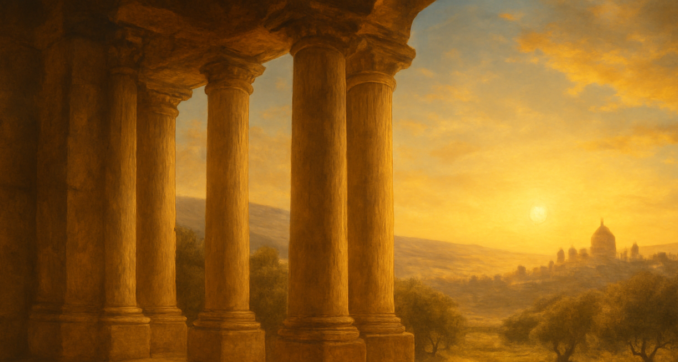
Somewhere in the first century of the Common Era, a Greek-speaking physician sat down to undertake a remarkable task. He examined eyewitness accounts, gathered sources, and composed an orderly narrative about an itinerant teacher from Galilee. The work we know as the Gospel of Luke would go on to inspire readers for centuries with its emphasis on compassion, healing, and the search for what has been lost. For Freemasons, this ancient text opens a window onto timeless symbols that still resonate powerfully in the work of the lodge today.
The Historical Context of a Physician-Writer
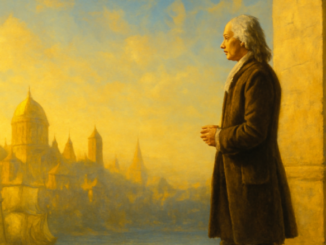
Tradition identifies the author of this Gospel as a learned physician who traveled with the Apostle Paul. What stands out about his work is its scholarly approach: in his prologue, he speaks of careful investigation and the orderly arrangement of facts. This methodical character was unusual in the religious literature of the time. The writer addressed his work to a certain Theophilus — a name that literally means “friend of God.” Some scholars suspect this was not a specific individual but a stand-in for every seeker of divine wisdom.
This historical context reveals something fundamental: even in antiquity, there existed a creative tension between faith and reason, between mystery and inquiry. The author of Luke sought to unite both. He did not demand blind belief but offered a reliable account upon which the reader could build personal conviction. Centuries later, this same attitude would echo through Freemasonry, where the search for truth has always remained a personal, rational, and yet deeply spiritual endeavor.
The Light That Shines in Darkness
One of the most distinctive passages in Luke is the Song of Zechariah, which speaks of “the rising light from on high” that appears “to shine on those who sit in darkness and in the shadow of death.” This light metaphor runs like a golden thread through the entire text. The light described here is not merely physical — it symbolizes insight, truth, and moral illumination.
The light has come to guide our feet into the way of peace.
For Freemasons, the symbolism of light is of foundational importance. Initiation is traditionally described as a transition from darkness to light, from ignorance to knowledge. The candidate enters the lodge blindfolded and later receives the light as a sign of new awareness. Luke provides an ancient parallel for this experience: the story of people sitting in darkness, awaiting illumination. This is not passive waiting, however, but an active readiness to receive what is to come.
The Parables of the Lost
Luke is, above all others, the Gospel of the lost. Three celebrated parables appear exclusively in this text: the Lost Coin, the Lost Sheep, and the Prodigal Son. Each tells of something precious that has gone missing, is searched for, and is ultimately found. The joy upon recovery far exceeds the value of the object itself.
These parables carry a symbolism that connects directly to the Masonic concept of the inner journey. The Prodigal Son leaves his father’s house, squanders his inheritance, and returns broken. Yet he is not condemned — he is welcomed. The story illustrates that wandering and error are part of the human condition. The return to one’s origin, to the core of who one truly is, constitutes the real fulfillment.
Each parable illuminates a different facet of this search. The Lost Coin represents the quest for what has become hidden within ourselves — talents buried, truths forgotten. The Lost Sheep speaks to the value of every individual within the community, the principle that no single soul is expendable. And the Prodigal Son embodies the possibility of moral resurrection, the conviction that it is never too late to turn back toward the light.
Mercy as a Building Stone
Another defining theme in Luke is its emphasis on mercy toward the outcast. Tax collectors, sinners, the poor, and women are given prominent roles throughout the narrative. The Parable of the Good Samaritan, also unique to this Gospel, poses the question of who truly qualifies as a neighbor. The answer lies not in lineage or religion but in the willingness to act when a fellow human being suffers.
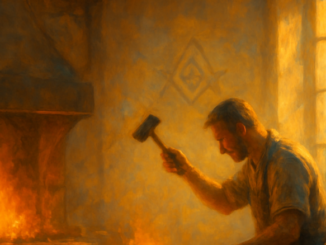
This principle of active compassion resonates deeply with Masonic values. The Brotherhood makes no distinction based on faith, social standing, or background. What matters is character — the willingness to build a better world through action. The Samaritan in the story was an outsider, someone despised by the established order. Yet he demonstrated true virtue. Luke holds up a mirror to his readers: judge not by appearances, but by deeds.
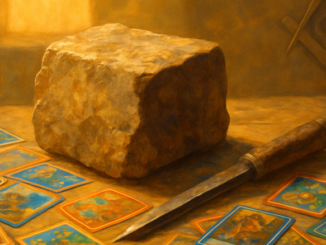
In Freemasonry, charity is not merely a duty but a defining characteristic of the Craft. The rough ashlar is shaped not only through knowledge and self-discipline but through compassionate engagement with the world. Luke’s emphasis on mercy as a cornerstone of moral life aligns naturally with the Masonic aspiration to place the welfare of others at the center of one’s conduct.
From Antiquity to the Lodge: A Timeless Lesson
When we read the Gospel of Luke today through a Masonic lens, we discover not dogmatic prescriptions but invitations to reflection. The physician-writer of the first century did not seek to persuade through authority but through carefully presented narratives that touch the heart. This is precisely what symbolism does: it speaks not to the intellect alone but to the whole person.
The parallels with lodge work are abundant. The search for light, the appreciation for every individual soul, the emphasis on deeds over words, the welcoming of the returning seeker — all of these find expression in Luke’s ancient text. The Gospel offers no blueprint for a perfect life, but it provides a compass for the inner journey. The symbols Luke employed are nearly two thousand years old, and yet they have lost none of their power. Perhaps that is the greatest lesson of all: true wisdom does not age.
The Gospel of Luke invites us to see the past not as a closed chapter but as a living wellspring of insight. Its light symbolism, its parables of the lost, and its call to mercy still speak to those willing to listen. For Freemasons, this ancient text offers a mirror in which they can recognize their own quest: the journey from darkness to light, from being lost to finding home, from passivity to active love of neighbor. In that recognition lies the enduring power of symbols that transcend time — and the quiet assurance that the search for truth, pursued with sincerity and an open heart, is always worth the undertaking.
Copyright text & image: devrijmetselaar.nl
Texts are based on the ideas and content of the author of devrijmetselaar.nl, reviewed, corrected, and supplemented with the assistance of OpenAI. Images are created based on the ideas of the author of devrijmetselaar.nl using OpenAI/DALL-E.
Frequently Asked Questions
What is the connection between the Gospel of Luke and Freemasonry?
The Gospel of Luke emphasizes symbolism—particularly light, healing, and the search for what is lost—that resonates deeply with Masonic teachings and ritual. Luke's methodical approach to truth-seeking through both reason and faith mirrors the Masonic principle that members should pursue knowledge through personal inquiry and spiritual exploration. The ancient text provides a historical parallel to how Freemasons understand the journey from darkness to enlightenment.
Why is the symbolism of light important in Freemasonry?
Light represents the transition from ignorance to knowledge and is central to Masonic initiation ceremonies. Luke's Gospel reinforces this universal symbol through passages about illumination guiding those in darkness toward truth and moral understanding. For Freemasons, light symbolizes the inner awakening and personal enlightenment that comes through study, reflection, and spiritual growth within the lodge.
How does Luke's authorship style relate to Masonic values?
Luke, as a physician and scholar, employed careful investigation and orderly reasoning rather than demanding blind faith—an approach that aligns perfectly with Freemasonry's emphasis on rational inquiry alongside spiritual development. His prologue reveals a commitment to verified facts and personal conviction, which reflects the Masonic belief that truth should be pursued through individual reason and experience. This creative balance between faith and reason has been a cornerstone of Masonic philosophy for centuries.
What do the Parables of the Lost teach us in a Masonic context?
Luke's parables of the Lost Coin, Lost Sheep, and Prodigal Son illustrate the joy and value of recovery and redemption, concepts that resonate with Masonic ideals of self-improvement and renewal. These stories emphasize that every person has worth and that the search for what is lost—whether wisdom, virtue, or spiritual truth—is a sacred undertaking. For Freemasons, these parables reinforce the lodge's mission to help members discover and recover their highest potential.
Who was Theophilus, and why does he matter to understanding Luke's message?
Theophilus, whose name means "friend of God," was either a specific patron or a symbolic representation of any sincere seeker of divine wisdom. Whether historical or metaphorical, Theophilus represents the universal reader—the person who approaches truth with an open mind and genuine desire for understanding. This inclusive vision aligns with Freemasonry's welcome of all sincere seekers who wish to explore the deeper meaning of life and brotherhood.

Be the first to comment