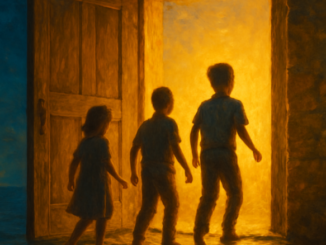
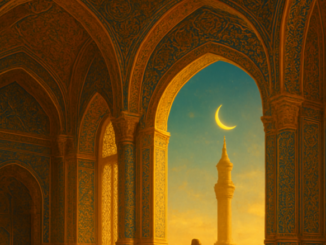
An open door at night symbolizing spiritual passage and Masonic transition
Spiritual Traditions

The Door That Opens: Rescue as a Spiritual Act

A school principal in Nepal opened the doors of his school in the middle of the night as floodwaters began to rise. Nearly nine hundred students found safety on the upper floors. It was a simple act — a door swinging open — yet within that movement lies something far deeper than practical emergency response. What does it mean to open a door in a moment of crisis? And what does this gesture reveal about spirituality in the most concrete sense of the word? The Door as a Symbol of Transition A door is never merely a physical object. In virtually every spiritual tradition, a door marks a transition — a threshold between two worlds. Think of the temple gates in ancient mystery schools, or the threshold the initiate crosses to enter a new life. Plato, in his Allegory of the Cave, described how the philosopher leaves the cave and steps toward the light. That exit is a door — an opening into a different level of reality. In Freemasonry, the door plays a strikingly similar role. The candidate seeking admission to the lodge knocks upon a closed door and waits until entry is granted. It is a ritual moment […]
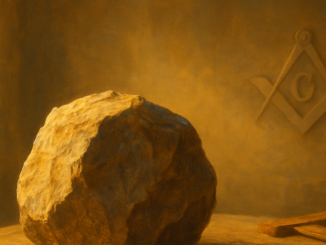
Open Quran alongside Masonic rough ashlar symbolizing repentance and transformation
Islam

Repentance in the Quran: Inner Transformation and Freemasonry

What does it truly mean to repent? Not as a fleeting pang of guilt, but as a profound inner turning that transforms your entire being? The ninth surah of the Quran, known as At-Tawbah — The Repentance — confronts the reader with precisely this question. Its themes of self-examination, broken promises, and the courageous return to one’s deepest values carry striking parallels with the spiritual journey at the heart of Freemasonry. Why Does This Surah Break With Tradition? The very first thing that sets At-Tawbah apart is its opening — or rather, the absence of one. It is the only surah in the entire Quran that does not begin with the customary invocation, “In the name of God, the Most Gracious, the Most Merciful.” Islamic scholars have debated this omission for centuries. Some believe the gravity of its content warrants the departure. Others view it as a continuation of the preceding surah. Whatever the explanation, the effect is immediate: the reader senses that something weighty is about to be discussed, something that tolerates no gentle preamble. The surah was revealed during a turbulent period, shortly before the death of the Prophet Muhammad. It addresses loyalty, broken covenants, and the possibility […]

Ancient desert battlefield symbolizing the inner struggle in Freemasonry
Islam

The Spoils of War: From Badr to the Inner Struggle

In the year 624 CE, a decisive battle took place in the desert near Badr. A small band of followers of the Prophet Muhammad faced a far superior force from Mecca. The unexpected victory that followed — and especially the division of the spoils — gave rise to fundamental questions about possession, community, and surrender. The eighth chapter of the Quran, known as Al-Anfal or The Spoils of War, addresses this event. But beneath the historical narrative lies a deeper layer: a spiritual teaching about releasing the ego and placing trust in a higher order. For Freemasons, who likewise pursue moral growth and fraternal unity, this ancient text offers remarkably familiar ground. The Historical Context of Badr The Battle of Badr was far more than a military confrontation. It was a turning point in early Islamic history — a moment when a persecuted community stood its ground against its oppressors for the first time. The young Muslim community in Medina numbered only around three hundred men, while the Meccan army fielded nearly a thousand soldiers. The victory was experienced by the faithful as divine assistance, as proof that devotion to a higher ideal is stronger than numerical superiority. After the […]

Freemason lodge interior symbolizing spiritual homecoming and commitment
Spiritual Traditions

Coming Home as a Spiritual Choice: Lessons from Racing

In a world that glorifies mobility — where success is measured by the next step, the bigger opportunity, or the better offer — the declaration “this is my home” sounds almost rebellious. When a world champion in motorsport chooses to stay where he was shaped, it touches something far deeper than sporting sentiment. It touches an ancient spiritual principle that Freemasons have understood for centuries: the power of conscious commitment. The Historical Roots of Loyalty to a Community The history of Western spirituality is filled with examples of individuals who deliberately chose commitment over unlimited freedom. In the medieval building lodges — the direct predecessors of modern Freemasonry — loyalty to one’s workshop was not a limitation but a prerequisite for growth. A journeyman who drifted from lodge to lodge without ever settling lacked the depth that only sustained commitment can provide. The great cathedrals of Europe were not built by roaming adventurers but by generations of craftsmen who dedicated their entire lives to a single structure. Johann Wolfgang von Goethe, himself a Freemason and author of the celebrated novel about Wilhelm Meister’s formative years, described this principle with eloquence. For Goethe, true freedom was not the ability to go […]

Mountain ridge symbolizing liminal space between light and shadow in Freemasonry
Islam

The Heights: Liminal Space as a Spiritual Lesson

Imagine standing on a mountain ridge. On one side, a vast open valley stretches before you; on the other, a deep abyss drops away into shadow. You find yourself precisely on the boundary — not here, not there, but somewhere in between. That feeling of in-betweenness, of occupying a space where you haven’t yet arrived but can no longer turn back, is exactly what the seventh surah of the Quran speaks about. And it is an image that carries deep resonance within the traditions of Freemasonry. What Does This Surah Tell Us? The seventh surah of the Quran, known in Arabic as one of the longer chapters, bears a name that refers to elevated places or heights — Al-A’raf. Its central image is a liminal zone: a place where souls reside who do not immediately belong among the blessed, yet are not counted among those who have gone astray. These people on the heights can see both sides. They observe, they wait, and they hope. The surah also recounts the stories of prophets who called their communities toward righteousness. You read about Adam, Noah, and Moses — about the eternal struggle between truth and self-deception. But what makes this text […]

Ancient book open to a page with symbols of light, unity, and Freemasonry
Islam

The Cattle Surah: Spiritual Lessons for Freemasons

In the quiet of an evening lodge meeting, a brother leafs through an ancient book. His fingers come to rest on a passage about cattle — about herds finding their way through the twilight. Something stirs in him: not the cattle themselves, but the metaphor of seeking, of being guided toward light. That moment of recognition bridges ancient wisdom with the path every Freemason walks. What Does the Sixth Surah Tell Us? The sixth surah of the Quran, known as Al-An’am or The Cattle, is one of the longer chapters and belongs to the Meccan revelations. It addresses the most fundamental questions of existence: Who created the heavens and the earth? What does it truly mean to believe? And how does the seeker distinguish truth from error? While the title refers to passages in which cattle are mentioned as part of creation, the heart of the surah reaches far deeper — toward the oneness of the divine and humanity’s responsibility to recognize that unity. Ibrahim (Abraham), the patriarch who holds a central place in Jewish, Christian, and Islamic traditions alike, appears in this surah as a seeker of truth. He gazes at the stars, the moon, and the sun, and […]

A symbolic table set for a shared meal representing Masonic and spiritual brotherhood
Islam

The Table as Spiritual Symbol: Surah Al-Ma’ida & Brotherhood

There is a curious paradox at the heart of human spirituality: the deepest truths are often expressed through the most ordinary images. A table set for a meal. Bread being broken. Guests gathering around a shared dish. In the fifth surah of the Quran — known as Al-Ma’ida, or The Table — we encounter just such a deceptively simple image, one that reveals extraordinary layers of meaning upon closer examination. For Freemasons, who are intimately familiar with ritual meals and the symbolism of fraternal communion, this ancient text opens a fascinating dialogue about what it truly means to sit together at one table. The Heavenly Table: More Than a Miracle Story Surah Al-Ma’ida takes its name from a remarkable narrative in which the followers of Jesus — known as Isa in the Islamic tradition — ask for a table to descend from heaven as a sign of divine grace. At first glance, the request seems strange. Why would people who had already witnessed miracles need yet another sign? The text itself suggests that the table is not so much intended as proof, but as confirmation of a covenant. The heavenly feast becomes a space where the earthly and the transcendent […]

Open Quran with Masonic square and compasses symbolizing spiritual unity
Islam

Women in the Quran: Spiritual Lessons for Freemasons

What if justice doesn’t begin with laws, but with the way we care for the most vulnerable in our communities? The fourth surah of the Quran, titled An-Nisa (The Women), opens with a call that cuts far deeper than legal prescriptions alone. It speaks to the very heart of what it means to be a responsible human being — a theme that echoes powerfully through the traditions of Freemasonry. A Paradox of Protection and Equality At first glance, Surah An-Nisa appears to be primarily concerned with practical matters — inheritance law, marriage, and family relations. Yet beneath these provisions lies a far deeper layer of meaning. The text opens by reminding us that all human beings originate from a single soul. This is no legal formality. It is a fundamental spiritual declaration: humanity is one family, and within that family, each person bears responsibility for the other. This creates a fascinating tension. On one hand, the surah provides specific rules designed to protect women and orphans during a time when they were particularly vulnerable. On the other hand, it points the reader toward a primordial unity that transcends all distinctions. This paradox invites deep reflection: how do concrete acts of […]

Rough ashlar stone resting in stillness, symbolizing Masonic spiritual practice
Spiritual Traditions

Stillness as Spiritual Practice: Masonic Lessons from Impasse

When political negotiations grind to a halt and progress seems like a distant mirage, the instinctive reaction is frustration. We want movement, results, forward momentum. But for those who have learned to look beneath the surface, an apparent impasse can reveal an ancient secret that builders and philosophers have cherished for centuries: stillness as a gateway to genuine transformation. The Stone That Does Not Move Picture a rough ashlar. It sits there, unworked, seemingly useless. Days pass, perhaps weeks, and nothing appears to happen. The untrained eye sees only stagnation — an obstacle, raw material that stubbornly refuses to become what it should be. Yet every stonemason knows that this period of rest is far from empty. The stone is being studied, measured, and carefully considered. The craftsman contemplates where the chisel must fall, which forms lie hidden within the rough material. The same dynamic plays out on the political stage whenever negotiations seem to stall. Commentators see no grand gestures, no breakthroughs, and declare the process broken. But is the absence of visible action truly the same as the absence of meaning? Freemasonry teaches us that the answer is far more complex than it first appears. Patience as a […]

Symbolic light passing through generations representing spiritual heritage
Islam

The Family of Imran: Two Perspectives on Spiritual Heritage

When a Muslim opens the third chapter of the Quran, they encounter the story of the Family of Imran — a lineage that produced prophets and passed faith from generation to generation. When a Freemason enters the lodge, they step into a tradition that likewise speaks of spiritual ancestors, of builders who transmitted wisdom to those who followed. Two worlds, seemingly separate, yet united by a shared question: how do we pass the light to those who come after us? The Surah Through the Eyes of the Believer For the Islamic reader, the Family of Imran is a story of divine election and responsibility. The surah describes how the family of Imran was elevated by God above all peoples, how Mary emerged from this lineage, and how she gave birth to Jesus — recognized in the Quran as a prophet and messenger. It is a text that speaks to the continuity of revelation: from Adam to Noah, from Abraham to the prophets of Israel, and ultimately to Muhammad. Each generation receives the light and carries it forward. The believing reader sees in this surah a confirmation of God’s plan unfolding through human generations. It is not merely about individual piety, […]

Open Quran with Masonic square and compasses symbolizing spiritual reflection
Islam

The Cow in the Quran: A Journey Toward Inner Obedience

What does a story about a sacrificed cow have to do with your inner journey? And why would a Freemason study the longest chapter of the Quran? The answers may be closer to home than you think. In this second installment of our series exploring sacred texts through a Masonic lens, we turn to Surah Al-Baqarah — The Cow — a text that invites deep reflection on obedience, knowledge, and the lifelong work of building a better self. Why Is This Chapter Named After a Cow? The name might seem unusual for a sacred text dealing with faith, divine law, and human responsibility. Yet the title refers to a specific narrative: the people of Moses are commanded to sacrifice a cow. What follows is anything but simple obedience. Instead, there is endless negotiation. Which cow exactly? What color? How old? The questions pile up until a straightforward request becomes a trial of trust. This story functions as a mirror. It reveals how the human mind tends to complicate instructions — to question and hesitate where trust is being asked. For anyone engaged in self-development, this is deeply familiar. How often do we postpone the simplest steps by overthinking them? What […]

Square and compasses on a desk with a glowing television screen in the background
Spiritual Traditions

Florida and the Inner Storm: Finding Spiritual Calm in Chaos

It’s late at night. A Freemason sits in his study, the television on. Images of agitated crowds, shouting commentators, and endless vote counts flicker across the screen. Florida — again. He sighs, turns the volume down, and glances at the square and compasses resting on his desk. How does one maintain inner peace when the outside world surrenders itself entirely to spectacle? The Eternal Lure of the Spectacle Elections in the United States — and in Florida in particular — have a way of becoming all-consuming theater. Media outlets compete for the most dramatic footage, social networks explode with hot takes, and millions of people around the world sit glued to their screens. It’s tempting to be swept up in this churning current of emotions, opinions, and predictions. Yet this very moment of collective frenzy offers an opportunity for self-reflection. The Roman emperor and philosopher Marcus Aurelius wrote in his Meditations that we are not disturbed by events themselves, but by our judgments about them. This Stoic wisdom, deeply valued in Masonic circles, invites us to step back from the surface-level noise and examine what truly matters. Spirituality as an Anchor in Turbulent Times For Freemasons, spirituality is not an […]

Open Quran showing Al-Fatiha with Masonic square and compass symbol
Islam

The Opening of the Quran: Spiritual Lessons for Freemasons

In the seventh century, somewhere on the rocky plains of the Arabian Peninsula, a prayer was composed that has since been spoken billions of times each day. Al-Fatiha — The Opening — is the first chapter of the Quran. It consists of only seven verses, yet it forms the beating heart of Islamic worship. This brief text carries a universal spiritual message that reaches far beyond the boundaries of any single religion. For Freemasons, who study sacred texts from all traditions in their pursuit of light and moral growth, this opening chapter offers striking parallels with their own journey. A Historic Breakthrough in Spiritual Language When the Prophet Muhammad received his first revelations in the seventh century, the Arabian world was in the grip of a spiritual struggle. Tribal gods competed for attention while monotheistic influences from Christianity and Judaism slowly seeped into the region. The Opening emerged in this context as a radically simple prayer: no complex rituals, no priestly intermediaries — just a direct invocation of the One. The prayer begins with the words “In the name of God, the Most Gracious, the Most Merciful” and closes with a supplication for guidance upon the straight path. This structure […]

Firefighting helicopters over Athens illustrating Masonic themes of sacrifice and service
Spiritual Traditions

When Rescuers Fall: Spiritual Lessons from Athens

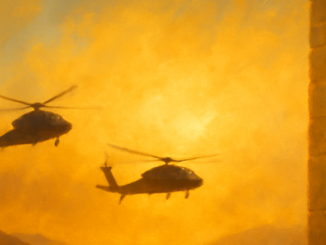
On a summer day above Athens, two firefighting helicopters collided while battling wildfires. A Danish and a Greek pilot lost their lives trying to save others. This tragic event touches something fundamental — the question of what it truly means to place yourself in service of a greater whole. For Freemasons, this moment of sacrifice raises spiritual questions deeply rooted in the tradition of the Craft. The Paradox of Sacrifice Firefighters, rescue workers, and pilots who battle wildfires live a daily reality most of us will never experience. They choose to run toward danger while everyone else runs away. That choice is not abstract. It is a concrete, physical act that demands courage, training, and something harder to name — an inner conviction that protecting others matters more than protecting yourself. In Freemasonry, we speak of shaping the rough ashlar. That shaping does not happen in isolation. It happens in relation to others, in the understanding that personal development gains meaning when it serves the community. The two pilots above Athens, each from a different country, worked together toward the same goal. Their nationality was irrelevant. What mattered was their shared commitment. What Service Really Means in Practice Spirituality in […]

Dramatic sky with lightning and sunlight symbolizing Masonic inner balance
Spiritual Traditions

Heat and Storms: What Weather Extremes Teach About Balance

Scorching daytime heat, violent thunderstorms, and nights that finally bring relief — it’s a weather pattern most of us simply endure. We crank up the air conditioning, flee from the first rumble of thunder, and breathe a sigh of relief when the cool air arrives. But what if we looked at this cycle not merely as a meteorological event, but as a mirror for our inner lives? In Freemasonry, nature has served as a teacher for centuries, and extreme weather offers a perfect opportunity to put that ancient wisdom into practice. Heat as a Test of Patience We all know the feeling: once temperatures climb past ninety degrees, we become irritable, our patience thins, and minor annoyances suddenly feel monumental. Extreme heat has a way of testing character like few other things can. In Freemasonry, we speak of working the rough ashlar — the slow, deliberate process of smoothing away our sharp edges. Intense heat acts as a kind of trial by fire, exposing exactly those unfinished corners we’d rather not see. Next time the temperature soars, pay conscious attention to how you respond. Do you snap at your partner? Lose your composure in the checkout line? These moments aren’t […]

Freemason in contemplation symbolizing compliance and spiritual wisdom
Spiritual Traditions

When Yielding Becomes Wisdom: Compliance in Freemasonry

Compliance is often mistaken for weakness. Those who yield, so the prejudice goes, must lack backbone. But is that really the case? Within the spiritual tradition of Freemasonry, compliance takes on an entirely different meaning — not as spineless conformity, but as a deliberate choice to place harmony above ego. This article explores that fascinating virtue, peeling back its deeper layers to reveal why bending can sometimes be the wisest thing a person can do. What Do We Really Mean by Compliance? Let’s start at the beginning. Compliance — or as the French so elegantly express it, the art of being accommodating — literally means being willing to make room for the other. It is the ability to temporarily set aside your own wishes or viewpoints for the benefit of the greater whole. But this immediately raises a question: where is the line between healthy compliance and unhealthy self-denial? This is precisely the tension that spiritual traditions, including Freemasonry, have grappled with for centuries. Marcus Aurelius wrote in his Meditations that the wise person adapts to circumstances the way water adapts to the shape of its vessel — without losing its essence. That is the key: adapting without losing yourself. […]

Ancient stone path symbolizing Cathar spirituality and inner purification
Spiritual Traditions

Cathar Spirituality: Lessons in Inner Purification Today

Imagine standing before the mirror one morning, asking yourself what you truly want to contribute to the world today. That brief moment of reflection — however fleeting — touches on something that medieval Cathar spiritual practitioners understood centuries ago. They sought purity in a world saturated with distraction and material temptation. Although their movement was crushed in the thirteenth century, their insights into inner growth remain remarkably relevant. For Freemasons, who likewise devote themselves to personal refinement, these ancient practices offer concrete tools for everyday life. Who Were the Cathars and What Made Them Spiritually Remarkable? The Cathars — sometimes called “the Pure Ones” — were a religious movement that flourished between the eleventh and fourteenth centuries in southern France and northern Italy. Unlike the mainstream Christianity of their era, they placed personal spiritual experience above ecclesiastical authority. Their central conviction was that the material world stood as an obstacle to spiritual growth. This belief translated into an ascetic way of life built on simplicity, honesty, and compassion. What stands out about Cathar spirituality is its practical approach. It was never about abstract theological debate but about daily choices. What do you eat? How do you speak to others? What […]

Sunlight streaming into a Masonic lodge during a moment of silent reflection
Spiritual Traditions

Violence and Spirituality: What a Bank Robbery Teaches Us

Morning sunlight streams through the tall windows of a lodge building in the north of the Netherlands. A group of Freemasons sit together in silence, their thoughts occupied by the day’s news: a deadly armed robbery at a German bank, a life brutally ended, a suspect apprehended. In the stillness, a question arises — one far older than any lodge: how do we relate to the darkness within humanity, and where do we find the light? The Shadow in the Headlines When violent news reaches us, most of us feel a mixture of horror, grief, and perhaps a certain distance. It happened there, not here. It happened to that person, not to me. Yet every encounter with human violence invites us into a deeper inquiry — not to pass judgment on the perpetrator or the victim, but to reflect on the human condition in which both light and darkness dwell. This tension lies at the very heart of Freemasonry. The search for enlightenment does not begin by denying the shadow but by acknowledging it. The rough ashlar with which every Entered Apprentice begins his journey represents the unrefined human being — complete with flaws, impulses, and the potential for both […]

A single candle flame glowing in darkness symbolizing Masonic inner light
Spiritual Traditions

Violence Against Journalists: Keeping Light in Dark Times

The brutal murder of a local sports journalist in Italy strikes a deep chord. Here was someone who told stories about sport and community — silenced by unimaginable violence. News like this raises questions that go far beyond the headline: how do we preserve our inner light when the world reveals its darkest side? This article offers practical guidance from a spiritual perspective rooted in Masonic tradition. When the Incomprehensible Crosses Your Path You read the news, scroll past it, but something lingers. An uneasy feeling in your stomach. A question you don’t ask aloud: what am I supposed to do with this? It’s a familiar moment for anyone who tries to live consciously. Senseless violence confronts us with the limits of our understanding and our power. In Freemasonry, this moment is never avoided. It sits at the very heart of the Craft: how do you relate to darkness while striving toward light? The tradition teaches that spiritual growth doesn’t happen in spite of life’s dark aspects — it happens through our conscious engagement with them. This is not abstract theory. It is a daily practice. The First Response: Acknowledgment Without Judgment What do you actually do when such news […]

Cyclist making a split-second decision symbolizing inner knowing and Freemasonry
Spiritual Traditions

The Wrong Bet: What Cycling Teaches Us About Inner Knowing

In a fraction of a second, a cyclist makes a decision. He follows his rival, convinced that rider is about to win. But reality unfolds differently. The gamble turns out to be wrong. This moment of human fallibility at the highest level of sport raises a deeper question: how do our snap judgments relate to genuine inner knowing? And what can two very different perspectives on intuition and spirituality teach us about the difference? The Outsider’s Perspective: Intuition as Tactics For most spectators watching a cycling sprint, the final dash to the finish line is a matter of raw physical power and clever tactics. The rider sitting in second position reads his opponents’ movements — shoulder shifts, breathing patterns, the subtle redistribution of weight. From this vantage point, intuition is nothing more than lightning-fast pattern recognition, honed by years of experience and training. When a rider later admits he thought someone else was going to win and made his move accordingly, we interpret it as a miscalculation. A tactical error in a high-speed chess game. The outside world judges: he should have paid closer attention, picked up on different signals. The conversation revolves around technique — what went wrong in […]