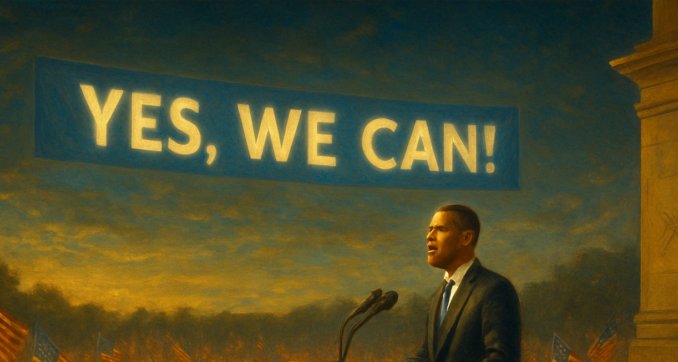
In the blog “Allusive“, I attempt to explain the meaning of the word Allusief. It is a word whose meaning is difficult to summarize. A brother pointed me to the speech that Barack Obama gave in 2008. I would like to include it here. In this context, the slogan “Yes, we can!” takes on an allusive meaning.
Copyright text & image: devrijmetselaar.nl
Texts are based on the ideas and content of the author of devrijmetselaar.nl, reviewed, corrected, and supplemented with the assistance of OpenAI. Images are created based on the ideas of the author of devrijmetselaar.nl using OpenAI/DALL-E.
Frequently Asked Questions
What is the connection between Freemasonry and Barack Obama's 2008 victory speech?
The article explores how Obama's famous slogan 'Yes, we can!' carries allusive meaning—a concept discussed in Masonic philosophy. The speech's themes of unity, collective action, and shared purpose resonate with core Masonic values of brotherhood and building a better society together.
What does 'Allusief' mean in the context of Freemasonry?
Allusief refers to meaning that is suggested indirectly or implied rather than stated explicitly. In Masonic teachings, this concept relates to how symbols and messages communicate deeper truths to those who are prepared to understand them, encouraging contemplation and personal discovery.
How do Freemasons interpret political or historical speeches?
Freemasons often seek deeper, symbolic meanings in speeches and events that align with universal principles of brotherhood, progress, and human improvement. This interpretive approach reflects the Masonic tradition of finding profound lessons in everyday occurrences and recognizing shared human aspirations.
Is Freemasonry involved in politics or political movements?
While individual Freemasons may participate in politics, Freemasonry as an organization remains non-political and welcomes members from all political backgrounds and beliefs. The fraternity focuses on universal moral principles rather than partisan agendas, promoting unity and understanding across diverse perspectives.


Be the first to comment