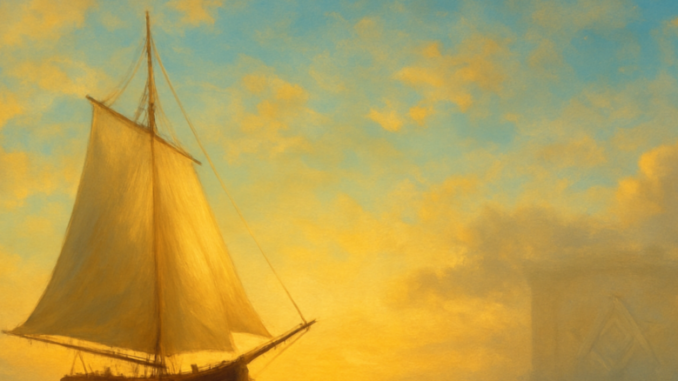
A candle flickers in the lodge as a brother takes the floor. He speaks of setbacks — of moments when life felt unbearable. The others listen in silence. Outside, the world rushes on, but here, in this space of reflection, suffering is not dismissed. It is acknowledged, weighed, and ultimately transformed into something that gives direction. This is precisely the movement that Voltaire captures so brilliantly in his masterwork Candide: the journey from naïve optimism, through the deepest misery, toward a hopeful yet realistic outlook on life.
The Illusion of a Carefree Existence
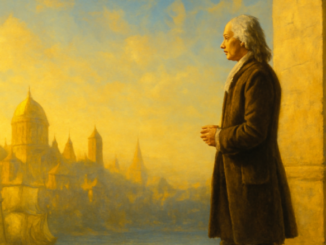
Candide begins his life in a castle where everything appears perfect. His tutor Pangloss teaches him that this is the best of all possible worlds — a philosophy that explains away every misfortune as part of a greater, benevolent plan. Voltaire is not merely mocking the philosophical optimism of Leibniz here; he is skewering the deeply human tendency to deny or trivialize suffering.
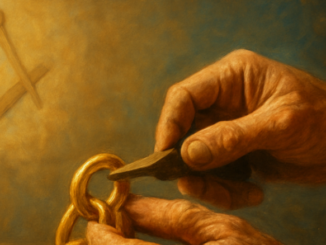
For the Freemason, this is the first point of recognition. The search for truth begins with shedding illusions. Anyone who enters the lodge as a seeker must be willing to let go of comfortable certainties. The rough ashlar that must be worked upon is imperfect not only through lack of knowledge, but also through the tendency to conceal that imperfection behind rose-tinted convictions.
Through the Depths of Suffering
Voltaire does not spare his hero. Candide is expelled from the paradise of his youth and endures war, natural disasters, betrayal, and loss. The Lisbon earthquake of 1755 — an event that profoundly shook Voltaire himself — forms a central scene in the narrative. Thousands of innocents perish, and the question becomes inescapable: how can this be part of a good creation?
This confrontation with senseless suffering strikes at the core of human existence. Freemasonry does not flee from this question. In the symbolic death and rebirth that form part of Masonic ritual, a brother is invited to face his own mortality and vulnerability. Not to despair, but to grow from that recognition toward a deeper understanding of what is truly valuable in life.
The Garden as a Workshop of Hope
The famous conclusion of Candide offers no abstract philosophy — instead, it provides a concrete answer. “We must cultivate our garden,” the protagonist concludes. This statement is not resignation but a call to active engagement within one’s own sphere of influence. The suffering of the world does not disappear by theorizing about it, but by working right where you are to make things better.
Hope is not the denial of suffering, but the choice to keep building a better world in spite of everything.
This resonates deeply with Masonic thought. The temple that is being built is not merely a symbol. It is the daily practice of self-reflection, of fraternal connection, of small actions that together form a greater whole. Voltaire and Freemasonry share a pragmatic wisdom here: grand ideals gain meaning through humble, persistent work.
Brotherhood as the Answer to Isolation
At the end of his journey, Candide finds a small community. Not the perfect world of his youthful dreams, but a group of people who work together and care for one another. It is this sense of connection that makes suffering bearable — not the grand answers, but the small gestures of solidarity.
The lodge functions in much the same way. Here, people come together who might never speak outside these walls. Social differences fade, and what remains is shared humanity. In times of personal crisis, a Freemason knows he does not stand alone. That knowledge is no luxury — it is a lifeline when suffering strikes.
Seeking Light in the Darkness
Voltaire wrote Candide during a period of deep doubt about human progress. Yet the book is far from cynical. It is, rather, an invitation to redefine hope — not as blind faith that everything will turn out well, but as the willingness to keep acting in spite of uncertainty.
Every Freemason knows this tension. The search for light offers no guarantee of final illumination. It is a continuous movement — a direction rather than a destination. Every setback can be seen as a new opportunity to practice resilience, to work the rough ashlar a little further toward perfection.
The Timely Lesson of Candide
In an era of global crises, uncertainty, and polarization, Voltaire’s message speaks as powerfully as ever. The temptation is strong to fall into either naïve optimism or paralyzing pessimism. Candide points to a third way: acceptance of reality, combined with active engagement in the here and now.
For the modern Freemason, this means: do not wait for a perfect world before you begin to act. The temple is not built in a single day, and the garden requires daily tending. Suffering does not disappear, but it gains meaning through what we do with it. In that transformation lies the heart of both Voltaire’s wisdom and the practice of Freemasonry.
Voltaire and Freemasonry share a sober yet hopeful view of human existence. Suffering is part of life, but the last word belongs to those who keep working, keep connecting, and keep seeking the light. Candide’s garden is the Freemason’s workshop: a place where hope is not dreamed, but cultivated.
Copyright text & image: devrijmetselaar.nl
Texts are based on the ideas and content of the author of devrijmetselaar.nl, reviewed, corrected, and supplemented with the assistance of OpenAI. Images are created based on the ideas of the author of devrijmetselaar.nl using OpenAI/DALL-E.
Frequently Asked Questions
How does Voltaire's 'Candide' relate to Freemasonry's approach to truth and self-discovery?
According to the article, Voltaire's critique of naive optimism in Candide mirrors Freemasonry's emphasis on shedding illusions to search for truth. Just as Candide must abandon his rose-tinted view of the world, Freemasons must be willing to let go of comfortable certainties and confront imperfection—symbolized by the rough ashlar that must be worked upon. The lodge provides a space where illusions are stripped away to reveal deeper understanding.
What does the article suggest about how Freemasonry addresses human suffering?
The article explains that Freemasonry does not shy away from suffering but rather acknowledges and transforms it. Through Masonic ritual, including symbolic death and rebirth, members are invited to confront their own mortality and vulnerability. Rather than leading to despair, this confrontation with suffering helps brothers grow toward a deeper understanding of what is truly valuable in life, similar to how Voltaire uses Candide's trials to teach wisdom.
What is the significance of the phrase 'We must cultivate our garden' from Candide for Freemasons?
The article presents this conclusion as a call to active engagement within one's own sphere of influence, rather than mere resignation or abstract philosophizing. For Freemasons, this represents a practical approach to hope and transformation—focusing on concrete action and meaningful work in the world rather than passive theorizing about solving universal suffering.


Be the first to comment