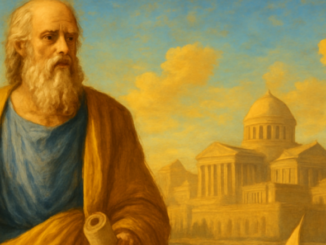
Symbolic illustration of Plato's ideal city connected to Masonic lodge imagery
Plato – Freemasonry & Connection

Plato’s Ideal City and Freemasonry: Building Connection

Imagine standing with a group of people before an empty plot of land. Your shared task: build a city from scratch — not just any city, but a community where everyone can thrive. Where do you begin? What values do you lay as the foundation? This is precisely the challenge Plato takes on in Book II of The Republic, and it is the very same question that Freemasons have been grappling with for centuries whenever they speak of building a better world. The City as a Mirror of the Soul In The Republic Book II, Plato makes a surprising move. Rather than diving straight into a debate about the nature of justice, he proposes designing an ideal city first. His reasoning is beautifully practical: justice is easier to recognize in a larger system than in a single individual, just as large letters are easier to read than small ones. The city becomes a magnifying glass for the human soul. For Freemasons, this approach feels immediately familiar. In the lodge, we work on two structures simultaneously: the inner temple of the self and the collective brotherhood. What we learn inside the lodge about cooperation, harmony, and virtue, we carry into the […]
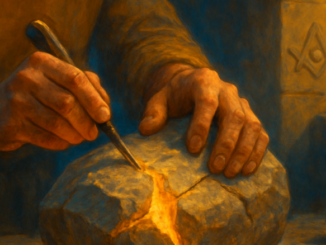
Rough ashlar stone symbolizing personal growth and transformation in Freemasonry
Philosophy & Ethics

Addiction Through the Eyes of a Freemason: Two Perspectives

You probably know someone who struggles with addiction. Or perhaps you recognize patterns in yourself that you wish weren’t there. Society tends to have a swift verdict ready for those who fall into addiction — and why they did. But what happens when you look at the same situation through a different lens? Not one that condemns, but one that seeks to understand? Freemasonry offers precisely that kind of perspective — not as a substitute for professional help, but as an ethical compass that encourages us to look at one of the most profoundly human struggles with greater compassion and insight. Society’s Judgment on Addiction In modern society, addiction is frequently viewed through a moral lens. The addicted person is seen as someone who has failed, someone who was weak, someone who made the wrong choices. This perspective is understandable when individual responsibility is the central value. After all, you chose to start smoking, drinking, or gambling. You could have stopped before it was too late. But this judgment comes at a steep cost. It breeds shame and isolation. People struggling with addiction avoid seeking help out of fear of being condemned. Families keep silent about what happens behind closed […]

Open book of Montaigne's Essays beside Masonic square and compasses
Michel de Montaigne – Freemasonry & Connection

Montaigne on Good and Evil: A Masonic Perspective

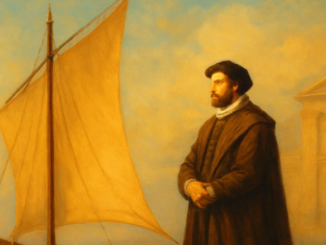
Two people witness the same event. One sees a disaster; the other sees an opportunity. Michel de Montaigne wrote about this very phenomenon in the sixteenth century, arguing that our perception of good and evil depends not on the facts themselves but on the opinions we hold about them. This idea touches on a fundamental question that also lies at the heart of Freemasonry: how do we arrive at moral judgment? And what connects the reflections of this French essayist to the search for light that Brethren have pursued for centuries? The World Through Montaigne’s Eyes Michel de Montaigne, the sixteenth-century French philosopher and writer, opens his essay with a simple but profound thesis: nothing is inherently good or evil. It is our mind that assigns value to the things around us. Banishment, which one person experiences as punishment, is embraced by another as liberation. Poverty drives some to despair, while others find genuine freedom in a life without possessions. Montaigne drew heavily on the Stoic tradition, particularly the works of Epictetus and Seneca. But he went further than his predecessors by weaving this philosophy into personal experience and concrete examples from his own time. His approach was never abstract […]