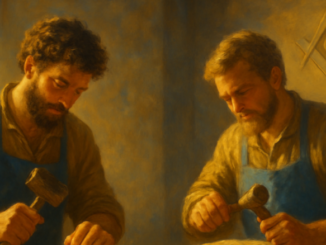
Freemasons building together symbolizing shared growth beyond zero-sum thinking
Personal Development & Leadership

Breaking Zero-Sum Thinking: How Freemasonry Shapes Character

You probably recognize it: that quiet, almost unconscious thought that when someone else wins, you automatically lose. The assumption that success, recognition, and happiness exist in limited supply — and that you need to fight for your share. This is zero-sum thinking, and it creeps into your personality without you even noticing. But what if that assumption is fundamentally wrong? What if real growth happens when you build together rather than compete alone? What Exactly Is Zero-Sum Thinking? The term originates from game theory, where it describes situations in which one person’s gain is automatically another person’s loss. Think of a poker game: the money you win is money your opponent loses. In those situations, zero-sum thinking is perfectly logical and accurate. The problem arises when you apply this mindset to areas where it doesn’t belong. Relationships, personal development, knowledge sharing, creativity — these are not poker games. Yet many people treat their entire lives as though they are. They see a colleague’s promotion as a personal defeat. They experience a friend’s happiness as a painful reminder of their own shortcomings. This doesn’t just limit your possibilities — it distorts your personality over time. How Zero-Sum Thinking Shapes Your Character […]
Vrijmetselarij - De kunst van het luisteren: persoonlijkheid in gepolariseerd debat
Personal Development & Leadership

The Art of Listening: Character in a Polarized World

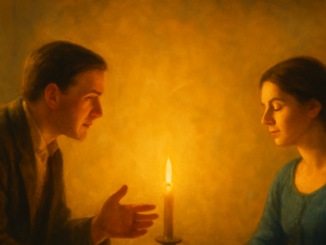
The lodge rests in half-light. A brother has just shared a viewpoint that stands in direct opposition to what another deeply believes. For a moment, silence hangs heavy, charged with unspoken emotion. Then a calm voice breaks through: “Tell me more about how you arrived at that thought.” In that single sentence lies a world of wisdom that reaches far beyond the walls of the temple — into a society where conversations increasingly fall silent before they have truly begun. When Debate Suffocates A troubling wind is blowing through public discourse. More and more often, disagreements don’t lead to deeper understanding — they lead to silence. The reflex to dismiss an opponent as someone who simply “hates” or “doesn’t get it” has become pervasive. It’s a mechanism that smothers debate before it can even take root. Instead of engaging with arguments, we question motives. Instead of listening, we wait for an opening to interrupt. This phenomenon is hardly new, but it seems to carry particular urgency in our time. When we reduce another person to a caricature of their opinions, we don’t just lose the chance at understanding — we lose a part of ourselves. Because whoever refuses to listen […]

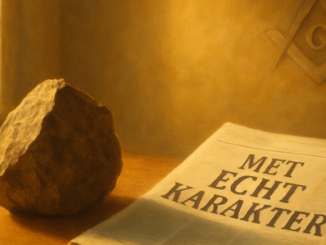
Rough ashlar stone symbolizing character development in Freemasonry
Personal Development & Leadership

Showing True Character: What Freemasons Learn About Authenticity

A brother sits at his kitchen table the morning before his advancement to a higher degree. His eye catches an advertisement bearing the words “with true character.” He pauses. Those two simple words cut straight to the question he has been wrestling with for months: who am I, really, beneath all the layers I present to the world? In professional sports, public disputes sometimes play out through unexpected channels. A footballer takes out a full-page newspaper ad — not about statistics or trophies, but about character. Who are you when the pressure is at its peak? That question resonates deeply within Freemasonry, where the development of personality and character has been the guiding thread for centuries. The Rough Stone as Mirror At the heart of Masonic symbolism stands the rough, unworked ashlar. It represents the human being as they arrive: full of potential, but also full of imperfections, blind spots, and ingrained patterns. The work on this stone is the work on yourself — not to become a perfect human being, because that does not exist, but to become a more authentic one. Someone whose exterior more closely reflects what lives within. Character, in this context, is not a fixed […]