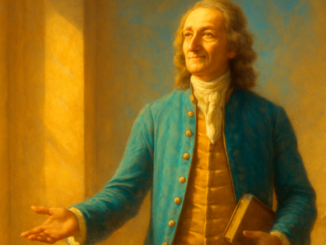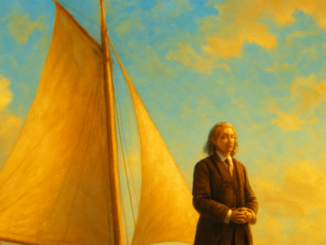
Philosophical books representing Voltaire and Locke's Enlightenment ideas
Symbolism & Rituals

Voltaire on Locke: Philosophical Roots of the Third Letter

What is it about a seventeenth-century philosopher that still echoes through modern conversations about knowledge, freedom, and the limits of human understanding? When Voltaire devoted his third philosophical letter to John Locke, he did far more than introduce an English thinker to a French audience. He opened a door to an entirely new way of philosophizing — a method that would leave its mark on Enlightenment thought and, perhaps less obviously, on the principles embraced within Freemasonry. Why Did Voltaire Choose Locke as His Guide? The question is worth pausing over. In early eighteenth-century France, the ideas of René Descartes still dominated intellectual life. His rationalism — with its emphasis on innate ideas and the certainty of thought — formed the bedrock of philosophical culture. But during his exile in England from 1726 to 1728, Voltaire encountered a radically different approach. John Locke had argued in his Essay Concerning Human Understanding that the human mind at birth is a blank slate, a tabula rasa. All knowledge, Locke maintained, arises from sensory experience and our reflection upon it. This empiricism appealed deeply to Voltaire. It offered an antidote to what he saw as the hollow speculations of scholasticism and the dogmatic […]

Rough ashlar and open book symbolizing Locke's blank slate in Freemasonry
Symbolism & Rituals

Voltaire on Locke: The Soul as a Blank Slate

In a dimly lit London study sometime in the 1720s, a young French exile bent over the works of an English philosopher who had died just decades earlier. François-Marie Arouet — better known as Voltaire — discovered in the writings of John Locke a revolutionary idea: the human mind is born a blank slate. No innate ideas, no predetermined truths, only the pure possibility of growth through experience. This discovery would change Voltaire forever, and it forms the heart of his third philosophical letter. The Context of Voltaire’s Exile When Voltaire lived in England between 1726 and 1728, he was fleeing not only the Bastille but also the suffocating intellectual climate of Louis XV’s France. In England, he encountered a society where freethinkers could debate openly, where Isaac Newton’s science was celebrated, and where John Locke’s philosophy was considered common knowledge. He later gathered these experiences into his Philosophical Letters, a collection of essays that introduced English thought to the French public. The third letter, devoted to Locke, stands out because Voltaire does more than simply report on scientific discoveries. He poses a fundamental question about human nature itself: Who are we, and how do we arrive at our knowledge? […]