Plato on the Soul: Inner Harmony as a Masonic Path
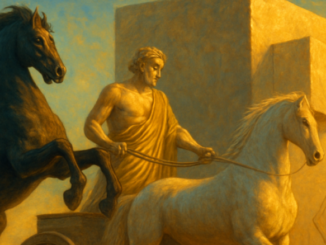
A charioteer grips the reins of two horses. One is fiery and untamable, the other calm and obedient. Only when the driver keeps both horses in balance can the chariot reach its destination. This image, drawn from Plato’s work, perfectly mirrors what the philosopher sets out in Book IV of The Republic about the human soul. For those familiar with Masonic values, a striking parallel emerges: the work on the rough ashlar turns out to be deeply connected to the ordering of forces within our own souls. Plato’s Tripartite Soul In The Republic, Plato identifies three distinct parts of the human soul: the rational part, the spirited part, and the appetitive part. The rational part seeks truth and wisdom. The spirited part craves honor and recognition. The appetitive part is drawn toward bodily pleasures and material satisfaction. Plato argues that justice within the soul arises when each part fulfills its proper function and reason takes command over the other two. This is far from abstract theory. Plato describes something we all experience daily — the tension between what we know to be right, what our pride demands, and what our desires whisper to us. The philosopher invites us to recognize […]