Explore the intersection of Freemasonry and literature through philosophical works that examine utopian ideals and the search for meaning in Masonic traditions.
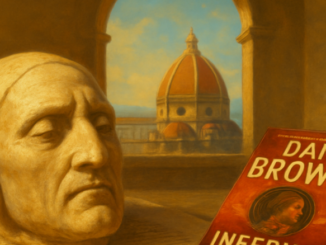
Inferno
Dan Brown’s Inferno: Fact or Fiction About Dante’s Symbolism?
A man wakes up in a Florentine hospital, his memory erased, his pockets filled with riddles that trace back to a seven-hundred-year-old masterpiece. In Dan Brown’s thriller Inferno, Dante Alighieri’s Divine Comedy serves as the compass guiding the protagonist through a deadly maze. But how much of the Dante symbolism Brown employs is genuinely rooted in historical fact? And where does fiction take over from reality? The Historical Dante: Poet and Exile Let’s start at the source. Dante Alighieri lived from 1265 to 1321 and wrote his Divine Comedy during his exile from Florence. This is thoroughly documented history. The poet was banished in 1302 for political reasons and never returned to his birthplace. In Brown’s Inferno, Florence plays a central role, and the tension between Dante’s love for the city and his exile is accurately portrayed as historical background. Brown also correctly presents the three-part structure of Dante’s work: Hell, Purgatory, and Paradise. This division corresponds to medieval cosmology and theological views on the afterlife. The nine circles of Hell, which serve as puzzle pieces in the thriller, are authentic elements drawn directly from the original poem. The Death Mask: Between Legend and Reality A crucial object in Inferno […]