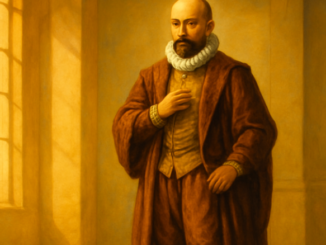
Montaigne on Democritus and Heraclitus: Laugh or Weep?
Should we laugh at human folly, or weep over human suffering? With this paradox, Michel de Montaigne opens one of his sharpest and most compact essays. In the fiftieth essay of the first book of his celebrated Essays, he sets two ancient philosophers against each other: Democritus, who laughed at the human condition, and Heraclitus, who wept over it. But Montaigne does far more than paint a philosophical portrait. He examines how we form judgments, why those judgments are so fragile, and which attitude best honours the complexity of existence. This essay is at once a philosophical exercise in humility and an invitation to look at ourselves with unflinching honesty. The Core Idea: The Fragility of Human Judgment The essay does not begin with Democritus or Heraclitus, but with a far more fundamental theme: the way human beings arrive at their judgments. Montaigne argues that our opinions are seldom grounded in genuine knowledge or deep understanding. We assess things on the basis of first impressions, habits, and superficial observations. We are quick to condemn or to praise without ever taking the trouble to consider all sides of a question. This makes human judgment, in Montaigne’s view, inherently unreliable — and […]