The House of the Temple in Washington D.C., headquarters of the Scottish Rite
Symbolism & Rituals

The Lost Symbol: Washington’s Temple in Fiction and Fact

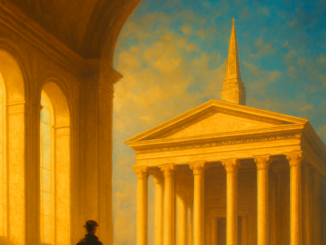
Anyone who picks up Dan Brown’s The Lost Symbol enters a world where the American capital is steeped in Masonic symbolism. Monuments, streets, and buildings all seem to be part of some grand mystery. But how does this gripping fiction compare to the reality of Freemasonry? Let’s examine the facts and discover where the novelist parts ways with the truth. Does the Temple from the Book Actually Exist? Yes, it does. The temple Dan Brown references in The Lost Symbol is a real building. It is the headquarters of the Scottish Rite in Washington, D.C., officially known as the House of the Temple. This imposing structure was completed in 1915 and was inspired by the Mausoleum at Halicarnassus, one of the Seven Wonders of the Ancient World. The building serves as the headquarters of the Supreme Council of the Scottish Rite for the Southern Jurisdiction of the United States. This is where the similarities between fiction and reality end, however. In the novel, Brown suggests that beneath the building lie secret chambers and hidden crypts filled with mystical knowledge. The reality is considerably more prosaic: the House of the Temple houses an extensive library, archives, and ceremonial rooms — but […]
Interior of the Sagrada Família basilica with its towering columns and light
Origin

Origin and the Sagrada Família: Separating Fact from Fiction

When Dan Brown published Origin in 2017, Barcelona’s Sagrada Família took centre stage as the dramatic backdrop for a confrontation between science and religion. Antoni Gaudí’s unfinished basilica was presented as a building brimming with hidden meanings and mysterious symbolism. But how much of what Brown suggests about this iconic structure is historically and architecturally accurate — and where does the novelist’s creative licence begin? This fact-check explores what we actually know about the Sagrada Família, stripped of the fictional layer that Origin drapes over it. The Building’s History: What the Facts Tell Us The Sagrada Família is undeniably one of the most extraordinary structures on Earth, and the facts about its origins are fascinating enough without fictional embellishment. The first stone was laid in 1882 under the direction of architect Francisco de Paula del Villar. A year later, Antoni Gaudí took over the project and would devote the rest of his life to it, right up until his death in 1926. Gaudí dramatically transformed the original neo-Gothic design and created an entirely unique architectural language inspired by organic forms found in nature. In Origin, Brown presents the basilica as a building with hidden layers of meaning that can only […]

The House of the Temple in Washington D.C. with Masonic symbolism
Symbolism & Rituals

The Lost Symbol: Washington’s Masonic Temple in Fiction

When readers first cracked open Dan Brown’s The Lost Symbol, they were swept into a Washington D.C. teeming with hidden symbols, underground chambers, and mysterious rituals. At the heart of the story lies what Brown presents as the Temple of Washington — a concept he frames as the beating heart of Masonic secrets in the American capital. But what exactly does the book claim? And how does this fictional vision compare to the way outsiders and initiated Freemasons actually view the same city? The Book’s Claim: Washington as a Masonic Blueprint In The Lost Symbol, Dan Brown advances the idea that Washington D.C. is not merely a city but a deliberately designed temple landscape. According to the novel’s premise, America’s Founding Fathers — many of whom were Freemasons — embedded symbolic patterns into the street plan and architecture. The Capitol, the Washington Monument, and numerous other buildings supposedly form a kind of sacred geometric whole. Brown suggests that this structure preserves hidden knowledge, a wisdom passed down through the ages by the initiated. The book casts the House of the Temple, the headquarters of the Scottish Rite in Washington, in a central role within this alleged network. Brown portrays the […]

Antimatter containment concept representing the themes of Angels and Demons
Angels & Demons

Angels & Demons: Antimatter as a Weapon of Destruction

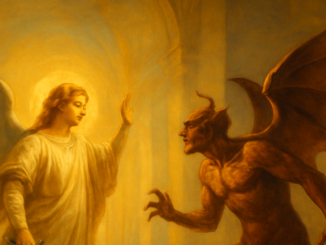
Imagine that science could create the ultimate force of destruction — a substance so pure and so powerful that it could undermine the very foundations of faith. This is not an idle thought experiment. It is the central premise of Dan Brown’s bestselling thriller Angels & Demons, a novel that places antimatter at the heart of a conflict between reason and religion, between laboratory and cathedral. But what does Brown actually suggest about this mysterious substance, and how does his fictional narrative connect to the symbolic quest that Freemasons have pursued for centuries? The Promise of Total Annihilation In Angels & Demons, Dan Brown presents antimatter as the most destructive material humanity has ever produced. According to the storyline, a minuscule quantity — captured within a specially designed containment system — would be enough to obliterate an entire city. The energy released when matter and antimatter collide, the book suggests, surpasses every conventional bomb and even nuclear weapons. Brown paints a scenario in which scientists at the European particle research center manage to produce and store measurable quantities of antimatter, unwittingly placing the key to apocalyptic devastation in human hands. This depiction raises a fundamental tension that runs through the […]

Ancient Masonic symbols alongside Dante's Inferno book representing fiction and reality
Inferno

Dan Brown’s Inferno: Freemasonry in Fiction vs Reality

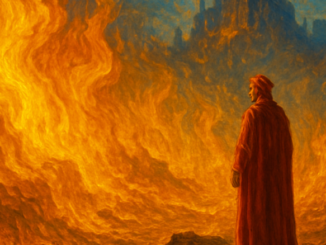
If you’ve read Dan Brown’s Inferno, chances are you walked away with questions. What’s real? What’s invented? And what about all those references to secret societies and ancient symbols? As a Freemason, these questions come up regularly — especially when popular thrillers paint vivid pictures of mysterious brotherhoods operating in the shadows. It’s worth taking a clear-eyed look at what Inferno suggests about symbolism and hidden knowledge, and how that compares to the reality of Freemasonry. Dante Alighieri as Inspiration Dan Brown didn’t choose the title Inferno at random. It’s a direct reference to Dante Alighieri’s Divine Comedy, the fourteenth-century masterpiece in which the poet descends into Hell, journeys through Purgatory, and ultimately reaches Paradise. This threefold path from darkness to light resonates deeply with Freemasons because it mirrors their own ritual journey — from ignorance to enlightenment, from rough stone to polished stone. Dante himself was not a Freemason — he couldn’t have been, since Freemasonry as we know it didn’t emerge until the eighteenth century. Yet his works are frequently referenced in lodge meetings and philosophical discussions. The symbolism of the journey, the confrontation with personal shortcomings, and the search for truth are themes that Freemasons readily recognize […]

Masonic lodge interior with symbolic elements from The Lost Symbol
Symbolism & Rituals

The Lost Symbol: Are Dan Brown’s Masonic Rituals Accurate?

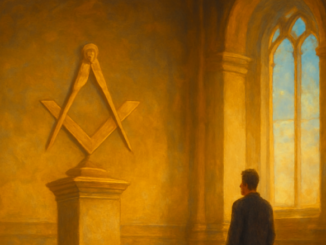
If you’ve read Dan Brown’s The Lost Symbol, you’ve probably wondered: does any of this actually happen inside a Masonic lodge? The skulls, the solemn oaths, the mysterious initiation ceremonies in darkened chambers — it makes for gripping fiction, but how much of it reflects reality? As a Freemason, you get asked these questions all the time, often by people whose entire understanding of the Craft comes from this one novel. It’s time to take a closer look at what Dan Brown gets right, what he gets wrong, and where the line falls between literary thriller and Masonic truth. The Allure of the Unknown Dan Brown is a master at building suspense around mystery. In The Lost Symbol, he places Freemasonry at the heart of a story filled with secret knowledge, danger, and intrigue. The setting is Washington D.C., where monuments and buildings are supposedly saturated with hidden Masonic messages. The book plays cleverly on our natural fascination with secrets and our tendency to search for hidden meanings everywhere we look. For many readers, this novel is their very first encounter with Freemasonry. That makes it all the more important to understand where literary license ends and historical reality begins. […]

Ambigram design with Masonic square and compasses on a dark background
Angels & Demons

Angels & Demons: Ambigrams and the Illuminati Myth Debunked

You’ve read the thriller or watched the film. The suspense, the mysterious symbols, the secret societies. Dan Brown’s bestseller Angels & Demons has captivated millions of readers with tales of the Illuminati and their alleged war against the Catholic Church. But how much of that symbolism is actually real? And what do Freemasons have to do with any of it? If you’ve ever wondered where the line falls between gripping fiction and historical fact, this article offers practical tools to help you tell the difference for yourself. What Are Ambigrams — and Why Are They So Fascinating? In Angels & Demons, ambigrams play a central role. These are words or designs that can be read from multiple orientations — most commonly, they look the same when turned upside down. In the novel, branding irons featuring this property are presented as ancient Illuminati symbols. The fascinating thing about ambigrams is that they do exist as an art form, but they are modern typographic creations from the twentieth century, not relics of a bygone era. The ambigrams in the book were specially designed for the novel by a contemporary graphic artist named John Langdon (whose surname, not coincidentally, Brown borrowed for his […]

The Lost Symbol book with Masonic square and compasses symbolism
Symbolism & Rituals

The Lost Symbol: Dan Brown’s Claims About Masonic Rituals

When Dan Brown’s The Lost Symbol hit bookshelves in 2009, it instantly became a global bestseller — and placed Freemasonry squarely at the center of public conversation. Set against the monumental backdrop of Washington D.C., the thriller painted Masonic rituals as keys to an ancient mystery. But what exactly does Brown claim about these rituals? And how do his assertions hold up against the actual history and practice of Freemasonry? The Central Premise: Freemasonry as Guardian of Ancient Secrets The Lost Symbol presents Freemasonry as the custodian of an ancient mystery — a secret reaching back to the earliest human civilizations. Dan Brown portrays Masonic rituals not as quaint traditions or fraternal ceremonies, but as carriers of hidden knowledge. According to the novel, these symbolic acts contain a deeper truth about the human mind and its untapped potential. Freemasonry doesn’t serve as mere background scenery in the story; it is the engine that drives the entire plot. The rituals function as literal keys to deciphering a great secret concealed within the architecture and geography of the American capital. Brown suggests that Masonic rituals are symbolic echoes of a lost wisdom — one that originated in the ancient mystery schools of […]