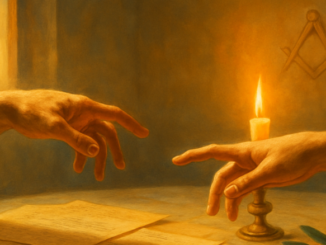
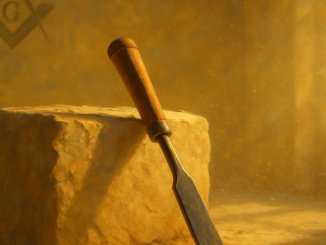
Masonic rough stone symbolizing character formation through dialogue
Personal Development & Leadership

Dialogue and Character: Lessons from International Tensions

When a politician calls for dialogue instead of confrontation, something fundamental is at stake. A recent appeal by a Dutch official to pursue conversation rather than retaliation over sanctions against the International Criminal Court raises questions that reach far beyond diplomacy. What kind of character does it take to extend a hand when tensions are running high? And what can Freemasonry teach us about shaping that character in times of conflict? Why Do Some Choose Dialogue Where Others Choose Confrontation? This may be the central question when we look at international tensions. It seems easy enough to answer sanctions with counter-sanctions, to build walls where bridges are needed. Yet there are always those who seek a different path — not out of weakness, but from a deep understanding that lasting solutions only emerge when opposing parties truly meet. In Freemasonry, we call this working on the rough stone. Every person enters the lodge as unworked material, full of sharp edges and unpolished corners. The art lies in shaping yourself into someone who doesn’t react from impulse but from considered virtue. That requires a personality trained in patience, a willingness to listen, and the ability to look beyond first impressions and […]
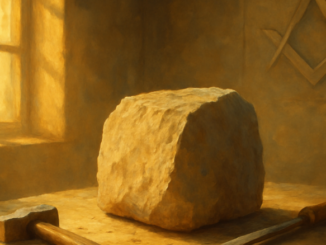
Rough ashlar stone being shaped symbolizing Masonic character formation
Personal Development & Leadership

Destruction and Character: Lessons from Youthful Impulsivity

A fourteen-year-old girl was recently arrested after causing an estimated hundred thousand euros in damage to an elementary school. It’s the kind of news story that makes you pause. What drives a young person to such destructive behavior? And perhaps more importantly, what does it reveal about the formation of character — about the long road every human being walks from chaos toward inner order? The Rough Stone as Starting Point Freemasonry offers a powerful symbol that speaks directly to this situation: the rough ashlar. Every apprentice who enters the lodge is symbolically presented as an unworked stone, full of irregularities and sharp edges. The Mason’s task is to work this stone — to smooth it, shape it, and form it into something that fits within a greater structure. But no one begins as a perfectly polished cube. Everyone carries rough corners and jagged edges. A teenager who destroys a school shows us that rough stone in its most visible form. This isn’t meant as an excuse for the act, but rather as an invitation to look beyond the surface. What shaped this young girl? What circumstances, what unprocessed emotions, what missed opportunities for guidance led to this moment of […]

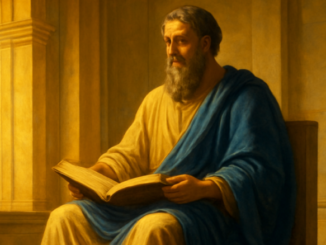
Ancient Greek temple columns symbolizing Plato's philosophy and Masonic education
Plato – Philosophical Background

Plato’s Republic III: The Philosophical Roots of Education

When Plato unfolds his vision of education in the third book of The Republic, he touches on questions that had already been asked for centuries before him — and that continue to resonate today in traditions devoted to the shaping of character. How do we cultivate virtue in a human being? What stories do we tell, what music do we play, and why? For the Freemason, these are far from abstract questions. The lodge itself is a space of formation, where ritual and symbol serve the very pedagogical function Plato envisioned. This article explores the philosophical sources Plato drew upon and places his educational ideal alongside the formative practice of Freemasonry. The Legacy of the Early Greek Thinkers Plato’s educational philosophy in Republic III did not emerge in a vacuum. He built upon a rich tradition of Greek paideia — the ideal of comprehensive human formation that had already taken root in the works of Homer and Hesiod. For Homer, the hero Achilles was the embodiment of aretē: virtue understood as a fusion of courage, honor, and physical excellence. Hesiod, in his Works and Days, added industriousness and justice to the equation. Plato knew these texts intimately, but he took […]

Rough ashlar stone with gavel and chisel symbolizing Masonic character formation
Personal Development & Leadership

Tragedy and Reflection: On the Forming of Character

Sometimes a news headline stops you in your tracks. A twelve-year-old boy killed under violent circumstances. An adult suspect arrested. You read the words, feel the helplessness, and wonder: how can a human being be capable of such a thing? It is precisely in moments like these that the ancient question of human character forces itself upon us — not as an abstraction, but as an urgent search for understanding. The Unfathomable Human Being When confronted with extreme violence, we instinctively reach for explanations. We want to understand what drives a person, what went wrong in the shaping of a personality. The philosopher Aristotle argued that character is not given at birth but formed through repeated actions. You become what you do, again and again. You do not become virtuous by reading about virtue — you become virtuous by acting virtuously. This insight is as comforting as it is unsettling. It means that every human being has the capacity for growth and improvement. But it also implies that wrong choices, repeated over time, can shape a personality capable of terrible deeds. Freemasonry takes this idea profoundly seriously. The Rough Stone as Metaphor In Freemasonry, the rough ashlar is a central […]