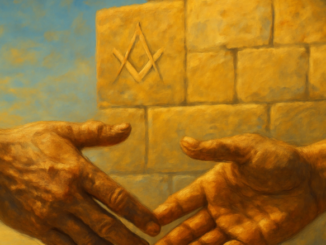
Freemasons forming a chain of union symbolizing brotherhood and reconciliation
Personal Development & Leadership

The Handshake After Conflict: Brotherhood as Foundation

A handshake. So simple, yet so deeply charged with meaning. When opposing parties suspend hostilities because the other side has made concessions, we witness more than a political compromise. We see two sides that, after weeks of tension, can once again extend a hand to one another. That handshake — so ordinary that we barely give it a second thought — carries a symbolic power rooted in humanity’s deepest need for connection and reconciliation. The Gesture Behind the Gesture A handshake is never just a handshake. In Freemasonry, the grip is one of the oldest forms of recognition between brethren — a gesture that says: I trust you, I acknowledge you as my equal, we share something that goes beyond words. When two opposing parties reach agreement after a conflict, the same ritual takes place, even if unconsciously. The outstretched hand is a sign of mutual recognition. Aristotle wrote that man is by nature a political animal, meant to live in community. But community does not arise on its own. It is built, stone by stone, gesture by gesture. The philosopher understood that cooperation does not begin with agreement — it begins with the willingness to build despite differences. That […]
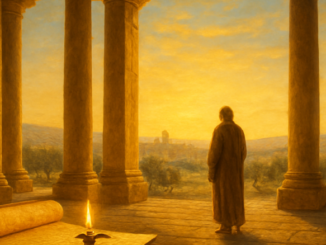
Broken chains and Masonic symbols representing spiritual freedom and growth
Christianity

Galatians and Freedom: When Chains Symbolically Fall

You may know the feeling: you follow every rule, meet every expectation, and yet something inside you feels imprisoned. As though you’re doing exactly what you’re supposed to, but somewhere along the way you’ve stopped hearing your own voice. The Letter to the Galatians, written by the Apostle Paul around the year 50 CE, speaks directly to that tension. It is a text about freedom — not the freedom to do whatever you please, but the freedom to become who you truly are. A Letter Against Regression The Galatians were communities in Asia Minor that Paul had previously visited. After his departure, other teachers arrived insisting that, in addition to their new convictions, followers must also observe the old Mosaic laws in order to be truly redeemed. Paul responds with fire. For him, this is no theological footnote — it is a fundamental issue. If you have found freedom, why would you voluntarily return to a system of obligations that never transformed your inner self? This tension between outward form and inward transformation is something every sincere seeker recognizes. You can follow every ritual, recite every word, know every symbol, and still remain hollow inside. The question Paul puts to […]