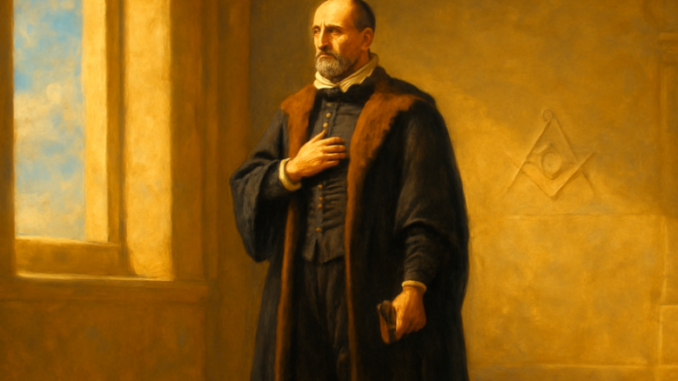
Imagine witnessing needless suffering inflicted by someone who takes pleasure in it. You feel an instinctive revulsion — perhaps even physical disgust. Michel de Montaigne knew that feeling intimately. In his essay “Of Cruelty,” he explores why cruelty repels him so deeply and what this reveals about our shared human nature. More than four centuries later, his reflections still cut to the heart of fundamental questions about compassion, character, and how we treat other living beings — questions that resonate powerfully within the traditions of Freemasonry.
Cruelty as the Deepest Vice
For Montaigne, cruelty is not simply one vice among many — it is the worst of them all. While other failings spring from weakness, ignorance, or uncontrolled passion, cruelty stems from a deliberate choice to inflict suffering with no purpose beyond the suffering itself. It represents a perversion of human nature that filled Montaigne with genuine horror.
Montaigne writes with striking candor about his own sensitivity. He cannot bear to watch a chicken having its neck wrung, and the death cry of a hare caught by his hounds causes him genuine distress. But this is not weakness, he argues. It is the sign of a sensitive soul that recognizes its deep connection to all living creatures. The capacity to suffer when witnessing another’s pain is, for Montaigne, a virtue — never a defect.
Lessons from the Ancient World
True to his essayistic style, Montaigne draws liberally from classical sources. He cites Seneca on the corrupting influence of gladiatorial games on the Roman people. These spectacles, staged as entertainment, gradually desensitized audiences to bloodshed and made them indifferent to human suffering. Montaigne sees in this a stark warning: cruelty is contagious. Those who grow accustomed to it as spectators can far more easily become cruel themselves.
He also invokes Pythagoras, who according to tradition taught that we must treat animals with respect — not only for the animals’ sake, but because cruelty toward animals paves the way for cruelty toward people. This idea resonates deeply with Montaigne: how a person treats those who are defenseless reveals their true character. It is a principle that transcends time and culture, and one that carries particular weight in the ethical framework of Freemasonry.
Compassion as the Measure of Civilization
Montaigne places compassion at the very center of what it means to live a civilized life. A society that tolerates or even encourages cruelty is no civilized society in his eyes, regardless of its cultural or intellectual achievements. The true measure of progress lies not in knowledge or power, but in how the strongest treat the weakest.
Cruelty does not reveal the strength of the perpetrator — it reveals the absence of their humanity.
This perspective makes the essay remarkably relevant today. In an era when debates about animal welfare, human rights, and ethical conduct occupy center stage, Montaigne offers a timeless compass: judge a person, an institution, or a civilization by the degree to which they practice compassion.
The Rough Ashlar and the Work of Self-Improvement
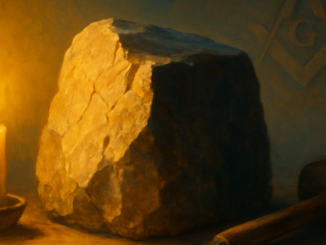
Within Freemasonry, the symbol of the rough ashlar plays a central role. The rough ashlar represents the individual in their unworked state — complete with imperfections and sharp edges. The Mason’s task is to work this stone, to smooth away the jagged corners and shape it into a perfect ashlar that fits harmoniously into the greater edifice of humanity.
Montaigne’s abhorrence of cruelty fits seamlessly into this symbolic framework. Cruelty is like a particularly sharp edge on the rough ashlar — a protrusion that not only deforms the stone itself but wounds others who come into contact with it. The conscious cultivation of compassion is a form of self-refinement, a grinding down of that sharp edge into a smooth surface that works in harmony with those around it.
The Practice of Honest Self-Examination
Montaigne invites us to look at ourselves honestly. Where in your own life do you tolerate small cruelties, perhaps without even realizing it? A cutting remark aimed at someone who cannot defend themselves. Indifference toward the suffering of others. Turning away from situations where you could help but find it too inconvenient. The essay compels self-reflection without moralizing.
Freemasonry embraces a similar practice of self-examination. In the quiet of the lodge, brethren are encouraged to evaluate their own conduct — not to condemn themselves, but to become aware of areas for improvement. Montaigne’s essay can serve as a mirror in that process: which rough edges do you still carry with you? What small acts of hardness have you allowed to become habit?
Compassion as a Unifying Force
Ultimately, Montaigne’s message is one of hope. Cruelty isolates; compassion connects. By consciously choosing gentleness where harshness would be easy, by pausing to acknowledge the suffering of others rather than passing it by, we build bridges between people. This is the foundation of true brotherhood — not one based on shared interests or circumstance, but on the recognition that we are all vulnerable beings who benefit from each other’s kindness.
In Freemasonry, this interconnectedness is symbolized by the chain of brethren who together form the lodge. Each link must be strong enough to support the others, yet gentle enough to cause no harm. Montaigne’s essay reminds us that the quality of those links is determined by our capacity for compassion.
Michel de Montaigne’s essay “Of Cruelty” is far more than a historical text. It is an invitation to examine your own character and to consciously choose compassion. In a world where hardness is sometimes mistaken for strength, Montaigne reminds us that true humanity lies in our willingness to be moved by the suffering of others. For Freemasons and non-Masons alike, this essay offers timeless guidance: work your rough ashlar with care, smooth away the sharp edges of cruelty, and help build a world where compassion is the standard — not the exception.
Copyright text & image: devrijmetselaar.nl
Texts are based on the ideas and content of the author of devrijmetselaar.nl, reviewed, corrected, and supplemented with the assistance of OpenAI. Images are created based on the ideas of the author of devrijmetselaar.nl using OpenAI/DALL-E.
Frequently Asked Questions
What is Montaigne's main argument about cruelty in his essay?
Montaigne argues that cruelty is the deepest and most dangerous vice because it involves a deliberate choice to inflict suffering for its own sake, representing a fundamental perversion of human nature. He contends that true character is revealed not by strength or intellect, but by how compassionately we treat those who are defenseless and vulnerable. This principle aligns perfectly with Freemasonry's core values of brotherhood, compassion, and treating all people with dignity and respect.
How does Montaigne connect sensitivity to animals with human virtue?
Montaigne views the capacity to feel distressed by animal suffering not as weakness, but as a sign of a virtuous and sensitive soul that recognizes its connection to all living creatures. He argues that how we treat defenseless animals reveals our true moral character and capacity for compassion. Freemasons have long embraced this principle, understanding that genuine virtue extends to all beings and that cultivating compassion strengthens our humanity.
What does Montaigne teach us about the dangers of becoming desensitized to cruelty?
Drawing from Seneca's observations about Roman gladiatorial games, Montaigne warns that regular exposure to cruelty—even as a spectator—gradually desensitizes people to suffering and makes them more likely to become cruel themselves. He demonstrates that cruelty is contagious and that societies must actively protect their citizens from normalizing violence. This insight reinforces Freemasonry's commitment to promoting ethical conduct and building moral character in individuals and communities.
How does Montaigne's essay relate to Freemasonry's values?
Montaigne's emphasis on compassion as the true measure of civilization directly mirrors Freemasonry's foundational principles of brotherhood, charity, and the inherent dignity of all people. His argument that cruelty reveals the absence of humanity while compassion reveals true strength aligns with Masonic teachings about moral development and ethical conduct. By studying essays like Montaigne's, Freemasons deepen their understanding of the virtues they are called to embody in their personal and civic lives.

Be the first to comment