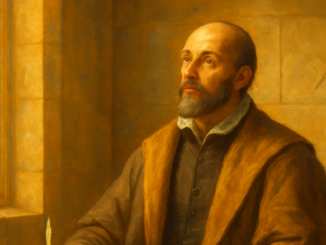
Rough ashlar and chisel symbolizing Montaigne's philosophy of courage and virtue
Michel de Montaigne – Philosophical Background

Montaigne on Cowardice: Philosophical Roots of Courage

When Michel de Montaigne wrote his fifteenth essay on the punishment of cowardice, he touched upon a question that has occupied philosophers for centuries. What makes cowardice such a grievous vice that some societies punished it with death? To truly understand Montaigne’s reflections, we must descend into the philosophical wellsprings from which he drew: the Stoics, the Greek moral philosophers, and the humanist tradition of his own era. In exploring the intellectual background of his thought, we discover not only the roots of his argument but also why these questions still resonate deeply within any brotherhood that places virtue at its center. The Stoic Legacy: Courage as a Cardinal Virtue Montaigne’s thinking about cowardice and courage is deeply rooted in the Stoic tradition. Seneca, whom he read extensively and quoted often, regarded courage as one of the four cardinal virtues — inseparably linked to wisdom, justice, and temperance. For the Stoics, cowardice was not merely a lack of physical bravery; it was a fundamental disturbance of the soul. To flee from danger was ultimately to flee from oneself. Marcus Aurelius wrote in his Meditations that a person must align his actions with nature and reason. From that perspective, cowardice was […]
Open book with Montaigne essays beside Masonic rough ashlar and square symbol
Michel de Montaigne – Philosophical Background

Montaigne on Good and Evil: Philosophical Roots of Essay 14

Imagine waking up tomorrow under exactly the same circumstances as yesterday, yet suddenly feeling happier. Nothing in the outside world has changed — only the way you look at it. This simple thought experiment strikes at the heart of what Michel de Montaigne explores in his fourteenth essay. But where did this sixteenth-century thinker draw his ideas from? The philosophical sources he tapped into turn out to be remarkably relevant today, shedding light on how Freemasons, too, think about moral truth and personal perception. The Stoic Legacy in Montaigne’s Thought When you read Montaigne’s essay, you immediately taste the influence of Stoic philosophy. Thinkers like Seneca, Epictetus, and Marcus Aurelius shared a central conviction: it is not events themselves that determine our well-being, but our judgments about those events. Montaigne, who frequently quoted and admired Seneca, adopted this starting point and gave it his own distinctive twist. He observed how people experienced the same adversity in completely different ways, depending on their inner disposition. The Stoics drew a clear line between what lies within our control and what does not. You cannot command the weather, but you can choose how you respond to it. Montaigne applied this principle to the […]

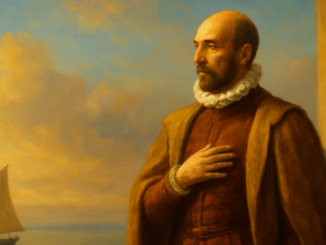
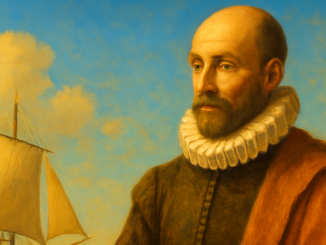
Portrait of Michel de Montaigne with philosophical texts on cruelty
Michel de Montaigne – Philosophical Background

Montaigne and the Law of Cruelty: Philosophical Roots

You have almost certainly experienced it: someone treats another person with unnecessary harshness, and somewhere deep inside you sense that something is fundamentally wrong. Michel de Montaigne, the sixteenth-century French thinker, wrestled with exactly this question. In his essay on cruelty, he digs into the philosophical roots of human violence and compassion. Which thinkers shaped his views? And more importantly — what can those insights still offer us today, particularly as Freemasons committed to the moral improvement of ourselves and society? The Stoic Legacy: Seneca as Teacher When Montaigne writes about cruelty, the voice of Seneca resonates throughout. The Roman philosopher, who lived from 4 BC to 65 AD, regarded cruelty as the very opposite of humanity. For Seneca, brutality was not merely a moral misstep — it was a fundamental assault on human dignity. He championed clementia, a form of mercy that springs from inner strength rather than weakness. Montaigne adopted this idea and applied it to his own turbulent era. Where Seneca wrote amidst the spectacle of Roman gladiatorial games, Montaigne observed the Wars of Religion tearing France apart. Both men witnessed how violence became entertainment, how crowds took pleasure in the suffering of others. The Stoic lesson […]

Rough stone being shaped into a perfect ashlar symbolizing constancy
Michel de Montaigne – Philosophical Background

Montaigne on Constancy: The Philosophical Roots Revealed

A stone that stands unmoved while the storm rages around it. This image, as familiar in the builder’s craft as in philosophy, strikes at the heart of what Michel de Montaigne explores in the twelfth essay of his first book: human constancy. But which thinkers whispered those ideas into his ear? Which philosophical traditions formed the foundation upon which he built his reflections on steadfastness? The answers lie hidden in a rich intellectual heritage reaching back to antiquity. The Stoic Foundation When Montaigne writes about constancy, he is unmistakably walking through the colonnades of the Stoa. Stoic philosophy, founded by Zeno of Citium in the third century BC, placed the imperturbability of the human mind at its center. For the Stoics, true virtue lay in accepting what lies beyond our control while mastering our own reactions. This idea forms the backbone of Montaigne’s approach to the subject. Particularly influential was the work of Seneca, the Roman philosopher and statesman whose letters and essays Montaigne studied with great enthusiasm. Seneca’s De Constantia Sapientis (On the Constancy of the Wise Man) addresses precisely the theme Montaigne would later rework. The wise man, Seneca argued, cannot truly be insulted or harmed, for his […]

Open books and classical philosophy texts in a Renaissance tower library
Michel de Montaigne – Philosophical Background

Montaigne’s Philosophical Sources on Divination and Prophecy

Have you ever wondered why some people swear by horoscopes while others dismiss them without a second thought? That tension between belief in predictions and healthy skepticism is nothing new. In the sixteenth century, the French thinker Michel de Montaigne grappled with exactly the same questions — and he did so by drawing on a rich tradition of classical philosophy, from the Roman Stoics to the Greek skeptics. In this article, we explore the philosophical sources that fed Montaigne’s thinking when he wrote his famous essay on divination and prophecy. The Renaissance Humanist in His Tower Library Picture Montaigne in his celebrated tower study, surrounded by thousands of books lining the walls from floor to ceiling. Each volume bore his handwritten inscriptions and annotations. This was no mere decoration — it was a living dialogue with the past. As a true Renaissance humanist, Montaigne believed that the wisdom of the ancients remained profoundly relevant to his own age. He was no passive reader: he questioned, compared, and drew conclusions that often feel strikingly modern. The humanism of the Renaissance was characterized by a return to classical sources. Where medieval scholars had often worked through commentaries and summaries, the humanists read […]

Open antique book with classical philosophical texts about rhetoric and speech
Michel de Montaigne – Philosophical Background

Montaigne and Rhetoric: Philosophical Roots of the Art of Speech

Why did a sixteenth-century French nobleman devote himself to writing about the art of speech? And perhaps more importantly, which thinkers were whispering in his ear as he put pen to paper? Michel de Montaigne was no isolated mind. He stood on the shoulders of ancient traditions — from Roman orators to Greek philosophers. In this article, we explore the philosophical sources that shaped his thinking on eloquence and the pace of speech, and consider why these ideas remain deeply relevant for those who value reflection, ritual, and the careful use of words. It Begins in the Library Where does such an inquiry begin? In the library, naturally. Montaigne’s famous tower room in his château in the Dordogne was lined with books. It was here that he read the classics, and here that he held conversations with the dead. His essay on eloquence and speed of speech did not emerge in a vacuum — it was born from a dialogue with centuries of rhetorical tradition. The question that presses itself upon us: which voices resonated most? Roman Rhetoric: Cicero and Quintilian as Living Companions To understand Montaigne’s thinking, we must return to the wellspring of Roman rhetoric. Cicero and Quintilian […]