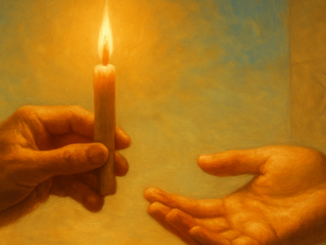
Zero-Sum Thinking vs. Spiritual Abundance in Freemasonry
Zero-sum thinking quietly shapes many of our daily decisions. It whispers that one person’s gain must inevitably be another’s loss — that every blessing somewhere else must be a curse. But what if there is a fundamentally different way of seeing the world? In Freemasonry and many spiritual traditions, a radically different premise holds true: that growth, wisdom, and light are not finite resources but multiply when shared. Today, we place these two worldviews side by side. What Zero-Sum Thinking Really Means The term zero-sum thinking originates in game theory. In a zero-sum game, total gains and total losses are perfectly balanced: what one player wins, the other loses. Chess is a classic example. This logic works perfectly within the boundaries of a game board, but it becomes deeply problematic when we apply it to life as a whole. In everyday life, zero-sum thinking manifests in thoughts like: “If my neighbor is successful, there’s less success left for me.” Or: “If I give something away, I have less for myself.” These beliefs create a world of constant competition, distrust, and fear. Philosophers like Thomas Hobbes described the natural state of humanity as a war of all against all — a […]