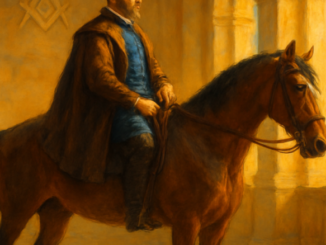
Montaigne on War Horses: Lessons in Substance Over Show
In an age when war shaped every facet of political life, Michel de Montaigne turned his penetrating gaze toward an unexpected subject: the horse. In Essay 48 of Book One of his famous Essays, titled ‘On War Horses,’ he examines the role of the mount in battle, the extravagance of princes, and the vanity that can lurk behind military splendor. What initially reads as a catalog of historical anecdotes gradually reveals a deeper meditation on appearance versus reality — on outward display versus inner worth. For those who walk the path of Freemasonry, these reflections carry a remarkably familiar ring. The Heart of the Essay: Splendor as a Mirror of Character Montaigne opens his essay by observing how much importance great military commanders and rulers placed on their horses. The horse was far more than a means of transport — it was a status symbol, an extension of the rider, and sometimes the very difference between life and death on the battlefield. He describes how generals such as Julius Caesar and Alexander the Great formed near-mythical bonds with their mounts. Bucephalus, Alexander’s legendary horse, occupies a prominent place in the discussion. Montaigne notes that Alexander even named a city after […]