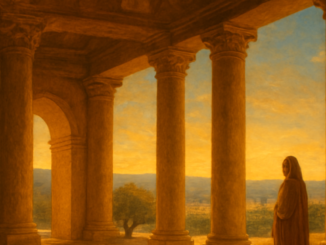
Ruth gleaning in the cornfields symbolizing loyalty and Masonic transformation
Christianity

Ruth and the Cornfield: Loyalty and Symbolism in Freemasonry

Loyalty is a word that rolls easily off the tongue, but it only reveals its true nature when everything else falls away. What remains of a promise when there is nothing left to gain? When following someone leads not to prosperity but to uncertainty, poverty, and exile? The Book of Ruth poses exactly this question — and the answer it gives is so radical that it still unsettles us three thousand years later. Ruth does not choose loyalty because it is wise. She chooses loyalty because it is essential. The Paradox of Gaining Through Loss Let us begin at the beginning — which is to say, at the end. The Book of Ruth opens with a cascade of loss. Naomi loses her husband, then both her sons. She stands in a foreign land without protection, without a future, without a name that still carries weight. She renames herself Mara — the bitter one. It is a gesture of total surrender to emptiness. And precisely at that lowest point, in that absolute desolation, something takes root that proves stronger than any material certainty: the loyalty of a daughter-in-law who refuses to leave. Here we touch a paradox that Freemasonry knows intimately. […]

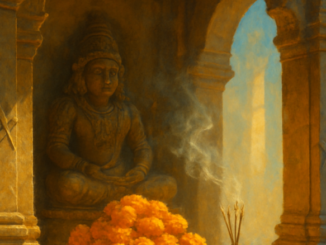
Hindu temple symbolism alongside Freemasonry symbols representing spiritual harmony
Religion

Hinduism and Freemasonry: Rituals and Spiritual Harmony

Hinduism is one of the oldest religions in the world, carrying with it a vast tradition of ritual, philosophy, and spiritual depth. Freemasonry, an age-old fraternity built on universal values, shares a remarkable number of principles with this rich spiritual heritage. Where these two traditions meet, a fascinating dialogue emerges — one rooted in symbolism, self-improvement, and the pursuit of higher truth. Hinduism: A Philosophy of Life Steeped in Ritual Hinduism is far more than a religion — it is an all-encompassing philosophy and way of life. At its heart lie foundational concepts such as karma (the law of cause and effect), dharma (righteous duty), and moksha (liberation from the cycle of rebirth). Rituals are central to Hindu practice, from the daily puja (prayer and devotion) to grand festivals like Diwali and Holi. Each ritual serves as a symbolic bridge between the earthly and the divine. Hindu temples are stunning sanctuaries filled with symbolism, where deity statues, flower offerings, and incense create a profoundly spiritual atmosphere. These temples are not only places of worship but also community centers where traditions are preserved and passed from one generation to the next. Freemasonry: A Universal Approach to Spiritual Growth Like Hinduism, Freemasonry […]