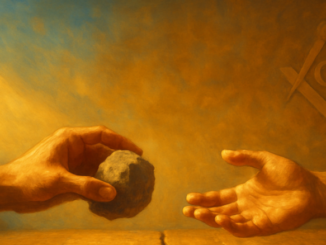
Masonic rough ashlar and perfect cube symbolizing personal growth amid division
Personal Development & Leadership

Division and Character: Masonic Lessons for Divisive Times

You know the moment. A family dinner, a meeting at work, a conversation with friends. Someone brings up a loaded topic, and suddenly the tension is palpable. How do you respond? Do you get swept up in the emotion, withdraw entirely, or look for a third way? The deep divisions currently visible in political movements around the world show just how sharply disagreements can cut. But it’s precisely in moments like these that we have the opportunity to reveal our true character. Freemasonry offers concrete, practical tools for staying grounded when division swirls around you. When Convictions Collide Picture this: you’re sitting with a group of people you respect. Maybe colleagues, maybe brethren in your lodge, maybe old friends. A discussion erupts over a sensitive subject. You notice your heart rate climbing. You feel the urge to raise your voice — or to say nothing at all. This is the moment when your personality is truly tested. It’s not your opinion that defines who you are, but how you express it and how you treat those who see things differently. Current tensions within political movements worldwide illustrate just how difficult this is. People who worked side by side for years […]
A lone figure stepping from darkness into light symbolizing return and renewal
Personal Development & Leadership

Returning After Silence: What Absence Teaches About Character

Sometimes a person disappears from view — not out of weakness, but out of necessity. Recently, a well-known news anchor announced her return to work after months of absence. Her words touched on something universal: stepping back into the world after a period of silence is an act of courage. In Freemasonry, this principle is deeply familiar. Consciously stepping back in order to return stronger is not failure — it is an essential part of building character. How can we apply this insight in our own lives? The Courage to Temporarily Disappear We live in a culture that worships visibility. Be constantly present, stay productive, make yourself seen. When someone withdraws, questions follow almost immediately. What happened? Is something wrong? These reflexes reveal just how uncomfortable we have become with silence and absence. Yet philosophers through the ages have understood that withdrawal can be a precondition for growth. Marcus Aurelius wrote in his personal meditations about the importance of inner calm amid external pressure. Montaigne literally retreated to his tower study to reflect on life and the human condition. Freemasonry incorporates this principle directly into its rituals. The candidate entering the lodge for the first time is first isolated in […]

A steaming cup of coffee on a kitchen table at dawn symbolizing Masonic calm
Personal Development & Leadership

Black Saturday and the Cup of Coffee: Rest as Character Building

The alarm goes off at four in the morning. A father loads the last suitcases into the car while the children doze on the back seat. The highway beckons, the destination calls — but somewhere in the kitchen, a cup of coffee sits steaming on the counter. “Have a quiet cup of coffee first,” someone had said. It’s Black Saturday, the busiest travel day of the year, and right now that advice sounds like a small act of rebellion against the collective rush. The Paradox of Slowing Down to Move Forward There is something striking about the suggestion to sit still on the most hectic day of the year. It seems illogical, perhaps even counterproductive. Yet this simple gesture touches on a deeper insight that Freemasons have cherished for centuries: real progress begins with inner stillness. In Freemasonry, we speak of subduing the rough ashlar — refining one’s own character before attempting to build anything in the outer world. That cup of coffee is, in a sense, a modern version of that ancient ritual. When thousands of travelers flood onto the highway at the same time, all driven by the same impulse to leave first, they create the very traffic […]

Traffic jam on a highway with orange cones symbolizing patience and reflection
Personal Development & Leadership

Road Construction and Patience: What Traffic Jams Reveal

The summer of 2026 promises to be a season of orange cones, detour signs, and agonizingly slow miles. Countless highways are being torn up and rebuilt, and many a driver will feel their patience wearing thin as the minutes tick away in standstill traffic. But what if that delay is more than just lost time? What if the way we react to obstacles reveals the very thing we most prefer to keep hidden — our true character? Why Does Delay Frustrate Us So Deeply? Ask yourself honestly: what happens inside you when you’re stuck in traffic? Do you feel the tension creeping into your shoulders? Do you notice your thoughts beginning to spiral? Most people view a traffic jam as an external obstacle — something imposed on them by government decisions or unfortunate timing. But is that really the full story? Within Freemasonry, there is an ancient insight that every outward situation serves as a mirror of an inner state. The rough ashlar that the Entered Apprentice works upon is not merely a symbol. It represents everything within us that remains unrefined, unpolished, and impatient. When the highway transforms into a parking lot, that rough stone suddenly feels uncomfortably close. […]

Racing cars on a circuit symbolizing Masonic brotherhood through adversity
Personal Development & Leadership

Falling and Rising: What Racing Teaches About True Brotherhood

Picture two drivers on the same circuit, facing the same conditions, carrying the same ambitions. One pulls a flawless line through the corners of the Ardennes; the other ends up in the barriers. It’s an image you might recognize from your own life — moments where you perform brilliantly while someone beside you stumbles, or the other way around. What do you do then? How do you handle that inequality of fortune? And what does your response reveal about the nature of true connection? The Circuit as a Mirror of Life A racetrack is more than asphalt and curves. It’s a concentrated version of existence itself — risk, choices, timing, and the eternal dance between control and surrender. During a training session in the Belgian Ardennes this week, two experienced drivers had entirely different experiences. One drove smoothly and with composure; the other lost grip and crashed. Neither could have predicted the outcome beforehand. You probably know that feeling. You’re in the same meeting as a colleague, following the same training, facing the same challenge. Yet things go differently for you than for the person beside you. Sometimes you’re the one who falls. Sometimes you’re the one who keeps going. […]

Racing car speeding through a curve symbolizing Masonic character under pressure
Personal Development & Leadership

Speed and Character: Masonic Lessons from the Racetrack

There is something deeply paradoxical about speed. A driver tearing through the corners of Spa-Francorchamps at blistering pace seems to have no room for reflection. And yet, in that fraction of a second — the split-second decision to brake or commit — the entire personality of the driver is laid bare. A top result in free practice is a sporting achievement, certainly. But what does speed actually reveal about character? And what might a Freemason learn from someone who repeatedly puts himself to the ultimate test? Personality Reveals Itself Under Pressure Let us begin with a provocative thought: perhaps personality is not what someone claims to be, but what someone does when the pressure is at its peak. A racing car cutting through the Ardennes forest at three hundred kilometers per hour offers no time for masks. There is no room for façade. The driver, in that moment, is entirely himself — fear, courage, calculation, instinct. Everything that makes a person who they are concentrates itself into an action lasting mere seconds. This raises a compelling question: is personality a verb rather than a noun? Not a fixed quality, but something that continuously reshapes itself in confrontation with the world? […]

Polar bear resting peacefully, symbolizing devotion, care, and Masonic reflection
History

Farewell to a Polar Bear: Lessons in Care and Devotion

Imagine a creature that spent 36 years surrounded by dedicated caretakers, that amazed generations of visitors, and that ultimately departed this world in peace. The passing of the oldest polar bear ever held in captivity stirs something deep within us — perhaps because her remarkably long life raises questions we rarely ask ourselves. What does it truly mean to live well? And what do we leave behind when our time comes? A Life Beyond the Statistics Polar bears in captivity typically live to around twenty years of age. The fact that this particular bear reached thirty-six makes her story extraordinary. Her keepers spoke of her not merely as an animal of unusual longevity but as a creature of remarkable character. She was headstrong, recognized familiar faces, and seemed to form bonds — in her own way — with the people around her. Perhaps you recognize the feeling that arises when you hear about an animal that has lived so far beyond expectations. A kind of respect emerges, an acknowledgment that this being experienced something most of its kind never will. And it is precisely that recognition that invites deeper reflection on what a long life actually means. Time as a […]

Crowbar as a Masonic symbol representing spiritual leverage and inner transformation
Spiritual Traditions

The Crowbar Symbol and Its Meaning: A Lever for the Soul

Sometimes you need a crowbar to pry something open — not just in the physical world, but in your inner life as well. The crowbar symbol and its meaning reach far beyond the practical tool we know from construction sites. This simple instrument carries a powerful spiritual message: some doors in our lives only open when we are willing to apply real force. In Freemasonry, where working tools serve as central symbols, the crowbar offers a surprisingly compelling perspective on personal transformation. What the Crowbar Symbol Tells Us About Resistance You probably know the feeling. Something in your life has rusted shut. A habit you cannot let go of. A belief that limits you but that you cannot seem to break through. A relationship that no longer works but that you cling to anyway. In moments like these, the image of the crowbar acts as a mirror. The pry bar does not ask for subtlety — it asks for honesty about what is truly needed. The meaning of this tool lies in its directness. Where other instruments perform fine, delicate work, the crowbar is designed for one purpose: overcoming resistance. In a spiritual sense, it represents those moments when a […]

Referee whistle symbolizing judgment and Masonic self-reflection
Freemasonry & Society

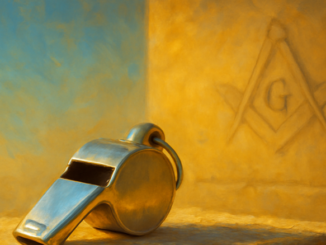
The Referee’s Whistle: When the Crowd Becomes the Judge

A match ends. The ball rolls to a stop. And then something erupts that has nothing to do with sport. The recent decision by a national football association to file complaints against hateful messages directed at players after a World Cup elimination reveals a deeper societal issue. How is it that people who were cheering moments ago can transform, in the blink of an eye, into judges who strip fellow human beings of their dignity? Behind this phenomenon lies a symbolic truth that Freemasons have explored for centuries: the struggle between the lower and higher self, and the choice that every moment demands of us. The Whistle as a Symbol of Final Judgment A referee’s whistle is a small object. Metal, simple, functional. Yet it carries an enormous symbolic weight. The moment it sounds, a match is frozen into a result. Win or lose. Hero or scapegoat. The complexity of ninety minutes of effort, dozens of decisions, and countless variables is reduced to a single number. This is the paradox of every judgment: it brings clarity, but it sacrifices nuance. In Freemasonry, we know a comparable symbol: the gavel. The Worshipful Master strikes it at decisive moments — not to […]

Rough ashlar stone being shaped symbolizing Masonic character building
Personal Development & Leadership

Personality and Choices: What a Verdict Teaches About Character

Sometimes you come across a news story that stays with you all day — not because of the shocking details, but because of the questions it raises. A court hands down a nine-year prison sentence, and you find yourself wondering: how does a person end up there? What happens within someone’s personality that leads them down a path ending in a courtroom? These questions go far beyond the legal realm. They touch on something fundamental about who we are and who we have the potential to become. The Rough Stone Within Each of Us In Freemasonry, we work with the symbol of the rough ashlar — the unfinished stone. This is no arbitrary metaphor. The rough stone represents the human being as they enter the world: full of potential, but also full of imperfections, sharp edges, and hidden cracks. The Freemason’s task is to work that stone — to chisel, smooth, and polish it. Not to achieve perfection, because that is an illusion, but to become more conscious of your own shape and the choices you make. When you read about a tragic event where lives have been permanently altered by violence, an uncomfortable question surfaces: what happened to the […]

Warm summer night cityscape symbolizing Masonic trial by fire and character
Philosophy & Ethics

The Tropical Night as Ethical Mirror: When Heat Tests Character

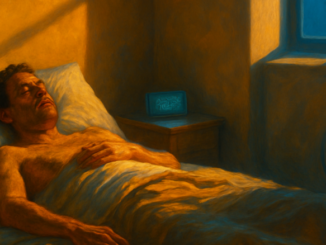
Last night, temperatures in parts of the country refused to drop below comfortable levels — what meteorologists call a tropical night. While many tossed and turned in sweat-soaked sheets, searching desperately for relief, a hidden question lay buried in the oppressive stillness. Not a question about the weather, but about ourselves. How do we behave when things become uncomfortable? As it turns out, the heat of a summer night can be an unexpected teacher in the art of ethical living. The Boiling Point of Character A thermometer measures temperature, but what measures our inner compass when the heat rises? In Freemasonry, we speak of working the rough ashlar into a perfect cube. This is not a one-time act but a lifelong process — one that becomes most visible in moments of discomfort. The tropical night serves as a kind of crucible in which our everyday patience, kindness, and self-control are put to the test. When the night brings no relief, small irritations bubble to the surface. The neighbor who opens his window and plays music. The child who cannot sleep. The partner who claims the only fan. In these seemingly trivial moments, something ancient reveals itself — what the Greeks […]

An open empty wallet reflecting light as a symbol of Masonic self-reflection
Personal Development & Leadership

The Empty Wallet as Mirror: Wealth Beyond Numbers

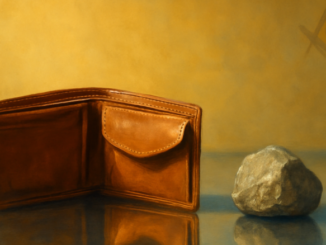
A wallet. Leather, stitching, a slot for coins. We open it dozens of times a week, check its contents, calculate what’s possible. Reports keep telling us that a growing number of people struggle to make ends meet — even as wages rise. The numbers don’t match the feeling. And perhaps that disconnect is precisely the invitation to look deeper, beyond the figures, toward what wealth truly means for who we are. The Mystery of the Growing Gap Imagine a bucket. You fill it with more water than last year. Yet the bottom stays dry. Somewhere there’s a hole that grows along with the filling. This is the paradox many households experience: wages go up, but the sense of abundance never arrives. Economists point to inflation, rising fixed costs, and shifting consumption patterns. These explanations make perfect sense on paper. But there’s something no spreadsheet can capture. The wallet is more than an object. It’s a mirror. What we put into it — and how quickly it disappears — reveals something about our relationship with needs, desires, and the question of who we want to be. Financial pressure doesn’t just affect the bank account. It touches our personality, the way we […]

Open book of Montaigne's essays with Masonic square and compass symbol
Michel de Montaigne – The Essays

Montaigne on Intention: How Purpose Judges the Work

In 1580, a remarkable book appeared in Bordeaux. Michel de Montaigne — a nobleman who had withdrawn from public life — published his first collection of essays. Among them was a short but profoundly rich piece: “That Our Actions Should Be Judged by Our Intentions.” With that single title, Montaigne touched on a question that had occupied philosophers for centuries. It is not what we do, but why we do it, that determines the true value of our actions. Rooted in Stoic and Aristotelian traditions, this idea would become a cornerstone of Western ethical thought — and it carries a special resonance for anyone engaged in the inner work of Freemasonry. The Legacy of Seneca and Stoicism Montaigne was a voracious reader of the Roman Stoics, and no thinker influenced him more deeply than Seneca. In his famous letters to Lucilius, Seneca had already argued that the intention behind an action matters more than its outcome. A deed may appear good on the surface, yet remain morally hollow if driven by self-interest or vanity. Montaigne eagerly adopted this view and applied it to even the smallest aspects of human conduct. The Stoics drew a crucial distinction between what lies within […]

Candle flame symbolizing intention and inner light in Masonic tradition
Content & Summary

Montaigne on Intention: How Our Motives Define Our Actions

Imagine helping a friend move house, only for something valuable to break halfway through. Does that make your help worthless? Or does it matter that you showed up with the best of intentions? Michel de Montaigne wrestled with exactly these kinds of questions back in the sixteenth century. In his seventh essay from the first book, he explores how our inner motivation shapes the way our actions should be judged. Short but powerful, this essay offers surprisingly practical insights for anyone who reflects on the true value of what they do — and it resonates deeply with the symbolic traditions of Freemasonry. The Core Idea: Intention Over Outcome Montaigne argues that it is not the result of an action that determines its worth, but the intention behind it. An endeavor can fail due to circumstances entirely beyond our control, yet that does not make the underlying motive any less pure or praiseworthy. Conversely, someone might stumble into a good outcome without any noble intention whatsoever. In such cases, Montaigne insists, we must look at what the person truly intended to accomplish. This may sound obvious at first glance, but Montaigne demonstrates how often we do the opposite in practice. We […]

Red traffic light glowing at night as a symbol of spiritual pause
Spiritual Traditions

The Red Traffic Light as a Spiritual Teacher

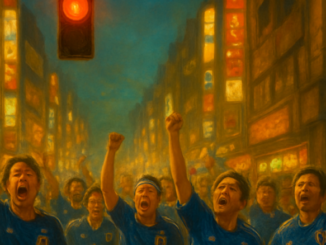
You may have seen the footage. Thousands of Japanese football fans celebrating wildly in the streets — singing, dancing, erupting with joy — until the traffic light turns red. Then everything stops. Silence. Stillness. Only when the light turns green does the celebration resume. This scene struck me deeply. Not because of the football, but because of what it reveals about the human soul and its capacity for inner freedom. A Moment of Recognition Imagine yourself surrounded by thousands of people cheering, singing, and dancing. The emotion is overwhelming, the energy contagious. And then, at the peak of collective ecstasy, a red light appears. A simple signal. No police officer, no authority intervening. Just you and that light. What do you do? The Japanese supporters chose stillness. Not out of fear of punishment, but from something deeper — a rooted awareness that true joy does not vanish through a moment of restraint. On the contrary, they demonstrated that discipline and celebration can strengthen one another rather than cancel each other out. This is a spiritual lesson that resonates powerfully with me as a Freemason. The Art of the Voluntary Halt In Freemasonry, we often speak about subduing our passions. This […]

Vrijmetselarij - What Is Freemasonry? Core Principles, Symbolism and Purpose
Personal Development & Leadership

What Is Freemasonry? Core Principles, Symbolism and Purpose

Freemasonry is one of the oldest fraternal organizations in the world, yet it remains widely misunderstood. It is not a religion, not a political movement, and certainly not a secret society — but rather a society with secrets. At its heart, Freemasonry brings people together around a shared purpose: personal and moral development. Through symbols, rituals, and allegory, members are given the tools to better understand themselves and find deeper meaning in life. Why Do People Join Freemasonry? In a world saturated with distractions, superficiality, and relentless pressure to perform, more and more people are searching for something deeper — genuine connection and purposeful reflection. Freemasonry offers a space where you can pause, reflect, and learn alongside others who walk the same path. It is not about receiving ready-made answers. Instead, it is about learning to ask better questions — about yourself, your values, and your place in the world. The Three Pillars of Freemasonry Freemasonry rests on three fundamental pillars that guide every member’s journey. These principles shape the experience within the lodge and extend far beyond its walls into everyday life. Brotherly Love Within a lodge, members form a close-knit community built on mutual support, encouragement, and inspiration. […]

Vrijmetselarij - New Year's Day: The Masonic Symbolism of a Fresh Beginning
Symbolism & Rituals

New Year’s Day: The Masonic Symbolism of a Fresh Beginning

New Year’s Day represents a clean slate — a chance to start over with renewed purpose and hope. It is a day steeped in reflection, aspiration, and deep symbolism. For Freemasons, this annual turning point carries special significance, offering a meaningful opportunity to reflect on the ongoing construction of one’s personal temple: the lifelong pursuit of self-improvement and harmony with the world around us. The Symbolism of Renewal Renewal lies at the very heart of Freemasonry. New Year’s Day symbolizes the great cycle of life — the ever-present opportunity to begin again with fresh eyes and a clear mind. The turning of the calendar invites deep introspection: How have we built upon ourselves over the past year? Which rough edges have we smoothed, and which building blocks do we wish to add in the year ahead? Just as the sun rises after every night, New Year’s Day reminds us that light follows even the darkest challenges. It is a day of hope and a powerful reminder of the eternal cycle of growth and improvement — a cycle that every Mason recognizes in the work of the lodge and in the journey of the soul. Traditions and the Bond of Brotherhood […]

New Year fireworks symbolizing Masonic reflection and renewal at midnight
Spiritual Traditions

Old & New Year: A Time for Reflection and Renewal

The turning of the year is one of those rare moments that invites us to pause — to look back at the road we’ve traveled and to gaze ahead at the path yet to unfold. New Year’s Eve is more than just the final page of a calendar. It is a deeply personal threshold, a symbolic crossing from what was into what could be. It is a time for honest reflection, for releasing what no longer serves us, and for setting intentions that align with who we truly wish to become. The Deeper Meaning Behind Our Traditions Fireworks lighting up the midnight sky, champagne glasses raised in celebration, the joyful company of loved ones — these familiar rituals give the night its festive character. But beneath the surface of these traditions lies a deeper message. Fireworks remind us that even in the darkest of times, light and energy can break through. Gathering with those we love symbolizes our deep need for connection and our shared wish for happiness. And the countdown itself serves as a powerful reminder that every single second holds within it the potential for a new beginning. Reflection: Shining a Light on the Past Year The end […]

Guitar resting near Masonic square and compasses symbolizing harmony
Culture & Media

The Guitar and Freemasonry: Resonance, Symbolism & Harmony

What do the six strings of a guitar have in common with the symbols on a Masonic tracing board? More than you might think. Both the guitar and Freemasonry are deeply rooted in symbolism, introspection, and the pursuit of harmony. They each offer a path toward self-improvement, connection, and creativity — making them a surprisingly powerful combination worth exploring. The Guitar as a Symbol of Balance A guitar is far more than a musical instrument — it is a powerful symbol in its own right. Its six strings represent equilibrium and balance: between body and mind, work and rest, reason and emotion. In Freemasonry, this same pursuit of balance is fundamental. The square and compasses, among the most central symbols of the Craft, point to the necessity of measuring our lives both rationally and intuitively, and bringing them into harmony. The shape of the guitar itself carries deeper meaning. The hollow body, which produces sound through resonance, can be seen as a metaphor for the human soul. Just as a guitar only produces music when it is open to vibrations from the outside, a person can only truly grow by remaining open to the influences and experiences the world has […]

A rough ashlar stone and gavel symbolizing Masonic personal transformation
Symbolism & Rituals

The Sledgehammer Blow: A Masonic Moment of Revelation

In Freemasonry, we work on ourselves. The idea is simple yet profound: by chipping away at our own rough stone, we strive to become better human beings. Every now and then, a presentation or discussion in Lodge strikes so deeply that it changes something inside you. I experienced such a moment — a sledgehammer blow of emotion that came from nowhere and left me transformed. Working on the Rough Stone Freemasonry is often described as a journey of self-improvement. We see ourselves as rough ashlar stones, and through reflection, ritual, and fellowship, we gradually shape ourselves into something more refined. Some Lodge meetings pass quietly, offering gentle lessons. Others hit you like a sledgehammer. The meeting I want to share with you was very much the latter. Some time earlier, I had attended a presentation about the concept of the Daimon — an idea I will write about separately another time. That earlier talk planted a seed in my mind, one I didn’t fully understand at the time. But seeds have a way of growing in the dark, and what happened next proved exactly that. The Blow That Came from Nowhere During a subsequent Lodge meeting, we had a round […]