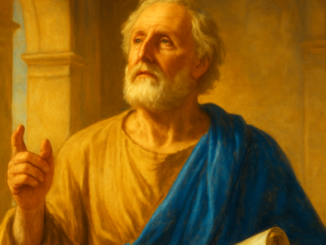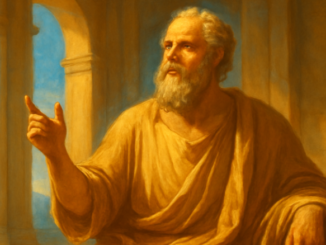
Ancient Greek temple columns symbolizing Socratic philosophy and Freemasonry
Plato – Freemasonry & Connection

Socrates’ Apology and Freemasonry: Two Paths to Truth

When a philosopher stood before his judges in 399 BC and chose death over abandoning his pursuit of truth, he touched something universal. Plato’s account of Socrates’ Apology is far more than the record of a trial. It is a manifesto on the value of self-examination, the courage to swim against the current, and an unwavering commitment to inner truth. For anyone familiar with the Masonic tradition, these themes strike a remarkably familiar chord. Both paths — that of Socrates and that of Freemasonry — lead toward the same destination: a person who knows themselves and lives accordingly. The Philosopher Before His Accusers In the Apology, Socrates defends himself against charges of impiety and corrupting the youth of Athens. His defense is no plea for mercy — it is a powerful articulation of his life’s mission. He explains that the Oracle at Delphi declared him the wisest of all people, not because he knew everything, but because he alone recognized the extent of his own ignorance. This paradox lies at the very heart of his philosophy: true wisdom begins with the awareness of how little one actually knows. To an outsider, this may seem bewildering. Why would anyone dedicate their […]

Hourglass in a Masonic lodge symbolizing Seneca's philosophy of time
Lucius Annaeus Seneca – Letters to Lucilius

Seneca’s First Letter: The Philosophy of Time in Freemasonry

A candle flickers in the early morning as a Freemason opens his journal. Before him lies a translation of Seneca’s letters, turned to the very first one. He reads words written nearly two thousand years ago and feels an uncanny recognition: time slipping away unnoticed, the urgent need to claim every moment. In the stillness of the lodge, where the hourglass stands prominently displayed, these ancient words take on an unexpected immediacy. The Stoic Roots of Time Awareness Lucius Annaeus Seneca wrote his first letter to Lucilius around 63 AD, during a period when he was withdrawing from political life at the court of Emperor Nero. That this letter on the use of time opens his entire correspondence is no accident. Seneca immediately lays the foundation of Stoic philosophy as a way of life: the realization that time is our only true possession, and simultaneously our most vulnerable one. The Stoic school, founded by Zeno of Citium around 300 BC, regarded time as an ethical category. Where other philosophical traditions focused on knowledge or happiness as the highest good, the Stoics saw virtuous action in the here and now as the essence of a life well lived. Seneca inherits this […]