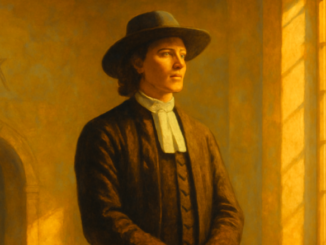
A quiet Quaker meeting house interior symbolizing silence and spiritual reflection
Quakers

The Quakers: Origins and Spiritual Roots for Freemasons

Imagine sitting in a bare room with no priest, no liturgy, no outward display of any kind. You wait in silence until someone is moved to speak — or no one speaks at all, and the silence itself becomes the message. This experience, which has transformed millions of lives across the centuries, began in seventeenth-century England with a shoemaker’s apprentice who refused to remove his hat for any earthly authority. The Society of Friends, known internationally as the Quakers, offers a surprisingly practical approach to spirituality that resonates deeply with Freemasons. A Revolutionary Beginning in Turbulent Times George Fox, born in 1624 in Leicestershire, grew up in an England torn apart by religious disputes and civil war. As a young man, he wandered for years in search of spiritual answers, but no preacher or theologian could satisfy his deepest questions. In 1647, he experienced what he would later describe as a moment of revelation: there existed an inner light in every human being that granted direct access to divine truth — without the mediation of priests or sacraments. This insight was explosive in an era when religious authority was literally a matter of life and death. Fox began to preach […]
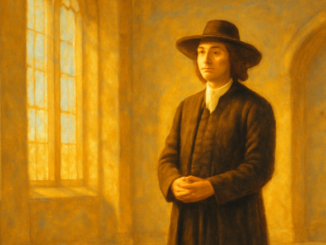
A peaceful Quaker meeting house interior representing silent worship and reflection
Quakers

The Quakers: Origins and History of a Silent Movement

In the middle of the seventeenth century, amid religious turmoil and civil war in England, a movement emerged that was radically different from anything the Christian world had seen before. The Quakers — officially the Religious Society of Friends — rejected church hierarchy, ordained clergy, and even the sacraments. They believed that every human being has direct access to the divine, without the mediation of priests or rituals. This conviction that an inner light serves as the source of spiritual truth raises compelling parallels with other traditions that seek direct experience of the higher self, including Freemasonry. George Fox and the Birth of a Radical Movement The Quaker movement began with George Fox, a shoemaker’s son from Leicestershire who underwent a profound spiritual crisis during the 1640s. He visited countless preachers and churches but found no answers to his existential questions. In 1647, Fox experienced what he later described as a direct revelation: there was one who could speak to his condition — Christ himself — without the mediation of human institutions. This experience became the cornerstone of what would develop into Quaker theology. Fox began travelling across England, proclaiming his message wherever he went. He attracted followers who recognized […]

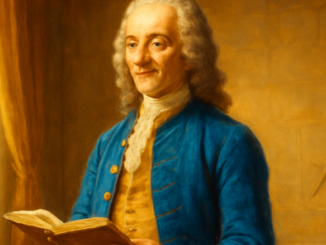
Voltaire meeting a Quaker symbolizing brotherhood and equality in Freemasonry
Symbolism & Rituals

Voltaire and the Quakers: Brotherhood Without Dogma

In 1726, François-Marie Arouet — better known as Voltaire — fled to England. What he found there would permanently reshape his thinking. It wasn’t the Anglican cathedrals or the royal courts that left the deepest impression, but a small community of plainly dressed believers who addressed everyone as equals and refused to remove their hats for anyone. The Quakers, or the Society of Friends, showed Voltaire a radically different way of coming together. His observations, recorded in the first of his Letters on the English, contain strikingly relevant insights into what genuine human connection truly means — insights that resonate deeply with the principles of Freemasonry. An Encounter That Changed Everything In his letters, Voltaire describes visiting a Quaker in London and being astonished by the man’s behavior. The Quaker remained seated when Voltaire entered, kept his hat on, and spoke without any trace of subservience. Where the French philosopher expected politeness shaped by hierarchy, he found equality instead. The Quaker explained that their community had no priests, performed no rituals, and accepted no authoritative interpretation of sacred texts. Every person, they believed, carried an inner light that provided direct access to truth. This experience struck Voltaire profoundly — not […]