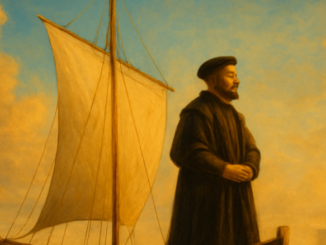
Montaigne and the Philosophy of Doubt: Sources Behind Essay 47
Picture a man in a stone tower library in the Dordogne, surrounded by thousands of books. He picks up a volume of Plutarch, sets it down, reaches for Sextus Empiricus, and scribbles a thought in the margin that has been haunting him for weeks: how can anyone ever be certain of their own judgment? Michel de Montaigne did not write his forty-seventh essay in an intellectual vacuum. Behind every doubting sentence lies an ancient philosophical conversation — a chain of thinkers who shaped and challenged him. This article traces that conversation back to its sources and forward to its unexpected resonance within Freemasonry. The Skeptical Tradition as Foundation Anyone seeking to understand the philosophical roots of Montaigne’s essay inevitably arrives at Pyrrhonian skepticism. Pyrrho of Elis, who lived in the fourth century BCE, taught that human beings cannot attain definitive knowledge about reality. He advocated for the suspension of judgment — known in Greek as epoché. Montaigne did not read these ideas directly from Pyrrho’s hand but encountered them through the writings of Sextus Empiricus, whose works were brought back into circulation during the sixteenth century thanks to the printing press. The rediscovery of these texts sent an intellectual shockwave […]