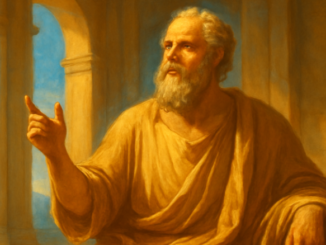
Socrates’ Apology and Freemasonry: Two Paths to Truth
When a philosopher stood before his judges in 399 BC and chose death over abandoning his pursuit of truth, he touched something universal. Plato’s account of Socrates’ Apology is far more than the record of a trial. It is a manifesto on the value of self-examination, the courage to swim against the current, and an unwavering commitment to inner truth. For anyone familiar with the Masonic tradition, these themes strike a remarkably familiar chord. Both paths — that of Socrates and that of Freemasonry — lead toward the same destination: a person who knows themselves and lives accordingly. The Philosopher Before His Accusers In the Apology, Socrates defends himself against charges of impiety and corrupting the youth of Athens. His defense is no plea for mercy — it is a powerful articulation of his life’s mission. He explains that the Oracle at Delphi declared him the wisest of all people, not because he knew everything, but because he alone recognized the extent of his own ignorance. This paradox lies at the very heart of his philosophy: true wisdom begins with the awareness of how little one actually knows. To an outsider, this may seem bewildering. Why would anyone dedicate their […]