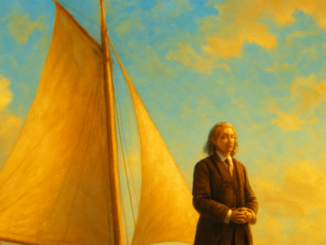
A lit candle symbolizing Enlightenment reason and Freemasonry light
Symbolism & Rituals

Voltaire and the Enlightenment: Philosophical Roots of Reason

A candle lit in darkness. This simple image carries a meaning that reaches far beyond the practical utility of light. For Voltaire, the flame of reason was not merely a metaphor — it was a living inheritance drawn from centuries of philosophical thought. To truly understand his vision of reason and brotherhood, we must trace the sources from which he drew: the thinkers who shaped him, the intellectual currents that flowed through his work, and the context in which his ideas blossomed. The Candle and the Legacy of Light When we light a candle, we perform an act that is at once ordinary and deeply symbolic. The flame drives away darkness, but it also brings warmth and community. In Freemasonry, light represents the insight that a seeking Brother acquires step by step. Voltaire — though not a Freemason in the conventional sense until very late in his life — moved in circles where this philosophy of light set the tone. His entire body of work is permeated by the conviction that ignorance lies at the root of human suffering, and that knowledge brings liberation. This conviction did not arise from nothing. Voltaire was a voracious reader and an intellectual sponge. […]
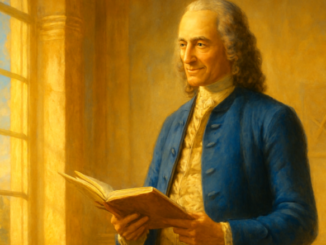
Portrait of Voltaire symbolizing Enlightenment reason and Masonic brotherhood
Symbolism & Rituals

Voltaire and the Enlightenment: Reason and Brotherhood United

Why does the thought of François-Marie Arouet — better known as Voltaire — remain so strikingly relevant nearly three centuries later for anyone reflecting on human progress? And what does his vision of reason and brotherhood mean for Freemasonry today? In this exploration, we examine the core ideas of his Enlightenment philosophy and discover how they resonate with the values that Brethren around the world hold dear. Who Was Voltaire and Why Did He Champion Reason? Voltaire lived from 1694 to 1778 and is widely regarded as one of the most influential thinkers of the European Enlightenment. His pen was feared and admired in equal measure. He wrote plays, philosophical treatises, pamphlets, and a vast body of correspondence. But above all else, he was a defender of human reason as a compass for life. Voltaire witnessed firsthand how superstition, dogmatism, and intolerance divided the people of his era. His answer? Reason as a universal bond between human beings, regardless of their origin or creed. In his writings on the Enlightenment, Voltaire argues that true civilization does not spring from blind obedience to tradition, but from the ability to think critically while showing genuine respect for one’s fellow human beings. This […]