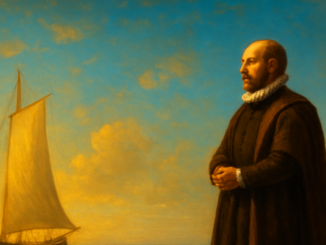
Montaigne on Cannibals: Summary and Deeper Meaning
A feather. A simple feather, worn by a man from a distant land. To the sixteenth-century European, it was a curiosity — an exotic souvenir from the New World. But to Michel de Montaigne, that same feather became a mirror, a symbol that raised an uncomfortable question: who, exactly, is the barbarian here? In his essay On Cannibals, Montaigne turns the gaze inward and confronts the reader with the shadow side of their own civilisation. More than four centuries later, this essay remains a powerful invitation to self-reflection — a theme that also lies at the very heart of Freemasonry. The Occasion: Encounters with the New World Montaigne wrote this essay around 1580, at a time when stories about newly discovered continents were flooding into Europe. He drew on the accounts of explorers, but also on something far more personal. He had actually met three indigenous Brazilians who had been brought to the French court. Through an interpreter, he asked them about their way of life, their customs, and their impressions of Europe. It is these direct encounters that give the essay a remarkable sense of authenticity. The title sounds deliberately provocative, and Montaigne chose the word “cannibals” with full […]