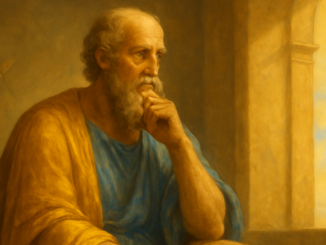
Plato’s Charmides and Freemasonry: What Is Temperance?
What does it truly mean to be temperate? And why does this concept seem so elusive, even to the sharpest minds? In Plato’s dialogue Charmides, Socrates and his interlocutors wrestle with precisely this question. The answer they seek turns out to be remarkably close to the heart of Masonic values: self-knowledge, inner balance, and the honest acknowledgment of what we do and do not know. What Is Temperance, Really? In the Charmides, Socrates meets the young Charmides, a man praised for both his beauty and his composed character. Socrates poses what seems like a straightforward question: what is temperance? But the answers that follow reveal just how complex this concept truly is. Charmides offers his first attempt: temperance is acting calmly and deliberately. But does that mean a quick, sharp mind is inherently intemperate? Surely not. Then perhaps temperance is a sense of modesty or shame? That, too, proves insufficient — shame can lead to both good and bad outcomes. Critias, the older cousin of Charmides, enters the conversation with a deeper suggestion: temperance is knowing yourself. This echoes the famous inscription at the Oracle of Delphi — “Know thyself.” Yet even this definition does not fully withstand the Socratic […]