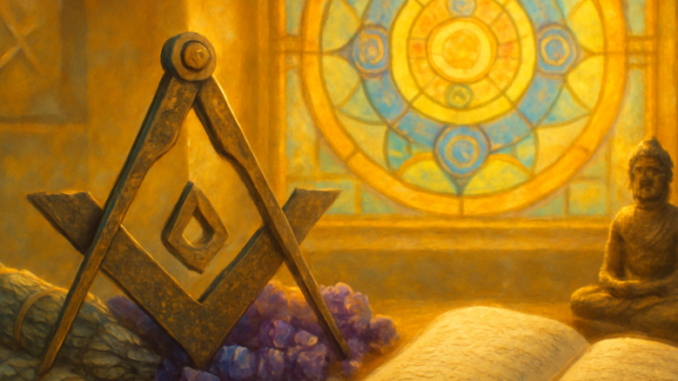
Individual spirituality is gaining momentum across the modern world. New spiritual movements — often grouped under the umbrella of New Age — offer flexible and deeply personal approaches to finding meaning and purpose. But how do these contemporary spiritual currents relate to Freemasonry, a tradition that similarly emphasizes freedom, growth, and self-discovery?
New Spiritual Movements: The Quest for Personal Meaning
New spiritual movements are inherently eclectic. They blend elements from Eastern philosophies, Western psychology, and traditional religions into personalized frameworks for understanding the self and the world. Meditation, yoga, crystal healing, astrology, and energy work are just a few of the practices that have gained widespread popularity within these movements.
A defining characteristic of these spiritual currents is their emphasis on personal development. Rather than following prescribed dogmas, practitioners forge their own path toward enlightenment and self-knowledge. This freedom of choice resonates with a growing number of seekers who feel confined by more rigid religious structures.
Freemasonry: A Traditional Yet Flexible Approach
Freemasonry shares with new spiritual movements a deep commitment to personal growth and introspection. While the Craft works with centuries-old rituals and rich symbolism, it also allows ample room for individual interpretation. Much like New Age practices, the journey toward self-knowledge lies at the heart of the Masonic experience — but it unfolds within a structured and time-tested context.
The fraternal bonds of Freemasonry also offer something that is often missing from the more solitary approaches of modern spirituality: a genuine sense of community. This makes Freemasonry an appealing complement for those who seek both personal freedom and meaningful connection with others.
Common Ground Between New Spirituality and Freemasonry
Despite their different histories and methods, new spiritual movements and Freemasonry share several important principles:
Introspection and Self-Development: Both traditions encourage individuals to look inward, to better understand themselves, and to strive toward reaching their full potential. Whether through guided meditation or Masonic ritual, the goal is the same — to become a better version of oneself.
Symbolism and Ritual: New spiritual movements and Freemasonry alike employ rituals and symbols to explore deeper layers of meaning. While the symbols may differ — crystals versus the square and compasses — the underlying purpose of using symbolic language to access profound truths is remarkably similar.
Freedom of Belief: Neither New Age spirituality nor Freemasonry imposes a rigid doctrinal framework. Both leave room for personal interpretation and encourage seekers to find their own understanding of the divine, the universe, and their place within it.
Tensions and Synergy
New spiritual movements are sometimes criticized for their lack of structure and coherence, while Freemasonry is occasionally perceived as overly traditional or slow to evolve. Yet these very differences can become sources of productive synergy.
The structure and continuity of Freemasonry can provide grounding and stability for those accustomed to a more eclectic spiritual approach. Conversely, the openness and adaptability of New Age ideas can inspire Freemasonry to innovate and remain relevant in a rapidly changing spiritual landscape.
Collaboration in a Diverse Society
In today’s multicultural and spiritually diverse society, new spiritual movements and Freemasonry together offer a broad spectrum of possibilities for those seeking deeper meaning in life. By learning from one another, both movements can contribute to a more inclusive and spiritually enriching world. Freemasonry’s long tradition of welcoming men of all faiths and backgrounds aligns naturally with the inclusive ethos of modern spirituality.
New spiritual movements and Freemasonry share a common mission: supporting individuals in their search for meaning, balance, and authentic connection. For those drawn to New Age practices, Freemasonry can offer an additional layer of structure, depth, and brotherhood. For Freemasons, the open and exploratory spirit of modern spirituality can serve as a source of fresh inspiration. In an era where spirituality is becoming increasingly personal, these movements remind us that there is profound strength in combining individual freedom with shared tradition — and that the journey inward is always richer when walked alongside others.
Copyright text & image: devrijmetselaar.nl
Texts are based on the ideas and content of the author of devrijmetselaar.nl, reviewed, corrected, and supplemented with the assistance of OpenAI. Images are created based on the ideas of the author of devrijmetselaar.nl using OpenAI/DALL-E.
Frequently Asked Questions
Is Freemasonry compatible with New Age spirituality?
Yes, Freemasonry and New Age spirituality share common ground in their emphasis on personal growth, introspection, and freedom of belief. While Freemasonry operates within a structured, time-tested framework with centuries-old rituals, it allows ample room for individual interpretation, making it compatible with the personal spiritual journey many New Age practitioners undertake. Both traditions encourage seekers to find their own understanding of the divine and reach their full potential.
What makes Freemasonry different from other spiritual movements?
Unlike many modern spiritual movements that can be solitary in nature, Freemasonry uniquely combines personal spiritual development with genuine fraternal community and brotherhood. The Craft offers a structured, time-tested approach grounded in centuries-old rituals and symbolism, providing seekers with both the freedom they desire and the meaningful human connection that is often missing from more individualistic spiritual paths.
Can I practice both Freemasonry and New Age spirituality?
Many individuals successfully integrate Freemasonry with other spiritual practices, as the Craft respects personal freedom of belief and encourages individual interpretation of its teachings. Freemasonry's use of ritual, symbolism, and introspection complements various spiritual journeys, and the fraternal bonds provide a structured community while you explore your personal spiritual path.
How does Freemasonry use symbolism like New Age practices do?
Both Freemasonry and New Age spirituality employ rituals and symbols as tools to access deeper layers of meaning and truth. While Freemasonry uses symbols like the square and compasses and New Age practices might use crystals or other objects, the underlying purpose is identical — to use symbolic language as a bridge to profound spiritual understanding and personal transformation.
What community benefits does Freemasonry offer that solo spiritual practices don't?
Freemasonry provides fraternal bonds and genuine community connection that complement personal spiritual development. Unlike many solitary New Age practices, the Masonic experience brings seekers together in meaningful relationships, offering both the personal freedom to develop spiritually and the support of a brotherhood dedicated to mutual growth and enlightenment.

Be the first to comment