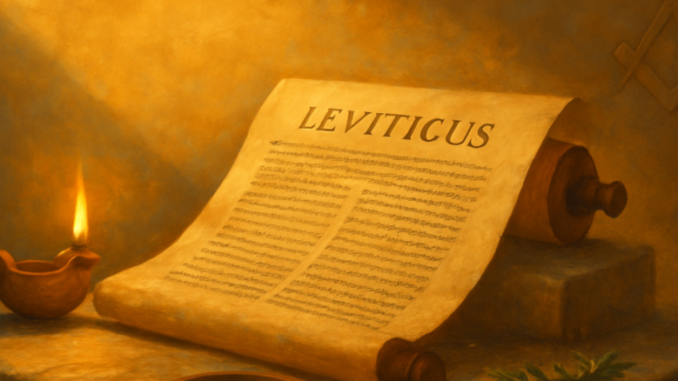
The Book of Leviticus, the third book of the Old Testament, stands as one of the most complex and symbolically rich texts in the Bible. Focused on rituals, laws, and offerings designed to promote a holy way of life, Leviticus holds a particular fascination for Freemasons. Its themes of discipline, dedication, and purification resonate deeply with the Masonic journey toward spiritual enlightenment. In this article, we explore how Leviticus can inspire personal and moral growth — not just as a religious text, but as a timeless guide for those walking the path of self-improvement.
What Is the Book of Leviticus?
Leviticus is the third book of the Bible and contains the rules and ordinances that Moses conveyed to the Israelites. At first glance, many of these laws appear strictly ritualistic or culturally specific to the ancient world. Yet beneath the surface, they carry universal lessons about purity, devotion, and justice — themes that transcend time and culture. For the thoughtful reader, and especially for Freemasons, Leviticus offers far more than a historical code of conduct; it provides a framework for understanding the relationship between outward discipline and inward transformation.
Holiness and Purification
One of the central themes running through Leviticus is the concept of holiness. The book repeatedly emphasizes that purity — both physical and spiritual — is essential for living a meaningful life. The call to “be holy” is not merely a religious commandment but an invitation to elevate oneself above base instincts and embrace a higher standard of being.
For Freemasons, this theme mirrors the ongoing pursuit of inner purification. Just as the rough ashlar must be shaped and refined into the perfect ashlar, the individual must continuously work on refining their character. Leviticus reminds us that this process of spiritual cleansing is not a one-time event but a lifelong commitment — a daily practice of striving toward moral and spiritual excellence.
Rituals as Symbols of Inner Transformation
The elaborate rituals described in Leviticus — the burnt offerings, the sin offerings, the purification rites — can easily be dismissed as relics of an ancient world. However, when viewed through a symbolic lens, they take on profound meaning. Each ritual can be understood as a metaphor for an inner process of transformation.
The act of sacrifice, for instance, symbolizes the willingness to surrender the ego, to let go of negative habits and selfish desires in order to make room for higher ideals. This idea resonates strongly with the Masonic journey, where self-discipline and devotion to a greater purpose lie at the very heart of the Craft. Every degree, every symbol, and every lesson in Freemasonry points toward the same truth: genuine growth requires genuine sacrifice.
Justice and Compassion
Beyond its ritual prescriptions, Leviticus also contains powerful teachings on social justice and ethical behavior. The text instructs its readers to care for the poor, to deal honestly in commerce, and to treat strangers with fairness and respect. The famous commandment “Love your neighbor as yourself” (Leviticus 19:18) finds its origin in this very book.
These values align seamlessly with the ethical foundations of Freemasonry. Justice and compassion are not merely abstract ideals within the Craft — they are active principles that Masons are expected to practice in their daily lives. Leviticus reinforces the idea that true spirituality is never divorced from how we treat one another. A person’s moral character is revealed not in solemn rituals alone, but in everyday acts of kindness, integrity, and fairness.
Leviticus and Its Masonic Significance
Freemasons who engage with the Book of Leviticus will find within it a compelling call to lead a moral and purposeful life. The text serves as a reminder that spiritual growth does not come without cost. The sacrifices it describes — whether literal or symbolic — point toward a deeper truth: that the path to self-knowledge and enlightenment demands discipline, humility, and a willingness to confront our own imperfections.
In this way, Leviticus functions much like the Masonic ritual itself. Both use outward forms — ceremonies, symbols, and structured practices — to guide the individual toward an inward awakening. Both insist that the pursuit of holiness, or moral perfection, is the highest calling a person can answer. And both affirm that this pursuit, though demanding, ultimately leads to a richer understanding of ourselves and our place in the world.
While the Book of Leviticus is perhaps best known for its detailed laws and ancient rituals, it offers far more than a historical curiosity. Its timeless lessons on discipline, dedication, and moral integrity make it a valuable companion for anyone committed to the work of self-improvement. For Freemasons, Leviticus can serve as a powerful guide for spiritual purification — a reminder that the journey toward higher ideals, though marked by sacrifice, is the most rewarding path one can walk.
Copyright text & image: devrijmetselaar.nl
Texts are based on the ideas and content of the author of devrijmetselaar.nl, reviewed, corrected, and supplemented with the assistance of OpenAI. Images are created based on the ideas of the author of devrijmetselaar.nl using OpenAI/DALL-E.
Frequently Asked Questions
How does the Book of Leviticus relate to Freemasonry?
Leviticus shares fundamental themes with Freemasonry, particularly around spiritual purification, moral discipline, and personal transformation. The book's emphasis on refining oneself through ritual and dedication mirrors the Masonic journey of shaping the rough ashlar into a perfect stone, making it a valuable guide for those seeking spiritual enlightenment within the Craft.
What can Freemasons learn from Leviticus's concept of holiness?
Leviticus teaches that holiness is an ongoing, lifelong commitment to moral and spiritual excellence rather than a single achievement. Freemasons can apply this principle by embracing daily practices of self-improvement and character refinement, understanding that the pursuit of inner purification is a continuous process central to the Masonic path.
How do the rituals in Leviticus connect to Masonic symbolism?
Both Leviticus and Freemasonry use ritual and symbolism to represent inner transformation and spiritual growth. The sacrifices and purification rites described in Leviticus symbolize the willingness to surrender ego and negative habits, which parallels the Masonic emphasis on self-discipline and devotion to a higher purpose through symbolic degrees and lessons.
Is Leviticus relevant to modern Freemasons?
Yes, despite its ancient origins, Leviticus offers timeless wisdom about ethical behavior, justice, and compassion that remains deeply relevant to contemporary Freemasons. The text transcends its historical and cultural context to provide universal lessons about personal development and moral growth that support the foundational principles of the Craft.



Be the first to comment