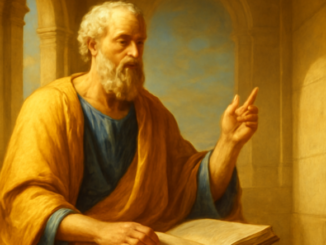
Rough ashlar and sculpting tools symbolizing Platonic and Masonic education
Plato – Content & Summary

Plato’s Republic Book III and Freemasonry: Education & Virtue

How do you shape a human being into a virtuous one? This question has occupied philosophers for millennia, and few have explored it as thoroughly as Plato in the third book of The Republic. In this remarkable text, the Athenian thinker presents his vision of education as the key to a just society — a vision that resonates strikingly with the way Freemasonry forms its members. In this article, we bring two worlds into conversation: the classical Athens of Plato and the symbolic workshop of the Masonic lodge. What do they share, and what can we learn from the comparison? The Heart of Book III: Music, Gymnastics, and the Soul In the third book of The Republic, Plato continues his dialogue through Socrates about the ideal state. The central question is how the Guardians — the protectors of the city — should be educated. Plato identifies two pillars: musical training for the soul and gymnastic training for the body. This division is far from arbitrary. The philosopher believes that harmony in the soul must precede harmony in the state. Musical education, in Plato’s framework, encompasses far more than music in the modern sense. It includes poetry, storytelling, and myth. Plato […]
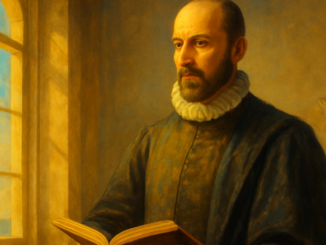
Open book with Masonic symbols representing Montaigne's educational philosophy
Michel de Montaigne – Freemasonry & Connection

Montaigne on Education: Lessons for the Seeking Freemason

Imagine a child who is not taught to obey, but to think independently. A child who is not stuffed with facts, but invited to ask questions. In the sixteenth century, Michel de Montaigne wrote an essay outlining precisely this vision of education. What he put to paper over four hundred years ago touches on something every Freemason recognizes: the conviction that true growth begins with the development of an independent mind and a virtuous character. In this article, we explore how Montaigne’s pedagogical ideas connect with the core values of Freemasonry. The Heart of Montaigne’s Educational Philosophy In his essay ‘On the Education of Children,’ Montaigne pushes back against the educational practices of his era, which he considered mechanical and superficial. Teachers crammed students full of trivia without paying attention to understanding or application. Montaigne argued for something radically different: an education that sharpens judgment rather than merely filling the memory. The child must learn to weigh, compare, and draw conclusions independently. This is not a passive process, but an active quest for insight. What does this look like in practice? Montaigne advises that an educator should confront the child with a variety of viewpoints and encourage them to choose […]