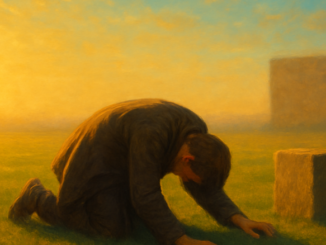
A rough ashlar stone symbolizing vulnerability and growth in Freemasonry
Symbolism & Rituals

Vulnerability as Strength: What a Leader’s Collapse Teaches Us

On October 23, 2026, news breaks that Vincent Kompany, head coach of Bayern Munich, has collapsed during a training session and been rushed to hospital. In a world that glorifies strength and conceals weakness, such a moment confronts us with an uncomfortable truth: even the strongest among us are mortal. This realization is hardly new. Centuries ago, philosophers and master builders understood that the very acknowledgment of our vulnerability holds the key to genuine strength. The Fallen Hero Throughout History History is filled with leaders who were struck down by their own bodies at the height of their power. Julius Caesar suffered from epilepsy. Alexander the Great died young, likely weakened by exhaustion and fever. Frederick the Great of Prussia battled chronic ailments he carefully hid from his subjects. These men, regarded by their contemporaries as near-divine figures, all shared the same human fragility. In the eighteenth century, when modern Freemasonry took shape in the lodges of London and Paris, this awareness of mortality was not a footnote — it was a central theme. The founders of the organized Brotherhood, including James Anderson and John Theophilus Desaguliers, designed rituals that remind Brethren of the transience of earthly existence. Not to […]
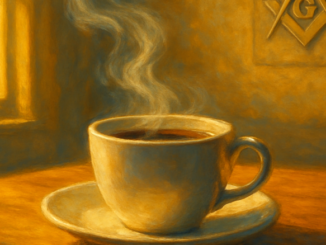
Steaming cup of tea in a Masonic lodge setting symbolizing temperance
Philosophy & Ethics

Too-Hot Coffee and Temperance: An Ethical Lesson from the Lodge

The lodge falls silent as the master of ceremonies places a steaming cup of tea before a newly initiated brother. The scent of bergamot rises from the near-boiling liquid. The young man reaches for it immediately, but an older brother calmly places a hand on his arm: “Wait. Let it cool first.” In that simple gesture lies a lesson far deeper than preventing a burned tongue. When Haste Becomes Harmful Recent medical research confirms what many have long suspected: regularly drinking very hot liquids — above 65 degrees Celsius (149°F) — can triple the risk of esophageal cancer. The heat damages the delicate lining of the esophagus, and repeated injury leads to cellular changes that can eventually become malignant. The science is clear: impatience with something as mundane as drinking coffee or tea can have life-threatening consequences. To most people, this sounds like an overreaction. A cup of tea is harmless, surely? But that very underestimation is the problem. We have grown accustomed to instant gratification — to the immediate fulfillment of our desires. Modern life encourages this at every turn: fast service, instant delivery, zero wait time. Yet nature, and our own bodies, operate on a different rhythm. Sometimes […]

Racing circuit at Monza symbolizing ethical integrity and Freemasonry values
Philosophy & Ethics

Monza and Ethics: What a Singular Moment Teaches About Integrity

Imagine you are about to do something you know will never happen again. A chance that presents itself exactly once, in exactly this form, at exactly this moment. How do you act? What does your response reveal about who you truly are? The recent events at the legendary Monza circuit — where a driver created a historic moment and declared “this will never happen again” — invite a deeper reflection on ethics, integrity, and the art of seizing the unrepeatable. The Unrepeatable Moment as an Ethical Touchstone There is something fascinating about moments we recognize as truly unique. In motorsport, where technique, talent, and timing converge, such moments arise regularly. But the conscious awareness of it — the ability to articulate that something “will never happen again” — reflects a rare kind of clarity. It is precisely this clarity that lies at the heart of Freemasonry’s ethical approach. You may recognize this from your own life. A conversation you should have had but kept putting off. An opportunity you let slip because the timing didn’t seem perfect. Or perhaps a moment when you did act, when you were fully present, and only later realized how defining that choice was. The […]