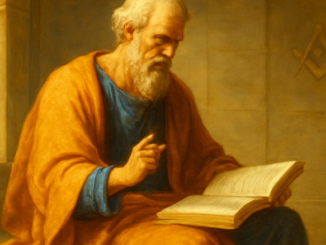
Plato’s Gorgias: Rhetoric, Justice, and the Good Life
What is the value of persuasion when it is not rooted in truth? This question lies at the beating heart of Plato’s dialogue Gorgias, a work in which the Greek philosopher examines the very foundations of rhetoric and exposes its relationship to justice. The dialogue invites us to reflect on a timeless dilemma: is it better to suffer injustice or to commit it? For those familiar with the symbolic language of Freemasonry, this ancient text opens a fascinating door to deeper reflection on inner righteousness and the architecture of the soul. The Setting and the Interlocutors The dialogue takes place in Athens, where Socrates engages with three distinctive figures: Gorgias, the famous orator from Leontini; Polus, his fiery student; and Callicles, an ambitious Athenian aristocrat. Each represents a different attitude toward power, persuasion, and morality. Gorgias presents himself as a master of the art of speaking, capable of convincing any audience regardless of the subject. Polus glorifies the power that rhetoric bestows. Callicles goes furthest of all, openly defending the right of the strongest to rule. Socrates assumes the role of the searching questioner — the one who, through apparent ignorance, systematically dismantles the certainties of his conversation partners. What […]