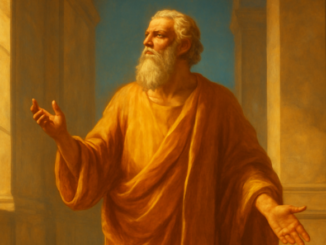
Ancient Greek prison scene representing Plato's Crito dialogue and Freemasonry
Plato – Content & Summary

Plato’s Crito: A Dialogue on Duty and Obedience

It is early morning. Through the narrow slit of a prison window, the first light falls on the sleeping figure of Socrates. His old friend Crito has been sitting beside him for hours, waiting for the right moment to wake him with an urgent proposal: escape, while you still can. What follows is one of the most powerful conversations in Western philosophy — a dialogue that continues to stir Freemasons and seekers of truth in their deepest convictions about duty, honor, and right action. A Friend With an Escape Plan The dialogue of the Crito takes place in the prison of Athens, where Socrates awaits his death sentence. Crito, a wealthy and devoted friend, has arranged everything for an escape. He has bribed the guards, prepared escape routes, and organized safe haven abroad. His arguments are deeply human and sympathetic: Socrates still has a family, his death would be a loss for philosophy, and besides, the verdict is unjust. Why would a wise man submit to a judgment based on false accusations? Socrates listens patiently. He acknowledges his friend’s good intentions but refuses to make decisions driven by emotion or public opinion. Instead, he proposes they examine the matter the […]
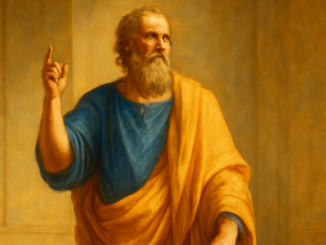
Ancient Greek temple columns symbolizing Plato's philosophy and Masonic self-knowledge
Plato – Philosophical Background

Plato’s Apology: The Philosophical Roots of Self-Knowledge

There is a paradox at the very heart of Western philosophy: the wisest man in Athens claimed to know nothing. When Socrates stood before the court, he was not so much defending his life as defending a way of life. The Apology that Plato recorded is far more than a legal document — it is a philosophical manifesto whose influence has echoed through the centuries, from the Stoics to Freemasonry. The question it raises still lingers: what does it truly mean to know yourself? The Legacy of Delphi Above the entrance to the Temple of Apollo at Delphi stood the famous inscription: “Know Thyself.” This oracle would become the starting point for Socrates’ entire philosophical quest. When his friend Chaerephon asked the oracle whether anyone was wiser than Socrates, the priestess answered that no one was. This response presented Socrates with a riddle that would define the rest of his life. How could he be the wisest man when he was so acutely aware of his own ignorance? The Apology shows how Socrates resolved this apparent contradiction. By questioning politicians, poets, and craftsmen, he discovered that they believed they knew things they did not actually know. His own wisdom, he […]