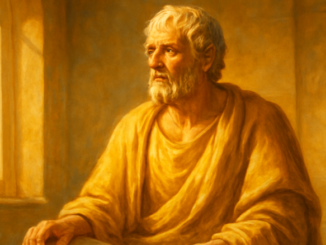
Hourglass and skull as Masonic memento mori symbols inspired by Seneca
Lucius Annaeus Seneca – Letters to Lucilius

Seneca’s Letter 77: Philosophical Sources on Life’s Brevity

When you read Seneca’s seventy-seventh letter to Lucilius, you step into a philosophical landscape far older than the Roman writer himself. The question Seneca raises — whether life is truly too short, or whether we ourselves squander it — is rooted in ancient debates about time, mortality, and the art of living. But which thinkers and traditions whispered these insights to Seneca? And how do these classical voices relate to the symbolic language that Freemasons would develop centuries later? The Stoic Roots of the Argument Seneca’s letter stands unmistakably in the tradition of the Stoa, the philosophical school founded by Zeno of Citium around 300 BCE. The Stoics drew a sharp distinction between what lies within our power and what lies beyond it. Time falls into the second category — we do not determine how many days remain to us. But how we fill those days is entirely our responsibility. This core idea echoes throughout everything Seneca writes about the apparent shortness of life. Chrysippus, the great systematizer of Stoicism, had already argued that the value of a life lies not in its length but in its conformity to reason. A short life lived in accordance with nature surpasses a […]
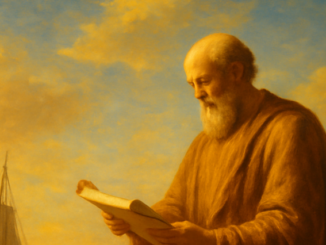
Ancient half-open gate with Masonic pillars symbolizing passage and connection
Lucius Annaeus Seneca – Freemasonry & Connection

Seneca Letter LXX: The Gate as a Symbol of Connection

A gate is never merely an opening in a wall. Anyone who has ever crossed a threshold knowing there was no turning back understands the shiver that accompanies such a moment. In his seventieth letter to Lucilius, Lucius Annaeus Seneca invites us to contemplate the ultimate gate — the gate of death. But where others look away, Seneca sees an invitation to connection: with ourselves, with the time we have left, and with the brotherhood of all who share this journey. The Threshold as a Meeting Place Picture an ancient gate, weathered by centuries, standing half open in the early morning light. On either side rise pillars adorned with symbols that speak of wisdom and impermanence. This image is no accidental metaphor. In Freemasonry, the act of crossing a threshold carries profound symbolic meaning. Every degree advancement begins with a passage — a deliberately chosen moment when the candidate leaves the familiar behind and steps into the unknown. In Letter LXX, Seneca does not write about death as a dead end but as a doorway. He argues that while we may not fully control the timing of this passage, we can choose the attitude with which we approach it. Herein […]