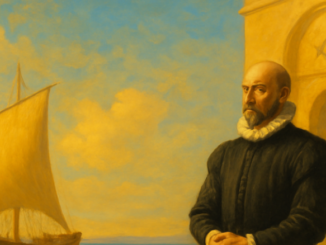
Montaigne on Names: What Hides Behind a Word?
A name seems like the most natural thing in the world. We carry one from birth, sign it beneath contracts, and have it carved into gravestones. But what is a name, really? Is it merely a label — an arbitrary sound attached to a person? Or does a name carry something deeper: a promise, a destiny, a hidden meaning? Michel de Montaigne poses exactly these questions in his short but remarkably rich essay “On Names,” the forty-sixth essay from the first book of his famous Essais. What he uncovers touches on something that also plays a central role in Freemasonry: the tension between the outward sign and the inner reality. Names Are Less Self-Evident Than We Think Montaigne opens his essay with a deceptively simple observation: there are only a limited number of first names and surnames in existence, and yet we insist on drawing personal meaning from them. He notes that names are recycled across centuries — borrowed, distorted, forgotten, and rediscovered. A name that carries glory in one generation can become entirely meaningless in the next. This leads Montaigne to a fundamental question: if names are so changeable and accidental, why do we attach so much importance to […]