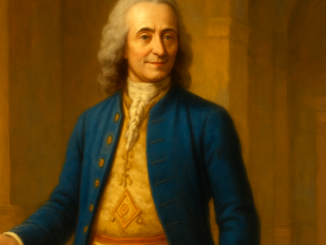
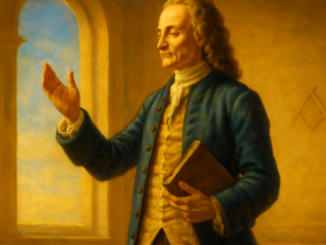
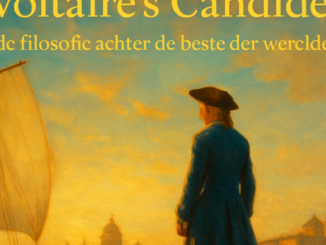
Voltaire writing his Treatise on Tolerance, symbolizing Masonic ideals
Symbolism & Rituals

Voltaire on Tolerance: The Calas Affair and Freemasonry

What drives a person to stand up against injustice when the rest of society looks the other way? In 1762, Jean Calas — a Protestant merchant from Toulouse — was sentenced to death on the strength of religious prejudice alone. Voltaire took up his pen and wrote his famous Treatise on Tolerance. But what does this eighteenth-century plea for humanity have to do with Freemasonry today? Far more than you might expect. What Actually Happened in the Calas Affair? Let’s start with the facts. Marc-Antoine Calas, Jean’s son, was found dead in the family home. In all likelihood, he had taken his own life. But a rumor spread quickly through Toulouse: that his father had murdered him to prevent his conversion to Catholicism. Without credible evidence, Jean Calas was tortured and broken on the wheel — a judicial murder driven by religious hysteria. Voltaire learned of the case and launched a years-long campaign for Calas’s posthumous rehabilitation. His Treatise on Tolerance is no dry legal argument. It is a passionate appeal for basic human decency. The question he posed remains just as relevant today: how can we call ourselves civilized while condemning our fellow human beings on the basis of […]

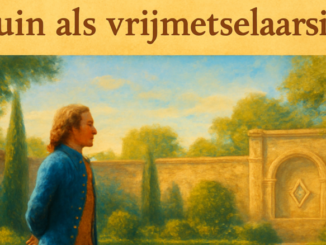
A sunlit garden symbolizing Voltaire's Candide and Masonic ideals of shared labor
Symbolism & Rituals

Voltaire’s Candide: The Garden as a Masonic Ideal

What did Voltaire really mean by that famous closing line? “Il faut cultiver notre jardin” — we must cultivate our garden. Is it a call to withdraw from the world, a retreat into comfortable isolation? Or does it point to something deeper, something that touches the very heart of what Freemasons strive for: connection through shared labor? Let’s sit with this question as if gathered around a table with a good glass of wine and an open mind. Why Does Candide End in a Garden? Candide has crossed the entire world. He has witnessed wars, survived earthquakes, listened to philosophers, and won and lost fortunes. And where does he ultimately end up? On a small farm on the outskirts of Constantinople, tilling the earth alongside his companions. Voltaire — who was deeply connected to Enlightenment thinkers and moved in circles where Freemasons were well represented — chose this ending deliberately. No triumph, no palace, no philosophical certainty. Just a garden. This raises an essential question: is the garden a retreat, or is it actually a starting point? For Voltaire, the answer seems carefully nuanced. The garden is not an escape from the world but a redefinition of what meaningful action […]

Open book showing Voltaire's Candide with Masonic square and compasses
Symbolism & Rituals

Voltaire’s Candide and Freemasonry: Building a Better World

When Voltaire published his famous satirical novel Candide in 1759, he took aim at one of the most influential philosophical propositions of his era: Gottfried Wilhelm Leibniz’s optimism — the claim that we live in “the best of all possible worlds.” Voltaire dismantled this idea with relentless wit. But what drove him to this attack? And how does his critical thinking relate to the symbolism and values cherished by Freemasonry? This article places Candide in its intellectual context and compares two fundamentally different ways of looking at the world. Leibniz’s Optimism: A World of Divine Perfection To understand Voltaire’s satire, we first need to know its target. Gottfried Wilhelm Leibniz (1646–1716), the German philosopher and mathematician, developed a theodicy designed to explain the existence of evil in a world created by God. His answer was elegant but controversial: God, being omniscient and wholly good, had necessarily created the best of all possible worlds. Every evil we perceive, Leibniz argued, serves a higher purpose within the cosmic whole. This philosophy resonated widely in eighteenth-century Europe. It offered comfort to those struggling with suffering and injustice. In Candide, the tutor Pangloss embodies this optimism in its most caricatured form. He insists that […]

Ancient philosophical symbols and Masonic tools representing the ethical foundation
Philosophy & Ethics

Freemasonry and Philosophy: The Ethical Foundation

Freemasonry and philosophy are inseparable. To truly understand the Craft, one must explore the philosophical roots that sustain it — because, at its core, the lodge is a space where people gather to reflect on the great questions of human existence. What does it mean to act rightly? How do we live in harmony with others? What does it take to become a truly good person? The philosophy of Freemasonry is not some abstract academic construct. It is a living, shared pursuit of ethical and moral development. In this article, we explore the historical background of this deep connection, the key concepts that underpin Masonic ethics, and the ways in which these ideas continue to resonate in the modern world. Historical Background: Philosophy as the Foundation of the Lodge Modern Freemasonry as we know it emerged in the early eighteenth century, most notably with the founding of the Grand Lodge of London in 1717. But the intellectual soil from which it grew had been cultivated for centuries. The late seventeenth and early eighteenth centuries were steeped in the ideals of the Enlightenment — a philosophical movement that placed reason, individual liberty, and universal brotherhood at the center of human progress. […]