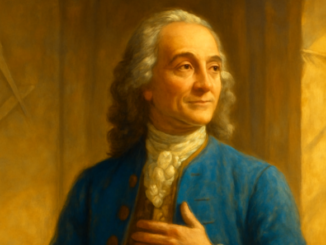
Explore the Calas affair and its profound impact on Freemasonry, tolerance, and Enlightenment philosophy through Voltaire’s influential writings.
Symbolism & Rituals
Voltaire on Tolerance: The Calas Affair and Freemasonry
What drives a person to stand up against injustice when the rest of society looks the other way? In 1762, Jean Calas — a Protestant merchant from Toulouse — was sentenced to death on the strength of religious prejudice alone. Voltaire took up his pen and wrote his famous Treatise on Tolerance. But what does this eighteenth-century plea for humanity have to do with Freemasonry today? Far more than you might expect. What Actually Happened in the Calas Affair? Let’s start with the facts. Marc-Antoine Calas, Jean’s son, was found dead in the family home. In all likelihood, he had taken his own life. But a rumor spread quickly through Toulouse: that his father had murdered him to prevent his conversion to Catholicism. Without credible evidence, Jean Calas was tortured and broken on the wheel — a judicial murder driven by religious hysteria. Voltaire learned of the case and launched a years-long campaign for Calas’s posthumous rehabilitation. His Treatise on Tolerance is no dry legal argument. It is a passionate appeal for basic human decency. The question he posed remains just as relevant today: how can we call ourselves civilized while condemning our fellow human beings on the basis of […]